
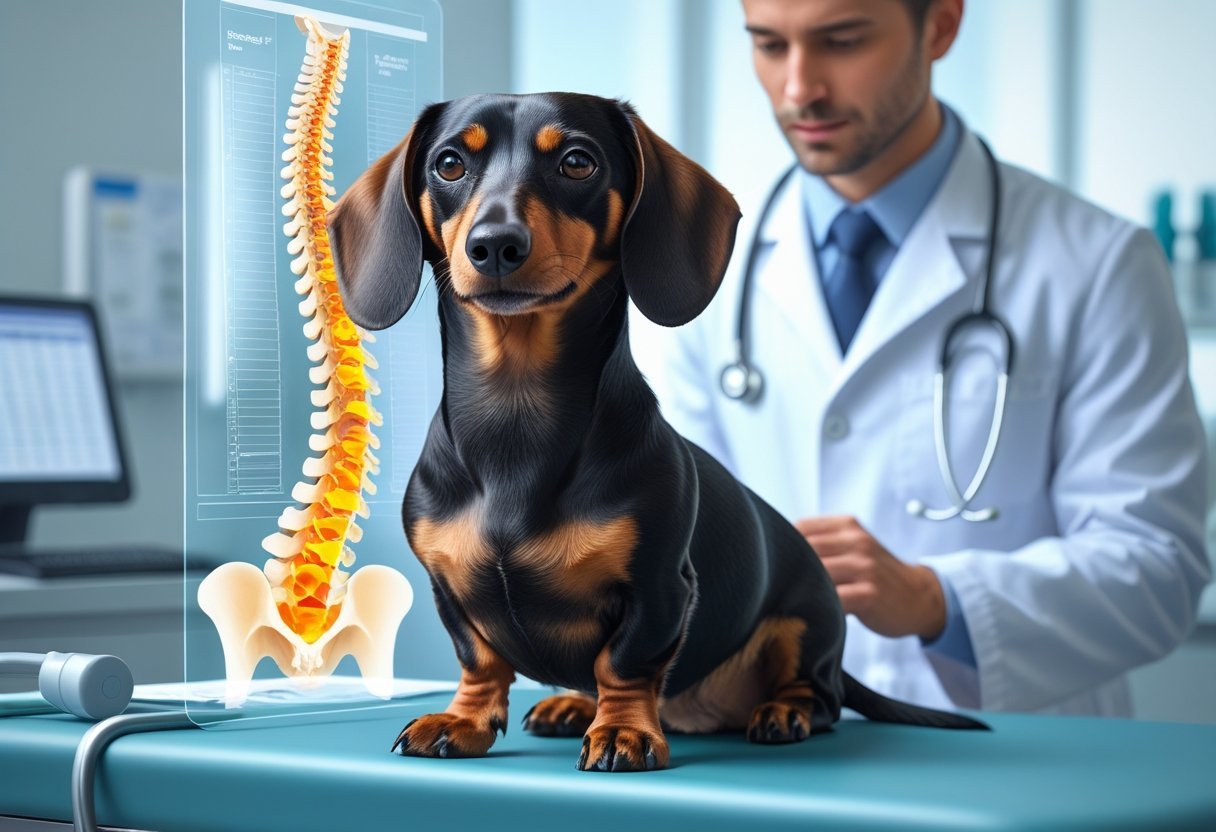
For Dachshund parents, that quiet worry about backs never really goes away. One jump off the sofa. One funny step on the stairs. One hesitant yelp when you lift them. 🐾
One Doxie parent described it perfectly: “You go from making coffee to Googling ‘emergency vet with MRI’ in the same minute.” That’s IVDD — it doesn’t give you planning time.
Intervertebral Disc Disease is the shadow every Dachshund family learns to live with. It can arrive suddenly, it can be frightening, and it can be expensive. The right insurance doesn’t remove the fear — but it gives you the power to say “yes” to care instead of asking “how much?” ❤️
This guide breaks down what the Best IVDD Insurance for Dachshunds should actually cover, what real treatment costs look like, and how insurers typically handle spine claims — without forcing you into policy PDFs or guesswork.
Key Takeaways ✨
- IVDD is common in Dachshunds and treatment gets expensive fast. 💸
- Choose plans that cover hereditary issues, MRI/surgery, and rehab. 🏥
- Waiting periods + pre-existing notes decide coverage, so timing matters. ⏱️
- Deductible type and reimbursement % change what you really pay. 🧮
- A comparison snapshot (like The Swiftest) helps you evaluate plans faster. 📲
💡 Counter-intuitive but important: prevention (ramps, braces, supplements) doesn’t affect coverage — enrolling before symptoms does.
🐾 Free Dachshund Care Guide
Download our free checklist to ensure your Dachshund stays happy, healthy, and well-loved!
Get Your Free Guide 🐶Why IVDD Insurance Really Matters for Dachshunds
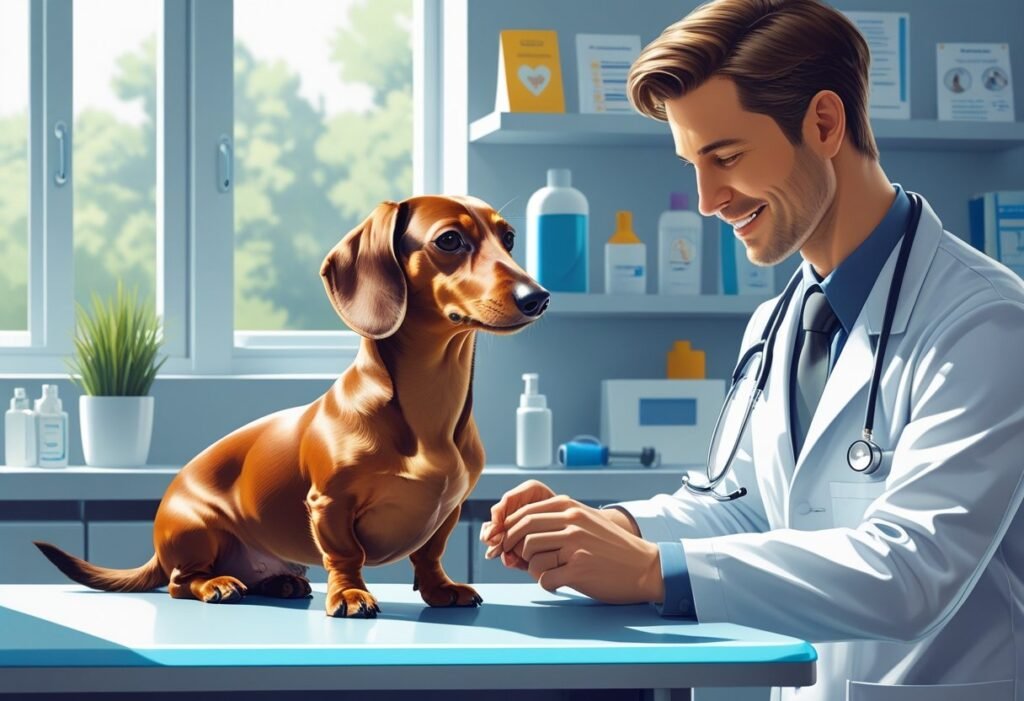
IVDD is a degenerative disc disease. In Dachshunds, disc material can harden early and then rupture or herniate from what looks like a small trigger — a jump from the sofa, a misstep on stairs, or even a twist during play. When a disc presses on the spinal cord, every hour matters. ⏱️
In real life, the care path often unfolds fast:
- Neurologic exam and pain control 🏥
- Advanced imaging (usually MRI; sometimes CT or myelogram) 🧠
- Surgery such as a hemilaminectomy if needed 🔧
- Hospitalization, ICU care, and medications 💊
- Rehabilitation like hydrotherapy, laser, or acupuncture ♻️
In those moments, good insurance feels like oxygen — it removes hesitation at the worst possible time. ❤️
What the costs look like in reality
MRI or CT scans alone can cost several thousand dollars. Spinal surgery can range from several thousand to well into five figures in complex urban cases. Hospitalization and medications stack up quickly over days. Rehab across several weeks is a significant ongoing cost.
Actual bills vary by clinic, city, and case severity — which is exactly why comparing insurance terms before you need them matters. Without coverage, every decision becomes a money question. With coverage, you are choosing treatment — not trade-offs. 💡
“Our vet said the MRI would tell us if surgery could help. With the policy in place, we focused on the answer — not the price.” — Priya S., CA 🐶
What to Look For in IVDD Coverage for Dachshunds
You don’t need an insurance degree — just a clear checklist built around how IVDD is actually treated in Dachshunds. The goal is simple: make sure the policy pays for the things that matter when a back episode hits, not just generic illnesses.
1) Diagnostics that matter
- MRI/CT must be clearly included under illness coverage 🧠
- Check rules for pre-authorization and specialist referrals
- Follow-up imaging should be covered if complications happen
2) Surgery & hospitalization
- Coverage must include neurosurgery, anesthesia, ICU, and post-op pain control 🏥
- Avoid plans with per-incident caps that can run out mid-treatment
3) Rehab & alternative therapies
- Hydrotherapy, laser, acupuncture, and physiotherapy are critical for recovery ♻️
- Coverage can be included or require a rehab rider — verify in writing
4) Hereditary & chronic conditions
- Policy must explicitly include hereditary/congenital back disease
- No Dachshund-specific exclusions hidden in spine/back sections
5) Waiting periods & pre-existing clauses
- Know the illness waiting period and any longer orthopedic waits ⏱️
- Anything in medical notes before enrollment is usually excluded
6) Deductible & reimbursement structure
- Understand annual vs per-condition deductible
- Reimbursement options (70/80/90%) change what you actually pay 💵
- Balance premium vs realistic risk and emergency cash on hand
7) Annual limits (or unlimited)
- Unlimited means no ceiling 🔁
- If choosing a cap, choose one based on worst-case IVDD, not average cost
8) Claim speed & transparency
- App/portal convenience, direct pay where available, clear timelines
- Know which documents are normally required (invoices, SOAP notes, imaging) 📄
“If I could go back, I’d add the rehab rider on day one. The surgery fixed the problem — the therapy gave us our walks back.” — Ellen M., OR 💛
How to Compare IVDD Insurance Brands for Dachshunds
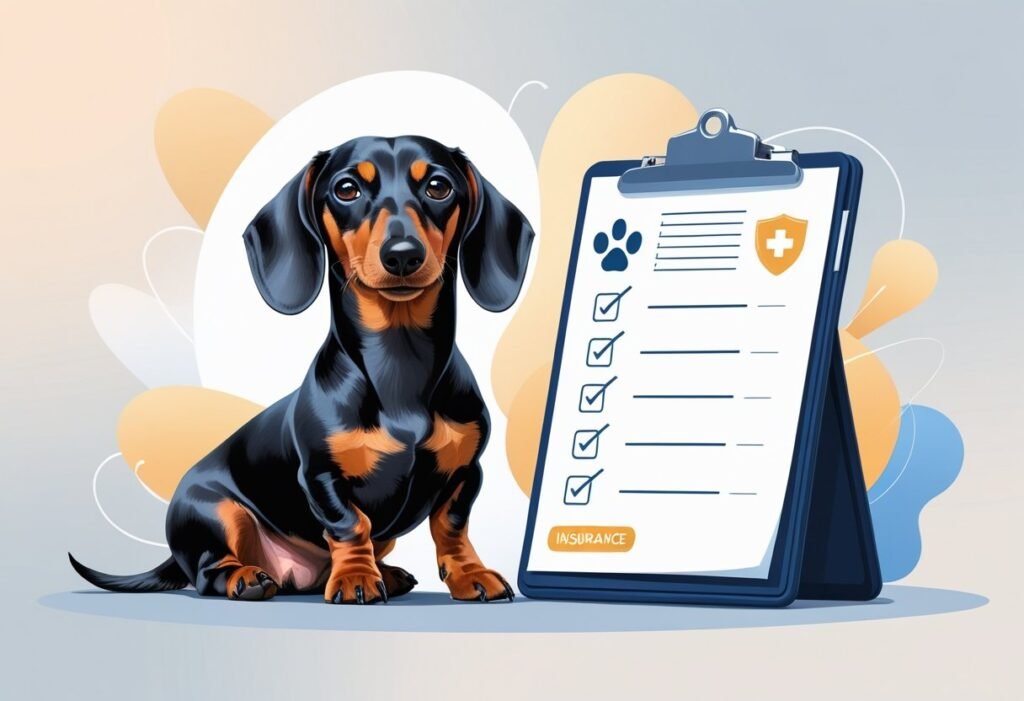
You don’t choose an insurer — you choose a policy structure. The brand only matters if its fine print matches IVDD reality. Below is a brief, Dachshund-centered lens on brands commonly seen when comparing plans through a neutral tool like The Swiftest.
Embrace
Often chosen by Dachshund owners for hereditary coverage, flexible reimbursement options, and the ability to include rehab benefits. Some orthopedic waits apply, but many owners complete required exams early to keep timelines clean.
Good for: balanced premiums + rehab support ✅
Trupanion
Known for no annual or per-condition caps and a per-condition deductible setup. Some clinics support direct pay, which matters during urgent neuro admissions. Rehab add-ons are available in many regions.
Good for: high ceilings + smoother large claims 🧾
Lemonade
Simple interface and modern experience. For IVDD, verify advanced imaging, surgery, and post-op coverage, plus whether rehab requires a rider.
Good for: clean app experience + simple pricing 📱
Figo
Readable policy docs and strong app flow. Double-check alternative therapy coverage and how specialty claims are processed.
Good for: user-friendly claims + specialist-heavy cases 📂
Fetch
Strong illness/accident framing. Confirm MRI/surgery language, post-op care, and whether rehab methods like laser or physio are included or optional.
Good for: solid core coverage (verify therapy scope) 🧠
Pumpkin
Practical illness-focused approach. Confirm spinal surgery, diagnostics, and therapy inclusion for IVDD-type events.
Good for: straightforward illness coverage + rehab clarity 🌿
ASPCA
Familiar and widely recognized. As always, check hereditary wording, waits, and rehab rules specifically for back issues.
Good for: brand comfort + fine-print matching 🏷️
Odie
Budget-friendly in some areas. Validate MRI/CT coverage, surgery caps, and therapy limits carefully so IVDD care doesn’t hit a ceiling mid-treatment.
Good for: cost-conscious homes willing to triple-check limits 💵
A final framing note: these are not verdicts — just starting lenses. The right fit depends on your dog’s age, history, and the clauses you confirm. A side-by-side snapshot (like Swiftest offers) makes it easier to see reimbursement, waits, and rehab terms without visiting every insurer’s site one by one.
Real IVDD Cost Scenarios for Dachshund Owners
Numbers don’t mean much until you picture them in the middle of a crisis — signing forms under bright clinic lights while trying to remember your login. The examples below show how deductibles and reimbursement levels change what you actually pay. Amounts vary by region, hospital, and case severity.
Scenario A — MRI + Surgery + Short Hospitalization
- MRI and consults
- Hemilaminectomy (spinal surgery)
- Two nights of hospitalization, medications, and follow-up checks
In complex urban cases, a consolidated bill can reach the mid–five figures; simpler cases or different regions can be notably less.
If insured: with a typical annual deductible and 80–90% reimbursement, most families report that the majority of surgical costs were covered after the deductible. You still pay a share — but you get to say “yes” immediately instead of calculating.
Scenario B — Conservative Management + Rehabilitation
- Pain control and crate rest
- Laser therapy or acupuncture
- Hydrotherapy sessions and rechecks over weeks
The total becomes a rolling stack of appointments and therapy bills.
If insured: plans that include rehab (or offer it as an add-on) absorb most of these steady costs. Without rehab coverage, those “small” visits add up faster than owners expect.
“Surgery wasn’t recommended for us, but ten weeks of therapy wasn’t cheap. Insurance didn’t just cover a crisis — it covered recovery.” — Mark E., AZ 🐾
IVDD bills don’t wait for your budget — protect your options before you need them. 🐾 Compare plans here →
Claims & Fine Print Owners Must Understand
Most owners don’t stop researching insurance because it’s complicated — they stop because it is emotionally draining to imagine emergencies in advance. This section removes the mental friction and shows exactly what matters.
How claims actually move
- Save itemized invoices and medical notes (SOAP notes, imaging reports).
- If the plan allows, pre-authorize high-cost procedures ahead of time.
- Submit within the insurer’s claim window — some are strict.
- Set up direct deposit so reimbursement arrives faster. 🏦
Avoiding avoidable delays
- Enroll before any back signs appear — once it’s in the file, it’s pre-existing.
- Complete any orthopedic exam requirement early so waits don’t block coverage. ⏱️
- If asked for history, submit complete records, not just the latest visit.
The exclusions that trip people up
- Anything noted by a vet before enrollment or during a waiting period is usually excluded.
- Some policies treat bilateral or intervertebral wording differently — read those pages slowly. 📄
- Rehab or alternative therapies may require a specific rider — missing it doesn’t mean denial, but it changes your cost.
A quick pass through a comparison view (for example, The Swiftest) highlights waiting periods, hereditary wording, and rehab requirements so you can rule out bad fits early — in minutes, not nights. ✅
Real Dachshund Owner Stories

Real decisions are made in real moments — not in spreadsheets. These short snapshots show how insurance changes what you do when IVDD suddenly becomes real.
“We saw a weird wobbly step on Tuesday. By Thursday morning she yelped when turning. We got an MRI the same day and she was in surgery that evening. Knowing our limit was just the deductible plus our 10% made the decision immediate.” — Hannah D., WA ❤️
“We managed ours without surgery — crate rest, pain meds, and eight weeks of hydrotherapy. I added the rehab rider ages ago ‘just in case.’ Best decision I made.” — Gabe S., OR 🧘
“Direct pay at our hospital meant no credit card acrobatics at 2 a.m. I can’t explain the relief of signing consent without the financial panic.” — Lori P., NY 🌙
“I assumed IVDD was a ‘maybe someday’ problem until it happened during a weekend trip. Insurance covered the imaging and meds, and we drove home focusing on her recovery instead of the bill.” — Michelle R., TX 🐾
Real stories like these are why IVDD insurance is not about optimism — it’s about readiness before the shock arrives.
The only difference between panic and confidence is preparation made earlier. ❤️ See IVDD-friendly plans here →
Smart Prep Tips for Dachshund Parents
Preparation doesn’t prevent IVDD — but it prevents panic. These habits make the difference between chaos and control when something suddenly goes wrong.
1) Build a small “go-file”
Create one PDF folder (digital or printed) with vaccination history, prior notes, medications, and insurer details. In an emergency, this cuts admin in half. 📂
2) Add a home safety checklist
Use ramps for sofa/bed, block stair access, add non-slip rugs, and watch weight. Every avoided jump is one less spinal gamble. 🪜
3) Ask your vet what their IVDD workflow is
Know where they send for imaging, which hospital handles neurosurgery, and how they prefer pre-auth to be requested. Familiarity lowers panic later. 🩺
4) Calibrate your deductible
Choose a deductible and reimbursement rate you could handle at midnight without thinking. Sometimes, you are paying for sleep, not just coverage. 😴
5) Keep a slip leash in the car
If your Doxie goes down in the yard or parking lot, you don’t want to carry them bare-handed into a clinic. Small habits save scrambling. 🚗
6) Pre-approve rehab in your mind
Decide now that when rehab is recommended, you’ll say yes (if covered). Surgery stabilizes — rehab restores. ♻️
Insurance isn’t money spent to avoid risk — it is money spent to protect choices. And with Dachshunds, choices matter most when minutes are loud and the room is bright.
Quiet paradox to remember: The cheaper a breed is to insure early, the more expensive it is not to insure them at all. 💡
Preparation is peace — and choosing the right plan is the most important part of it. 💡 Explore Dachshund plans here →
Best IVDD Insurance for Dachshunds — Final Verdict
Dachshunds are bold, stubborn, and deeply loved — and that same courage comes with a real IVDD risk. Good insurance doesn’t just fund surgery; it funds decisiveness. It gives you time, calm, and options when your dog needs you most. ❤️
If you’re brand-curious, Embrace often appeals to Doxie owners for its rehab-friendly flexibility, while Trupanion draws families who want caps off the table and like the possibility of direct pay during emergencies. Lemonade, Figo, and Fetch are compelling for their clean app experience and accessible pricing — as long as rehab and orthopedic specifics are confirmed. Pumpkin, ASPCA, and Odie can also work for Dachshunds when the fine print clearly includes advanced imaging, surgery, and post-op therapies with no breed gotchas.
But here’s the real move: don’t pick a logo — pick a fit. Open a neutral comparison view (like The Swiftest) and sanity-check the four things that matter most for IVDD:
- Hereditary coverage clearly included
- MRI/CT + neurosurgery in scope
- Rehab or alternative therapies covered or add-on available
- Waiting periods and deductible style you can live with
When those align, you’ve already done the smartest thing a Dachshund parent can do — you decided before the siren, not during it.
Frequently Asked Questions

Even after reading the full guide, certain questions linger — especially when you’re trying to choose before something goes wrong. These quick answers address the most common concerns Dachshund parents have about IVDD insurance. 🐾
Does pet insurance actually cover IVDD for Dachshunds?
Yes — many accident/illness plans cover IVDD as a hereditary condition if you enroll before symptoms show up. Always confirm coverage for MRI, surgery, and rehab in writing. ✅
Are MRIs and spinal surgery usually included?
Often yes under illness coverage — but some plans require pre-authorization or specialist referral. Review MRI/CT language and any per-incident caps that could limit payout. 🧠
Do I really need rehab coverage?
Most Dachshunds regain strength through hydrotherapy, laser, acupuncture, and physiotherapy. Plans that include rehab (or offer it as an add-on) keep recovery on track and affordable. ♻️
Annual deductible or per-condition deductible — which is better?
Annual deductibles keep math simple across multiple issues. Per-condition can work if one major issue dominates your year. Choose based on what you could truly afford in a crisis. 💵
What is the biggest mistake people make with IVDD insurance?
Waiting until a back note appears in records — that makes IVDD pre-existing. The second mistake is assuming rehab is automatically included when it often is not. ⚠️
Is unlimited coverage necessary?
Not required — but for complex IVDD cases it gives peace of mind. If you pick a cap, choose one based on worst-case IVDD costs, not average cases. 📊
Which insurers should I start with?
Many Doxie owners begin with Embrace or Trupanion, then compare one or two of Lemonade / Figo / Fetch. Pumpkin / ASPCA / Odie can also fit when rehab and waits align. A side-by-side snapshot (like Swiftest) makes these differences obvious without opening ten tabs. 📲
Will insurance help if my dog already had a “mild” back episode?
If there is documentation of back pain, wobbliness, or disc disease before enrollment, most plans treat related issues as pre-existing. Still compare — unrelated conditions may still be fully coverable. 🔍
Should I get IVDD insurance now if my Dachshund seems healthy?
Yes — IVDD coverage only applies before any signs are recorded in the medical file. Waiting until symptoms appear means the condition is labeled pre-existing and will not be covered later. The lowest stress (and lowest premium) always comes from enrolling while your Doxie is still symptom-free. 🕒