
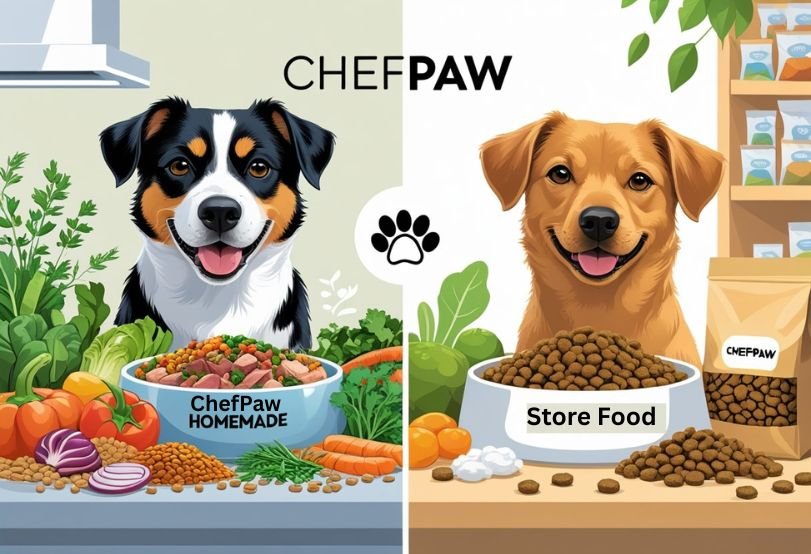
You love a routine as much as your Doxie does — until mealtimes turn into a tug-of-war between your schedule, a sensitive tummy, and that long, delicate back you think about every day 🐾.
Miss dinner by twenty minutes and the pacing begins. Switch to a “new and improved” bag and suddenly stools change, skin flares, or the midnight whining returns 😟.
Most Dachshund parents don’t just want a full bowl — they want predictability: calm digestion, steady weight, and the quiet confidence that today’s meal won’t undo tomorrow’s walk ✅.
Dachshunds don’t slowly reveal diet mistakes — they show them fast: a flare-up, a restless night, or stiffness the next morning ⚠️.
This is why ChefPaw vs Store-Bought Dog Food is not a trendy debate — it’s about which approach makes it easier to keep your Dachshund stable day after day. Store-bought can be simple and consistent 🏷️.
ChefPaw, when used with intention, can turn “guess and hope” into a repeatable system without turning your kitchen into a lab 🍲.
Below, you’ll see where each path shines, where it pushes back, and how to choose the one you can actually maintain — because the best feeding plan for a Dachshund is the one you repeat exactly 🔁.
Key Takeaways ✨
- Routine + precision matter most for Dachshunds — weighed portions and consistent texture help prevent IVDD strain and stomach flare-ups 🧘♂️⚖️
- ChefPaw = full control — you choose ingredients and texture, reducing “mystery ingredient” reactions and weight creep 🍲
- Store-bought = convenience — if your Doxie already does well on a known formula, consistent kibble keeps life simple 🏷️
- Cost evens out over time — ChefPaw has upfront cost but reduces waste; store-bought costs stay monthly and rise with specialty foods 💰
- Pick the plan you can repeat — control-focused homes favor ChefPaw; travel-heavy or chaotic schedules may do better sticking with kibble 🔁
🐾 Free Dachshund Care Guide
Download our free checklist to ensure your Dachshund stays happy, healthy, and well-loved!
Get Your Free Guide 🐶Dachshund-Specific Nutritional Needs: IVDD, Weight & Gut Stability
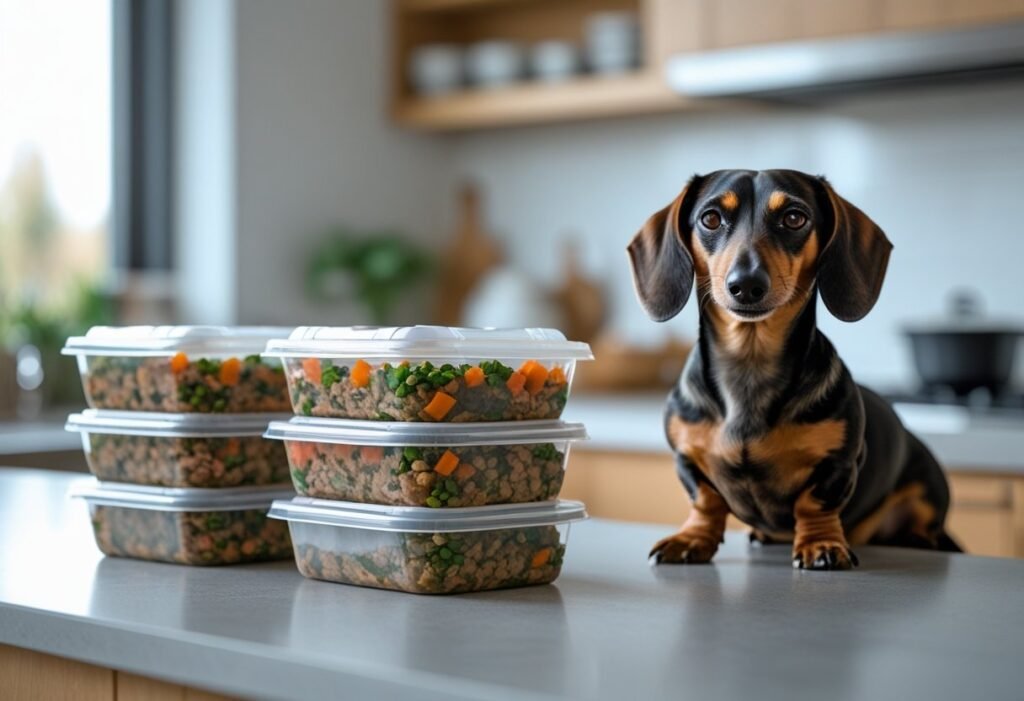
What works for “most dogs” does not automatically work for Dachshunds — their anatomy, metabolism, and anxiety patterns make diet errors far more costly. 🐾
Weight & IVDD Are Directly Linked
Doxies carry a lot of the world on very short legs and very long spines. Even half a kilo of “oops weight” adds strain. Portion drift — eyeballing scoops or assuming “close enough” — is a quiet culprit. Measuring in grams protects the back over time. ⚖️
“Portioning by grams instead of scoops is what changed everything. His weight finally stabilized and the back stiffness faded.” — Mark E., AZ 🐶
Sensitive Stomachs Dislike Surprises
Many Dachshunds react to shifts in ingredients or processing. A new binder, flavoring, or additive can turn today’s bowl into tomorrow’s gas, soft stools, or 2 a.m. restlessness. Predictable inputs and a steady texture prevent that wobble — with Dachshunds, little things are never little. ❗
Routine Calms Behavior
These pattern-loving dogs settle when meals arrive at the same times with the same mouthfeel. The way food sits in the bowl and breaks in the mouth matters more than people think.
Simple truth: predictable food → predictable tummy → predictable day ✅
“We stopped changing brands every month. Once the batch routine stuck, her stools normalized and the midnight whining disappeared.” — Nina R., NJ 🐶
A Dachshund’s body reacts to even small diet changes — choose a feeding method that keeps things calm and predictable. 🐾 Click here to explore ChefPaw →
ChefPaw vs Store-Bought Dog Food: Side-by-Side Comparison
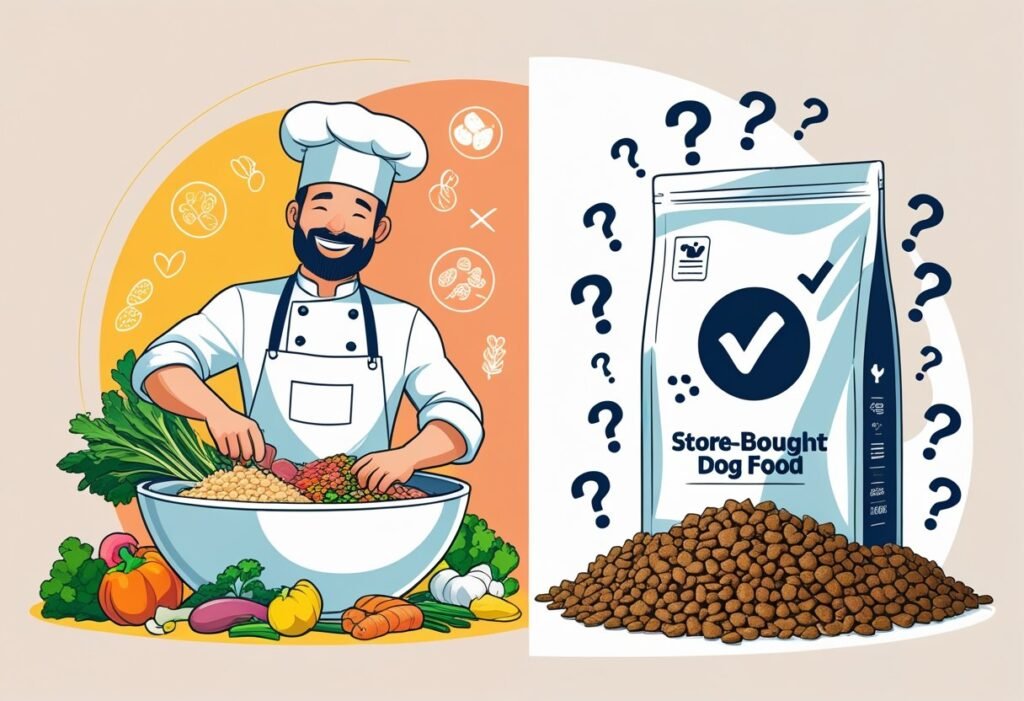
Both paths can “work” — but they work for different homes and different Dachshund temperaments. The aim is not to crown a universal winner, but to see which method your real daily life can sustain.
ChefPaw (Home-Prepared with Appliance)
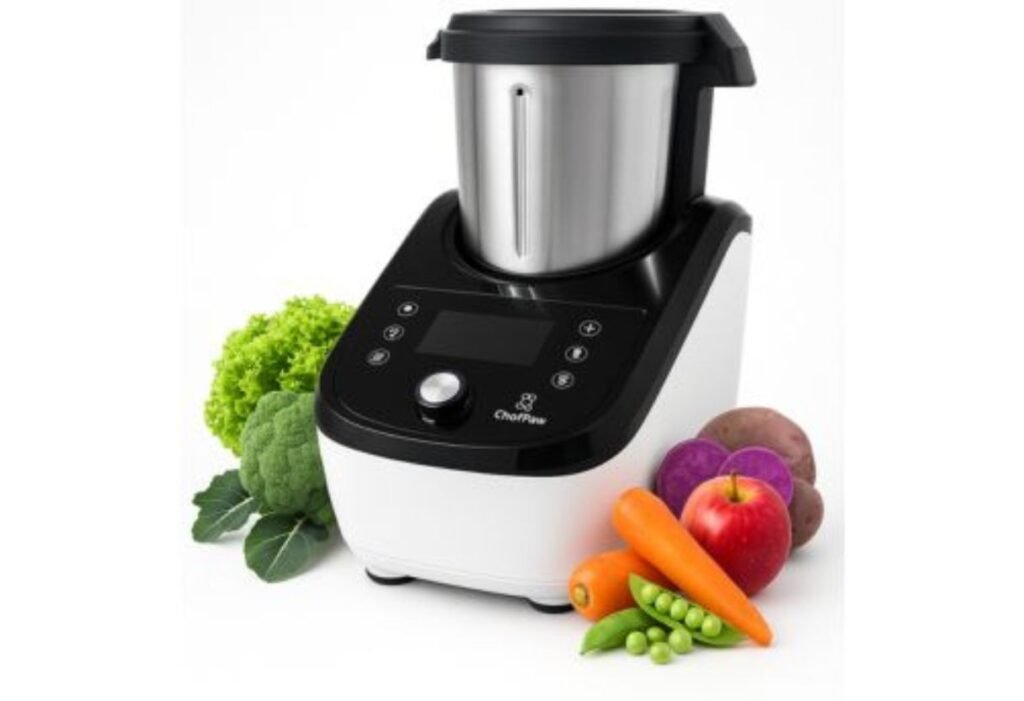
Control & consistency
You choose every ingredient and finish with a uniform, repeatable texture. For Doxies that balk at chunky mixes or react to random fillers, this alone can calm digestion. Because ChefPaw handles weigh → cook → blend → cool in one workflow, batches come out the same every time — ideal for sensitive stomachs.
Portion precision built-in
The built-in scale makes it easy to portion recipes and daily meals by grams, not scoops. That precision supports weight stability — and a stable weight protects a long back from strain.
Time rhythm & hygiene
Most single-Dachshund homes settle into a two-batch weekly rhythm. You still rinse, cool, portion, and store — but once it becomes a system, it feels lighter than daily guesswork.
Caution if you avoid cleaning
If you leave residues, ChefPaw will punish you with odors and stuck film. Routine — not enthusiasm — determines success. 🧼
Where ChefPaw pushes back
There is an upfront cost and a mild learning curve. You must commit to labeling, cooling, and basic storage discipline. For control-first owners, that trade is worth it; for convenience-first owners, it may feel heavy.
“Kibble was fine until it suddenly wasn’t. ChefPaw made it easy to control ingredients without turning my kitchen upside down.” — Carla M., IL 🐶
Practical tip: Freeze portions flat in bags so they thaw evenly. Round containers thaw unevenly and cause half-cold meals — a common trigger for belly upset.
Store-Bought (Kibble / Limited-Ingredient / Plant-Forward)
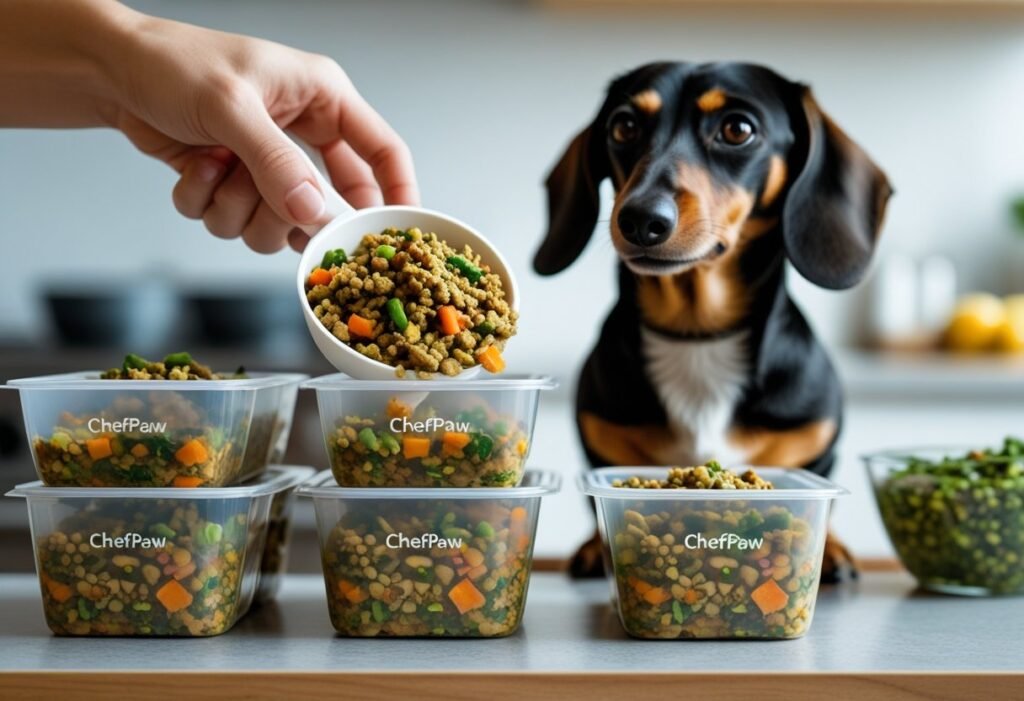
Convenience & routine stability
Bag to bowl — same schedule, minimal cleanup. For busy weeks or pet sitters, nothing beats a zero-prep routine. Ideally still weighed on a kitchen scale to prevent quiet portion creep.
Batch consistency (manufacturer-level)
Reputable brands aim to keep macronutrients stable from bag to bag. For many Dachshunds, that alone keeps stools and energy predictable — if the formula agrees with them.
Ingredient transparency & sensitivity risks
Labels can be vague. Processing aids, palatants, or certain binders may disagree with your dog. Even premium formulas may hide what your Doxie is reacting to, causing slow-burn issues.
Where store-bought pushes back
You trade control for convenience. If sensitivities persist, you end up rotating formulas — and repeated switching destroys the very consistency Dachshunds depend on.
Cost, Effort & Long-Term Sustainability
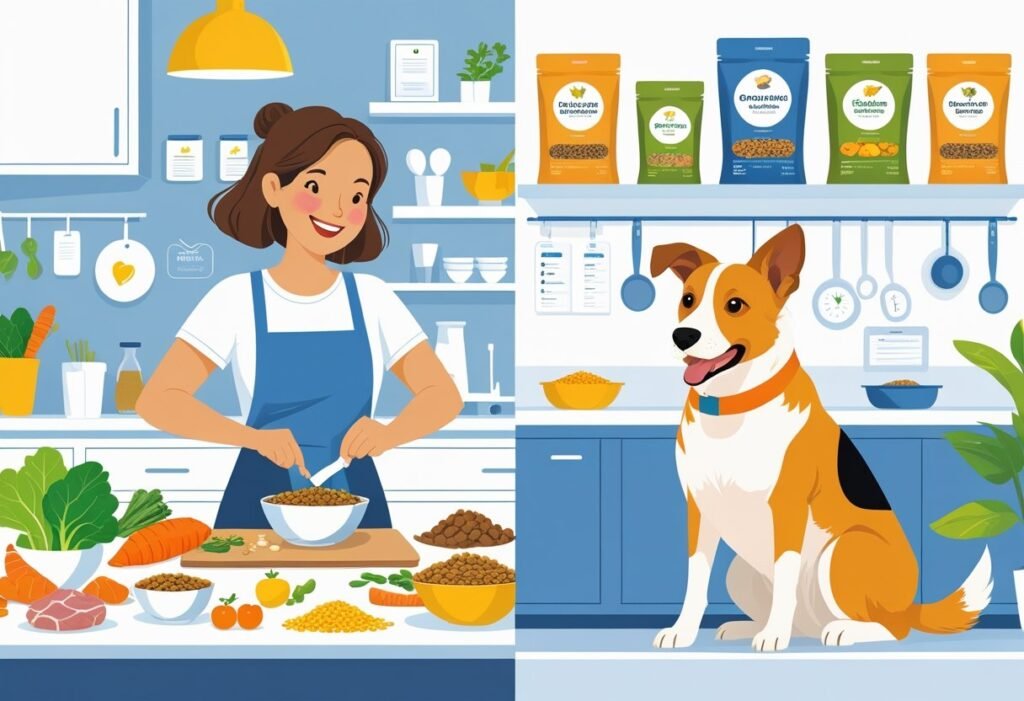
Every feeding method sounds “reasonable” in theory. What matters is what you can do again and again without stress.
Time reality
Store-bought is the daily winner for speed — weigh the portion, pour, done ✅.
ChefPaw concentrates effort into two short batch sessions per week. Most of that time is hands-off, and the payoff is calmer digestion and fewer “what changed?” nights.
Financial reality
Store-bought costs spread monthly; specialty or limited-ingredient formulas can get expensive, and constant “trial bags” waste money.
ChefPaw front-loads cost into the appliance. Ingredient cost depends on how you source. Over months, many families find per-meal costs even out or tilt cheaper when you stop buying “maybe this bag will work” food. 💰
The sustainability factor
The best plan is the one you’ll still be doing three months from now — not the one that looks good for a week.
If batching doesn’t scare you and control matters, ChefPaw is easy to maintain.
If your bandwidth is razor-thin but your dog thrives on a known formula, store-bought may keep the household calmer. 🧘♂️
When ChefPaw Makes More Sense for Your Dachshund
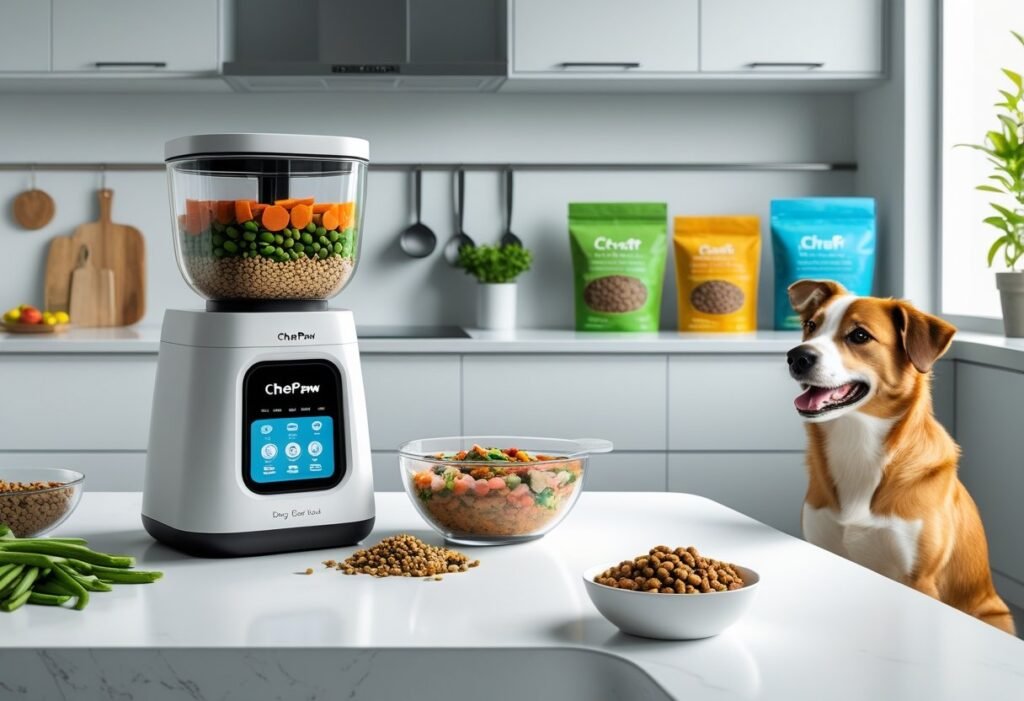
If you recognize yourself or your Doxie in the points below, ChefPaw is usually the calmer and more sustainable path long-term — not because it’s trendy, but because it removes uncertainty and repetition of trial-and-error.
- Recurring GI or skin issues on multiple commercial formulas — you want to remove unknowns and control ingredients directly 🧾
- Weight control is critical (IVDD risk) and you’re willing to weigh batches and meals to keep numbers stable ⚖️
- You care about ingredient ethics & simplicity — plant-forward, clean, low-processing — and want transparency you can’t get from a bag 🌿
- You can sustain two batch sessions per week and basic storage habits (cool, portion, label, rotate) 🧼
- You’re done with the “better kibble” cycle and want to stop troubleshooting every few months 🔁
If even two or three of those points are true in your home, ChefPaw tends to deliver more stability, fewer flare-ups, and a routine you don’t have to re-solve every few weeks.
When Store-Bought Makes More Sense for Your Dachshund
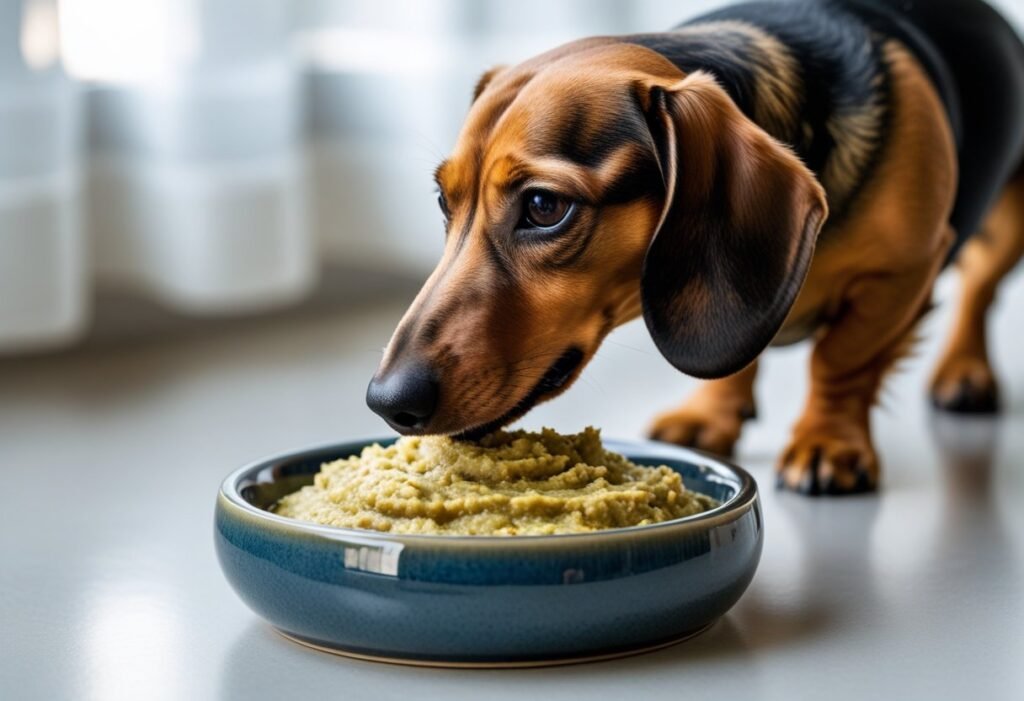
Store-bought isn’t “wrong” — it can be the healthier choice if the reality of your home favors simplicity and stability over control.
- Your Doxie already thrives on a specific formula (stable stools, good coat, steady weight) 🟢
- Your schedule is unpredictable — travel, pet sitters, late shifts — and you need a zero-prep routine anyone can follow 🧳
- Budget predictability matters more than ingredient customization right now 💵
- You still use a scale for portions to protect the spine, even with kibble ⚖️
- You are not ready to commit to batch prep or kitchen hygiene workflows yet 🧼
If these describe you, sticking with a known, well-tolerated commercial formula can maintain peace — forcing a switch when life cannot support it often creates more chaos, not less.
Switching Without GI Chaos: A Dachshund Transition Plan
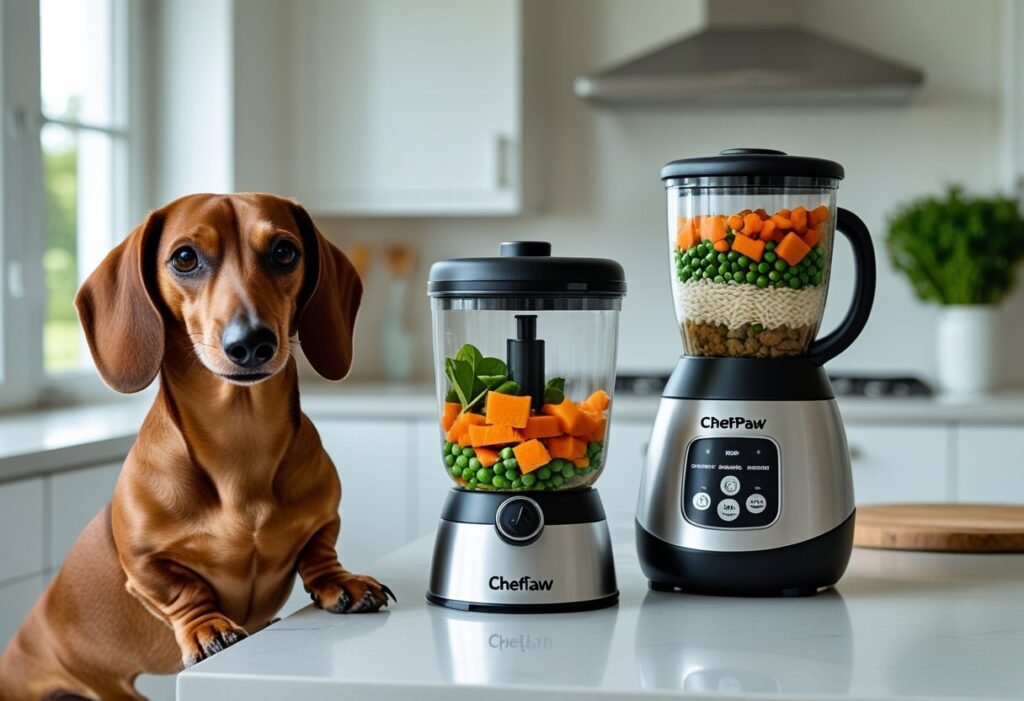
When you switch diets, the goal is not speed — the goal is a stomach that never notices the handover. Slow change is not caution; for Dachshunds, it is protection. 🐾
Transition Schedule
Days 1–3: 75% current food / 25% new food
Days 4–6: 50% / 50%
Days 7–9: 25% / 75%
Day 10+: 100% new food
How to Prevent Flare-Ups During the Switch
Weigh meals in grams.
This prevents “close enough” portions that creep up silently over time. ⚖️
Keep feeding times identical.
Same hours, same pre-meal cues. Dachshunds read routine better than we do. 🕒
Watch the three signals.
Stool quality, appetite/energy, and pre-meal anxiety tell you if the switch is too fast. A tiny backstep in the ratio or texture often fixes it.
Texture matters.
If moving to ChefPaw, start with a smooth, consistent blend. Adjust density later once digestion is stable.
Storage discipline.
Cool quickly, portion into small containers, label dates, and follow fridge/freezer timelines.
For store-bought, seal bags well and keep them dry and cool to preserve freshness.
When the transition is gentle and consistent, you don’t get drama — you get stability, which is the real goal for a long-backed, routine-dependent breed.
If every food change causes stress, switch to a routine you can repeat the same way every week. 🍽️ See how ChefPaw makes that easier →
Final Verdict: The Sustainable Choice
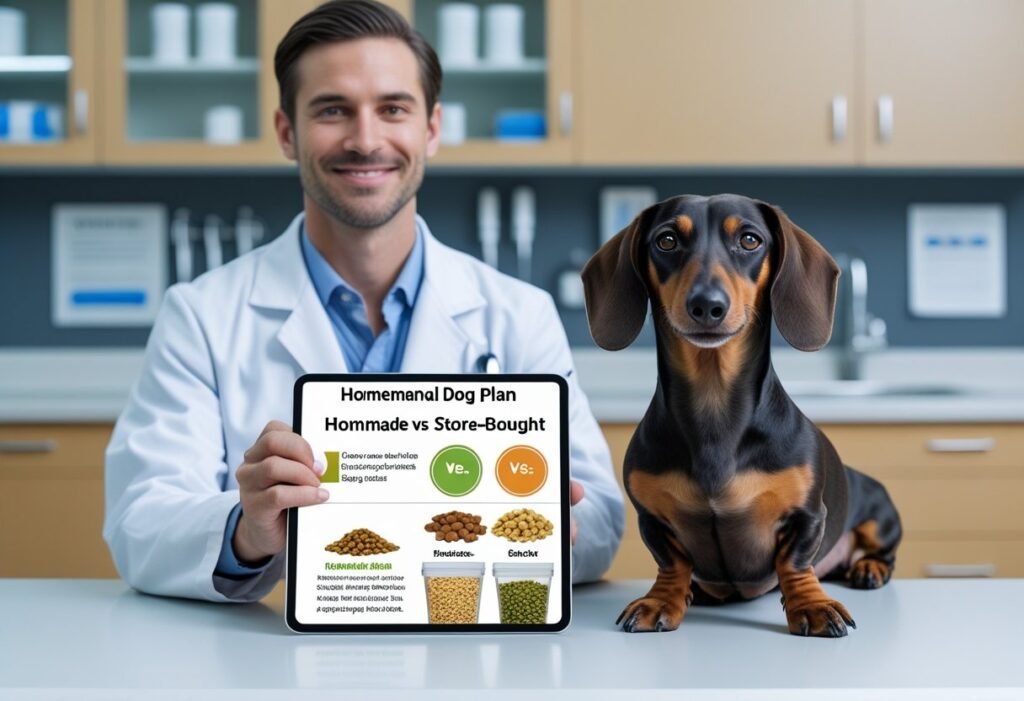
For Dachshunds, consistency is medicine — and two levers deliver it:
ingredient clarity and portion precision. Store-bought provides speed and a broadly consistent formula, which is enough for many dogs. But if you’ve been fighting recurring tummy surprises, skin flickers, or quiet weight creep, ChefPaw’s controlled workflow (weigh → cook → blend → cool) is often the calmer long-term answer. It removes guesswork, delivers repeatable texture, and anchors meals to grams instead of scoops — exactly what a long-backed, pattern-dependent breed needs. 🐾
When the stomach or skin is unpredictable, the method that gives control will always outperform the one that gives convenience.
For the control-first owner:
ChefPaw turns mealtimes into a predictable system you can sustain — with fewer unknowns and steadier weight.
For the stability-first owner:
A well-tolerated commercial formula, weighed precisely and fed on schedule, still delivers a quiet, happy household.
Either way — protect the spine, respect the stomach, and let routine do its quiet work. ✅
Frequently Asked Questions
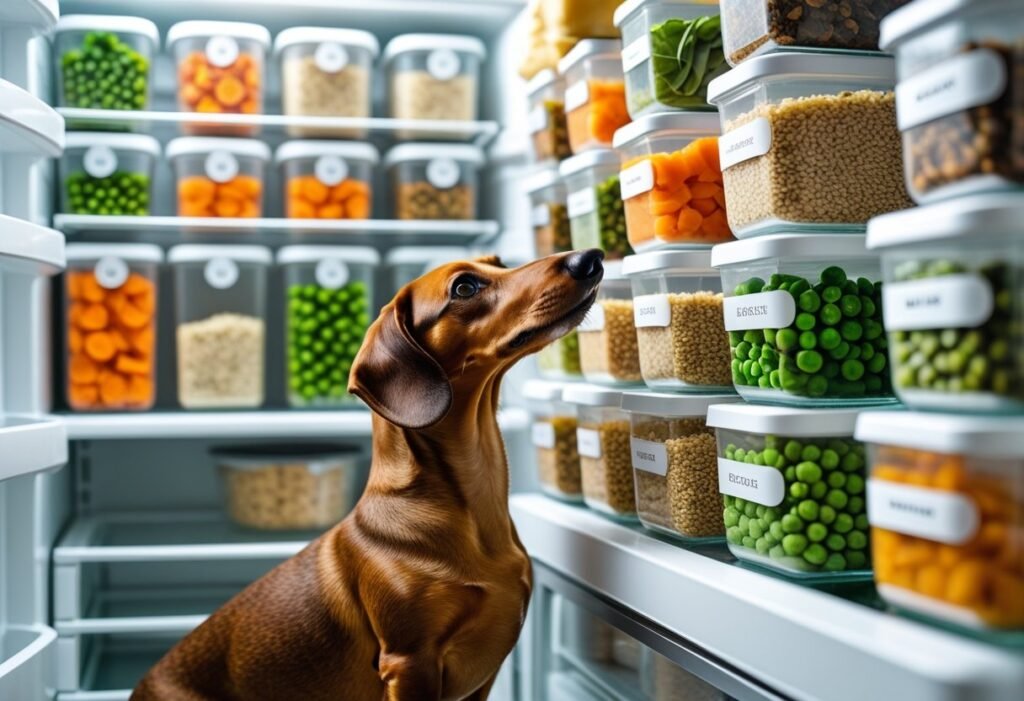
Before choosing between ChefPaw and store-bought, most Dachshund owners run into the same few doubts. These answers are written specifically for long-backed, routine-dependent dogs — not generic pet advice.
Is ChefPaw fully hands-off?
Not entirely. It automates the cook/blend workflow, but you still measure ingredients, cool and portion batches, and keep parts clean. Most owners fall into a simple two-batch weekly routine once the habit forms.
Can home-prepared meals meet veterinary guidance?
Yes — when you use balanced recipes and portion by weight. For medical conditions or supplements, coordinate with your vet. The advantage of home prep is adjustability without mystery ingredients.
How do I portion correctly to protect against IVDD risk?
Use a kitchen scale for both recipe inputs and daily servings. Re-check weight weekly and adjust by 5–10% based on waist tuck, stool quality, and energy. Multiple smaller meals (3–4) often reduce gulping and begging. ⚖️
What if my Dachshund gets gassy or anxious during a switch?
Slow the transition and match textures. Keep feeding times identical and avoid rich toppers for the first two weeks. If using ChefPaw, keep batches uniform; with store-bought, avoid hopping between formulas.
How long can ChefPaw batches be stored safely?
Refrigerate short-term portions and freeze the rest promptly. Use small containers for faster cooling and even thawing; always label dates. For store-bought, keep bags sealed, dry, and away from heat to maintain freshness.
My dog does fine on kibble — is there any reason to change?
If your Doxie is thriving — truly thriving, not “mostly fine except random flare-ups” — then consistency is already working. There is no obligation to switch. The case for ChefPaw grows when you want tighter ingredient control, smoother texture, or you’ve had recurring problems on commercial food.
Can I keep things plant-forward or avoid certain ingredients with ChefPaw?
Yes — that is exactly what control enables. You can prioritize simple, ethical, plant-forward recipes and exclude any known triggers, while still meeting nutritional targets under veterinary guidance. 🌿