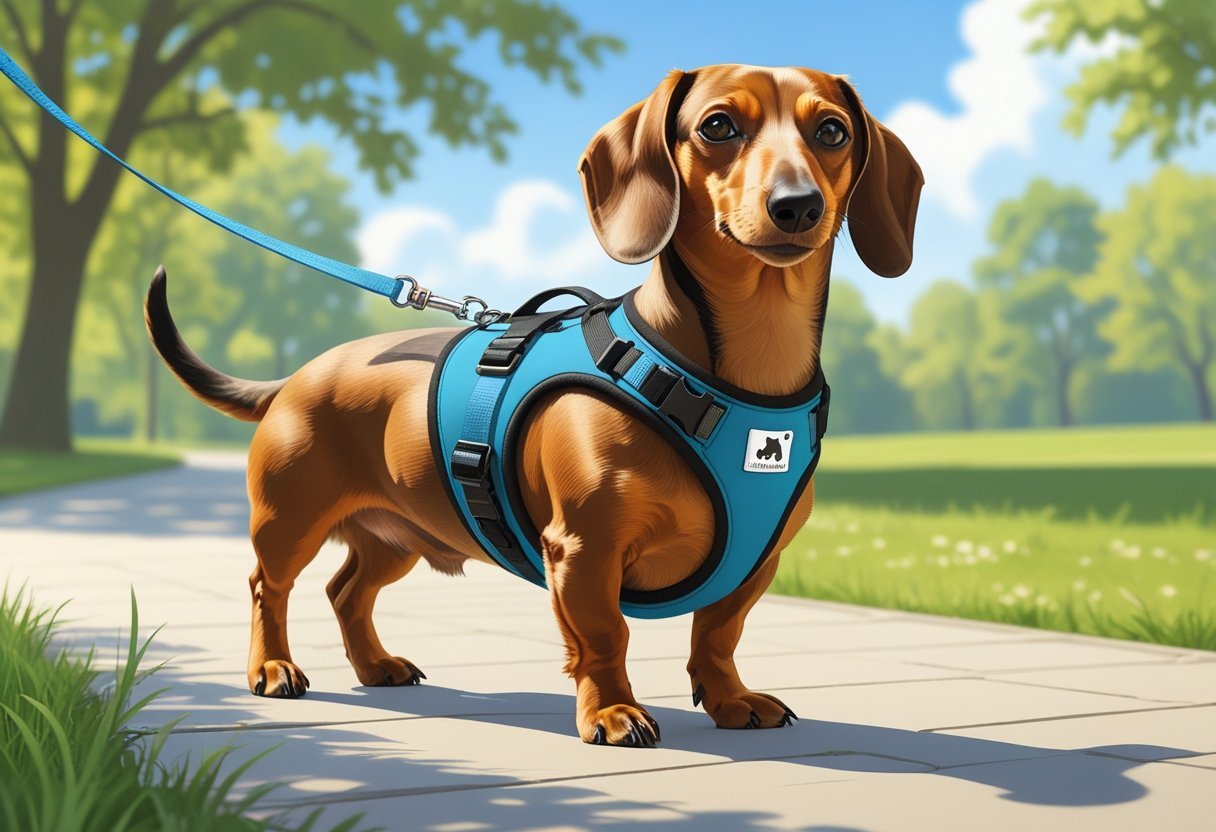
Living with a Dachshund often means being extra mindful — but when IVDD becomes a concern, that awareness can quickly turn into constant worry. Simple activities like going for a walk may no longer feel routine. Many owners find themselves questioning every step, every tug on the leash, and every piece of gear they use.
The fear isn’t just about exercise — it’s about accidentally causing pain or making a fragile situation worse. Some Dachshund parents respond by avoiding walks altogether, while others continue walking but feel unsure whether they’re doing it safely. That uncertainty can be exhausting, especially when online advice feels conflicting or overwhelming.
This is where choosing the right walking setup starts to matter more than ever. IVDD safe harnesses for dachshunds are not about restricting movement or wrapping your dog in fear — they’re about supporting the spine while allowing controlled, confident activity. When walking feels safer, both you and your Dachshund relax.
This guide is designed to slow things down and provide clarity. Instead of throwing endless options at you, it focuses on how experienced Dachshund owners think about walking safely with IVDD in mind — so daily routines feel manageable again, not stressful. 🐾
Understanding IVDD: Why Dachshunds Are at Risk
Dachshunds face unique health challenges because of their long backs and short legs. Their build puts them at higher risk for back problems, especially IVDD.
What Is Intervertebral Disc Disease (IVDD)?
IVDD happens when the cushioning discs between the vertebrae in the spine bulge or rupture. These discs usually act as shock absorbers for your dog’s back.
When damaged, the discs can press on the spinal cord and nearby nerves. This pressure leads to pain, nerve damage, and sometimes even paralysis.
IVDD comes in different severity levels, from mild discomfort to total loss of mobility in the back legs.
Early signs of IVDD include:
- Reluctance to jump or climb stairs
- Crying out in pain when touched
- Hunched back or tense abdomen
- Changes in walking pattern
- Reduced activity levels
Why Dachshunds Are Prone to IVDD
Dachshunds have a genetic predisposition to IVDD. Their chondrodystrophic traits mean their cartilage develops differently, which affects disc health.
Their long backs and short legs add extra stress to the spine. Studies show that 1 in 4 Dachshunds will deal with some form of IVDD during their life.
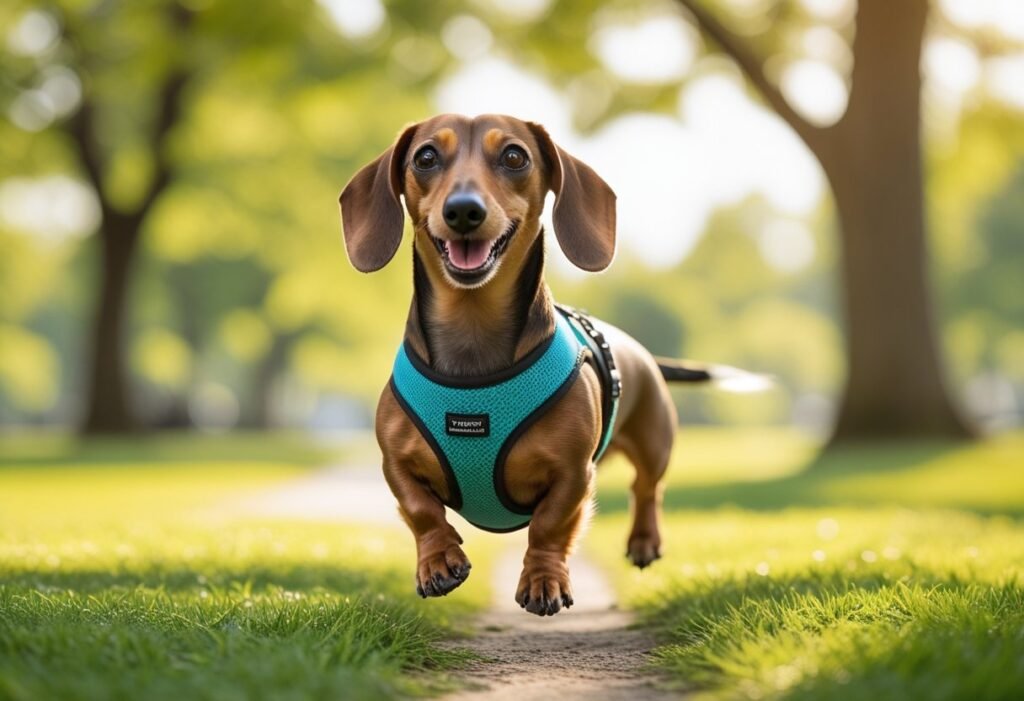
Weight matters too. Overweight Dachshunds have an even higher risk, since extra pounds put more pressure on their already vulnerable backs.
Age plays a role as well. Most IVDD cases show up between 4 and 8 years old, but younger dogs aren’t immune.
Impact of Walks on Dachshund Back Health
Daily walks are important for your Dachshund’s health, but you need to be careful. Improper walking can stress their backs and trigger IVDD.
Sudden moves like jumping, running up stairs, or sharp turns put dangerous pressure on spinal discs. Retractable leashes that let your dog dart forward can cause harmful jerking motions.
Short, frequent walks work better than rare long ones. Aim for 15–20 minute sessions instead of hour-long hikes. 🚶
Surface matters: Try to walk your Dachshund on soft, even ground. Avoid slippery floors and rough terrain that could make your dog twist or jerk their back.
Why IVDD Safe Harnesses for Dachshunds Matter
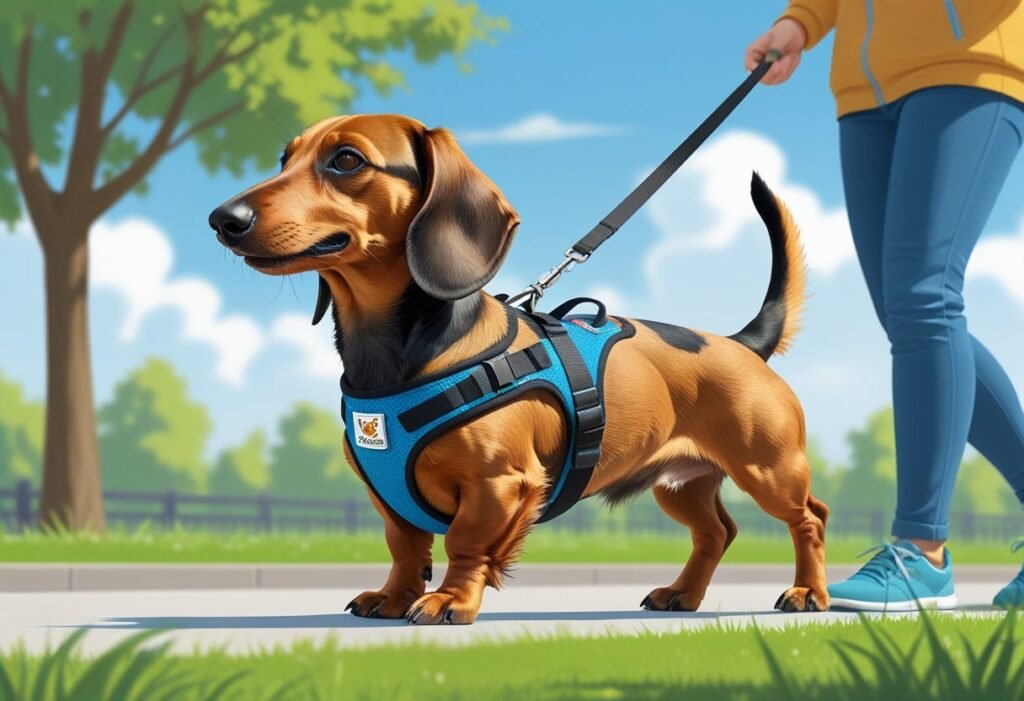
Dachshunds face unique spinal challenges because of their long backs and short legs. They need proper support during walks to prevent injuries and protect their spines.
Risks of Standard Collars and Harnesses
Standard collars create dangerous pulling pressure on a dachshund’s neck and spine. That pressure travels straight to their delicate vertebrae and can trigger IVDD episodes.
Some poorly designed harnesses — including certain step-in styles — can still place pressure too close to the spine if they lack proper chest support. This is especially risky for Dachshunds, whose backs are already under strain.
When your dachshund pulls with the wrong gear, they risk disc compression and herniation. Even a sudden dash after a squirrel can cause damage if the harness isn’t right.
Warning Signs of Improper Equipment: 🚨
- Your dachshund coughs when pulling on a collar
- Visible pressure points on their chest or back
- Difficulty breathing during walks
- Reluctance to walk or discomfort when wearing the harness
How IVDD-Safe Harnesses Protect the Spine
IVDD-safe harnesses spread pressure evenly across the chest, not the back. This design keeps force away from the vulnerable vertebrae.
The best IVDD harnesses use padded chest plates to spread tension over a wider area. Look for ones with no-pull front attachments to discourage lunging.
Y-shaped fronts avoid restricting the shoulders but still offer stability. That way, your dachshund can move naturally without risking their spine.
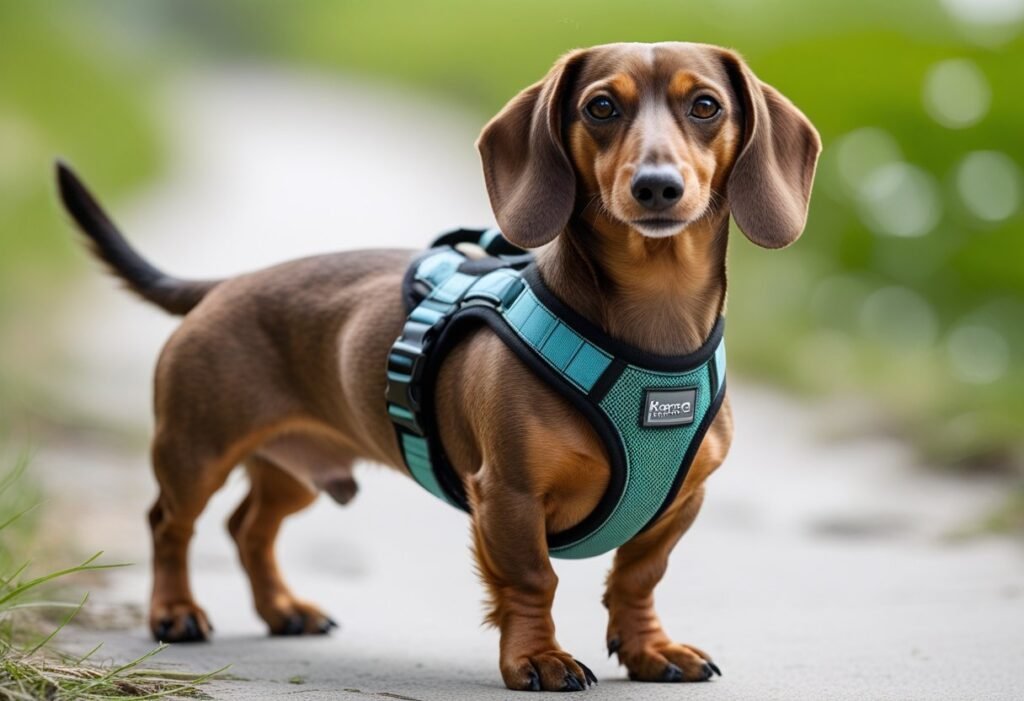
Quality harnesses often have lift-assist handles. You can help your dachshund up stairs or onto furniture, which prevents those jarring vertical impacts that can trigger disc problems.
Support straps should run beside the spine, not across it, to keep everything lined up during activity.
Veterinarian Recommendations
Veterinarians warn against using retractable leashes with any harness. The sudden stopping force can hurt even a well-supported dachshund’s back.
Some veterinary clinics recommend harness designs that have been tested for spinal safety and stability in long-backed breeds.
Specialty vet clinics sometimes suggest specific brands tested for dachshund safety. Many vets recommend the PetSafe Sure-Fit or Dachshund Deluxe harnesses for their spine-friendly designs.
Your vet might suggest custom-fitted harnesses if your dachshund already has IVDD issues. Those offer maximum support during rehab.
It’s smart to ask your vet to check harness fit during regular check-ups, especially as your dachshund gets older or gains weight.
How Most Dachshund Owners Approach IVDD Care
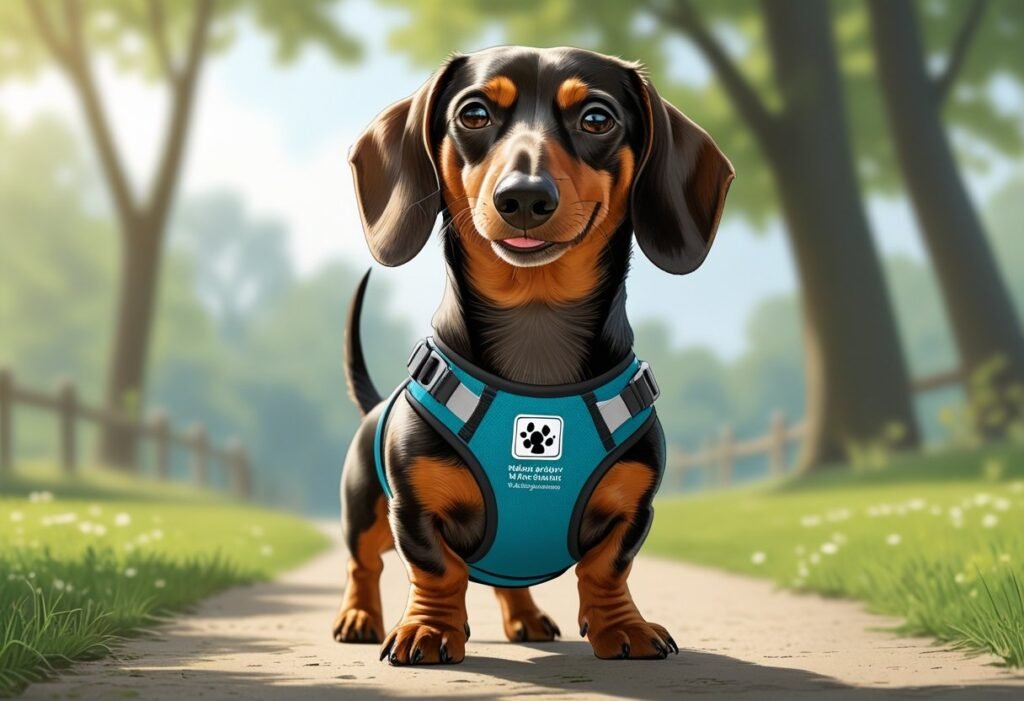
Experienced Dachshund owners tend to shift their mindset once IVDD becomes part of daily life. Instead of trying to eliminate all movement or constantly worrying about “doing something wrong,” they focus on making everyday activities safer and more predictable.
Most start by prioritizing spinal safety over intensity. Walks don’t need to be long or ambitious — they need to be controlled, steady, and free from sudden strain. Reducing sharp pulls, jerks, and awkward movements often matters more than cutting activity entirely.
There’s also a growing understanding that guided support is better than guessing. Rather than relying on trial and error, owners look for tools and routines that reduce pressure on the spine while still allowing their Dachshund to move comfortably. This helps avoid overprotecting the dog on one extreme, or unintentionally pushing them too hard on the other.
Finally, experienced owners make changes one step at a time. They don’t overhaul everything overnight. Small, thoughtful adjustments — especially around daily walks — tend to create the biggest improvement in confidence, comfort, and long-term stability for dogs living with IVDD.
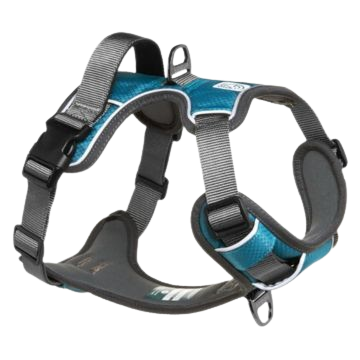
🐕🦺 Embark Pet Adventure Harness – Gentle Support for IVDD-Prone Dachshunds
Give your Dachshund the spine-safe comfort they deserve with the Embark Adventure Harness. Designed to reduce neck strain and evenly distribute pressure across the chest, it’s a must-have for dogs prone to IVDD. Lightweight yet durable — perfect for both everyday walks and active adventures. 🌿
- ✅ IVDD-safe design prevents pressure on the spine or neck
- ✅ Padded and adjustable for a snug, secure fit
- ✅ Reflective stitching for visibility and safety
- ✅ Made with weather-resistant, durable materials
🐾 For calmer Dachshunds who don’t pull much:
Some owners prefer a simple step-in harness for short, controlled walks where extra structure feels unnecessary.
→ View Coastal Pet Step-In Harness
🩺 For long-term IVDD peace of mind:
Many Dachshund owners also plan ahead with insurance, so unexpected IVDD treatment decisions feel less overwhelming.
→ Compare IVDD-friendly pet insurance plans
Key Features of the Best Dachshund Back Support Harness
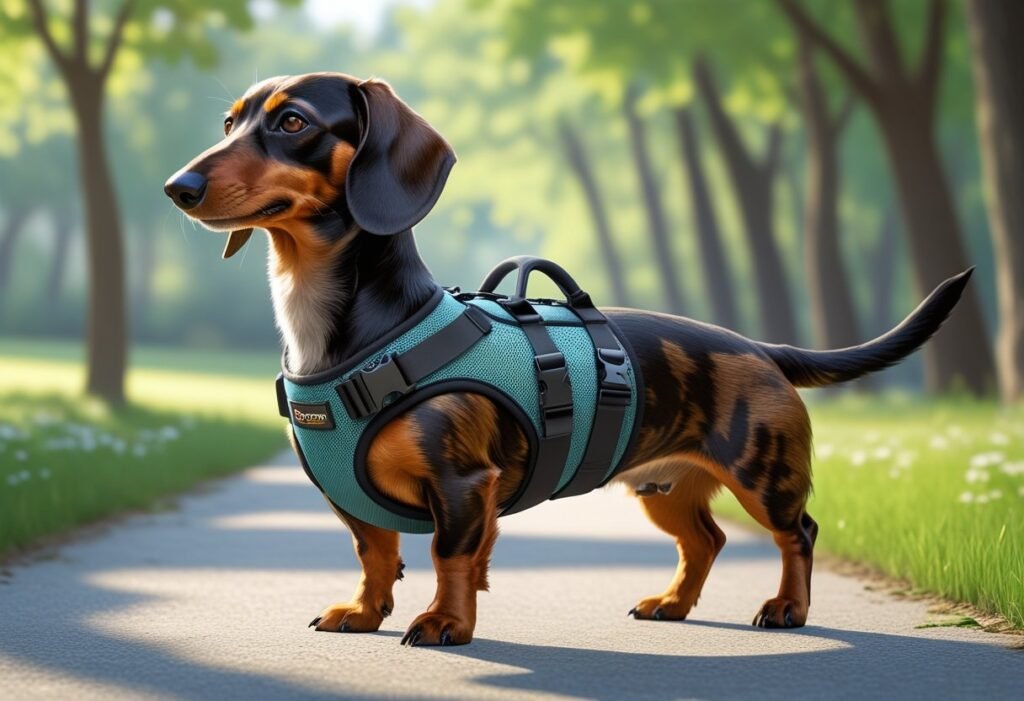
Picking a back support harness for your dachshund? There are a few design details that really matter for protecting their spine and keeping them comfy on walks.
Spinal Support and Pressure Distribution
The top feature in a dachshund back support harness is proper spinal alignment protection. Look for harnesses that help keep the spine neutral by controlling movement through the chest and shoulders, rather than placing pressure directly on the back.
Good harnesses spread pressure across your dog’s chest, not the neck or spine. That helps avoid strain on your dachshund’s delicate back.
Many top-rated options have a semi-rigid support panel running the length of your dog’s back. It adds stability but still lets them move naturally.
The best harnesses use a Y-shaped chest piece instead of straps that cross the throat. That design eases pressure on the trachea and supports the sternum.
Adjustable and Secure Fit
A harness needs to fit well for real back protection. Look for several adjustment points—usually at the neck, chest, and girth.
Measurements matter a lot with dachshunds. The best harnesses offer at least three or four adjustable straps to fit their long-bodied shape.
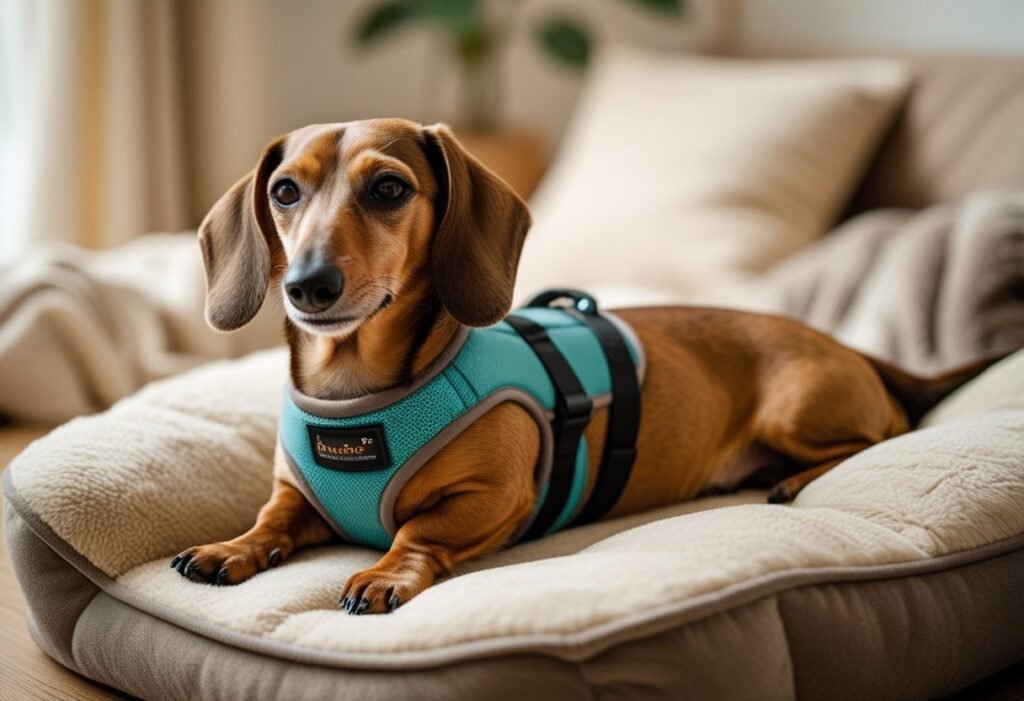
Quick-release buckles make life easier, but they should be sturdy and keep the harness secure. Nobody wants a wiggly dachshund slipping out mid-walk.
Non-slip materials on the straps help prevent shifting during activity. That stability keeps back support where it should be.
Multiple leash attachment points give you more control and help maintain good spinal alignment on walks.
Comfort and Material Considerations
Breathable, lightweight materials prevent overheating and chafing. Dachshunds are low to the ground and can get hot fast, so it matters.
Soft padding in key spots—chest, underarms, and along the spine—keeps things comfortable even on longer outings.
Weather counts too. Go for quick-drying fabrics in rainy areas or lighter, ventilated options for hot climates.
Reflective stitching or strips help with visibility during evening walks. It’s a small detail, but it adds safety.
Machine-washable harnesses are a lifesaver. Dachshunds love to get dirty, and their harnesses pick up all sorts of stuff from the ground.
Choosing the Right IVDD-Safe Harness for Your Dachshund
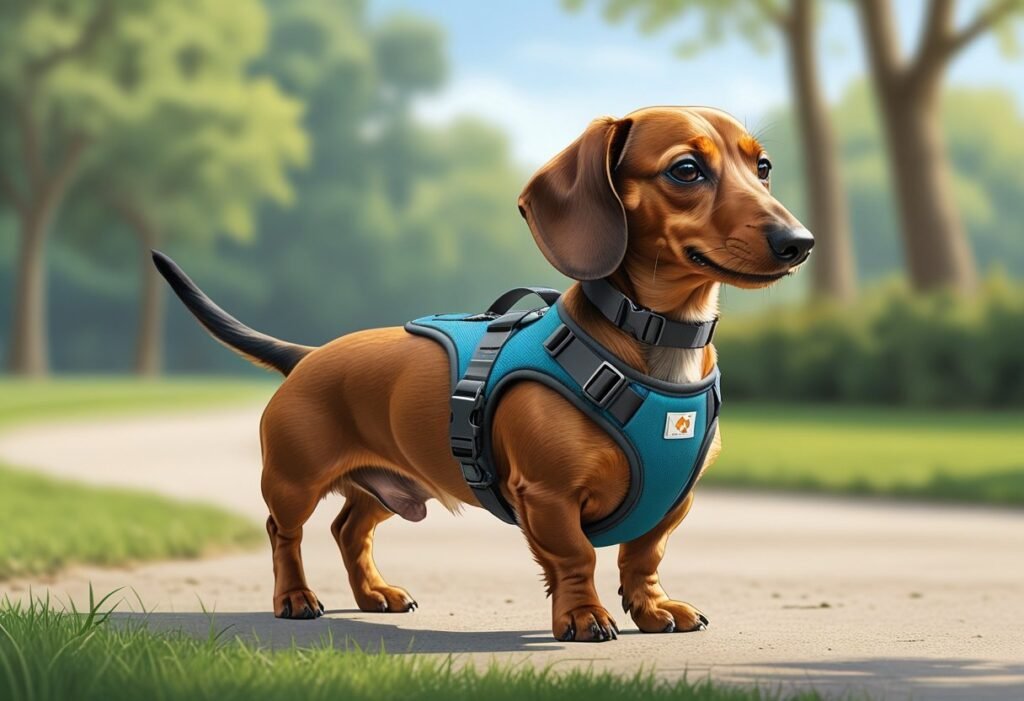
Finding the right harness for your dachshund is key for preventing back injuries. The best harnesses spread pressure evenly across the chest, not the neck or spine.
Sizing and Measuring for Optimal Fit
Measuring your dachshund correctly is a must before buying a harness. Use a soft tape to measure your dog’s chest at its widest point, usually just behind the front legs.
Also, measure the neck and the length from neck to base of tail. Most IVDD-safe harnesses come in sizes from XS to L. Dachshunds usually fit XS to M, depending on their build and weight.
Always check the manufacturer’s sizing chart, since sizing can vary between brands. A good fit means:
- You can slide two fingers between harness and body
- No rubbing around the legs or armpits
- The harness stays put when your dog moves
Too tight: restricts movement and breathing.
Too loose: lets your dog slip out or causes chafing.
Types of IVDD-Safe Harnesses Available
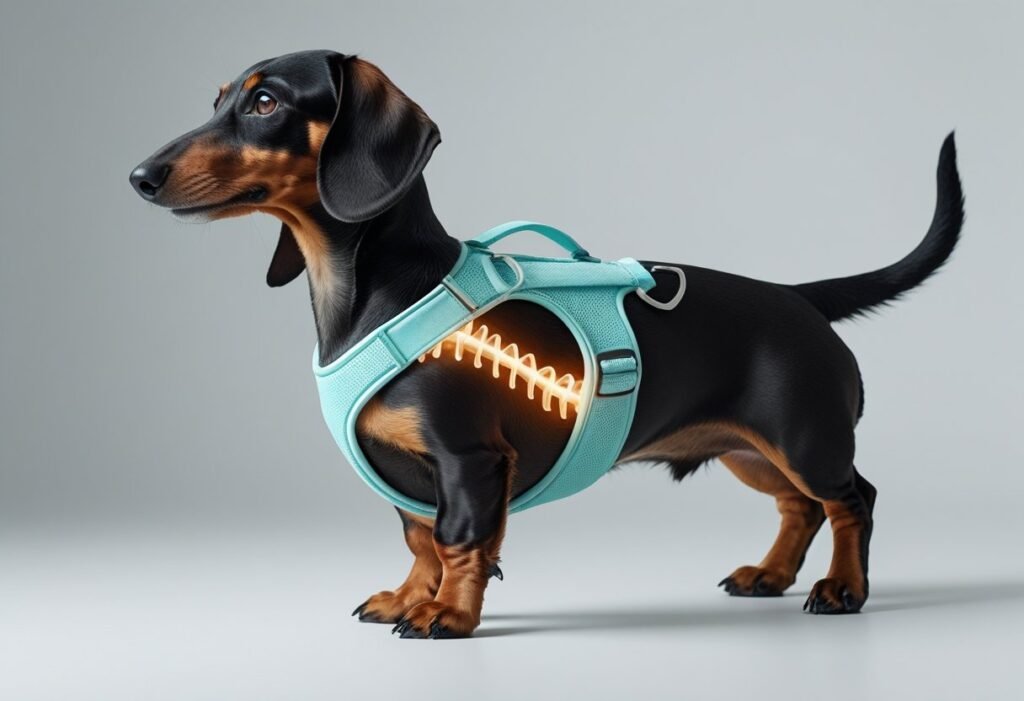
There are a few harness styles that can really help protect your dachshund’s back.
Y-shaped harnesses: These spread pressure over the chest and shoulders, keeping weight clear of the spine. They wrap around the neck and chest in a Y shape.
H-shaped harnesses: Straps form an H pattern, giving even weight distribution and stability. They don’t squeeze the neck.
Full-body support harnesses: These offer the most coverage. Fabric panels support the chest, belly, and sometimes part of the back.
Go for harnesses with padded chest plates and wide straps to spread pressure. Skip any that have straps crossing right over the spine or neck.
When to Transition from Collar to Harness
In general, it’s best to switch your dachshund to a harness as soon as possible—ideally when they’re still a puppy. That way, you set good habits before any back issues start.
If your dachshund is an adult and you spot signs of back discomfort, like hesitating to jump or tackle stairs, make the change right away. 🪜 Even healthy adults can benefit from harnesses to help avoid problems down the road.
If your dog already has IVDD, a harness isn’t optional anymore. Talk to your vet for harness advice tailored to your dog’s needs.
It’s fine to leave a collar on for ID tags, but never use it for leash walks with a dachshund.
How to Properly Use and Maintain Dachshund Harnesses
Using a harness the right way is key for your dachshund’s back health and comfort. Fitting, walking, and maintaining the harness the right way will protect your dog and help the harness last longer.
Correct Way to Put on and Remove Harness
Put the harness on when your dachshund is calm and standing. Don’t ever lift your dog by the harness straps—it’s rough on their spine.
For most Y-shaped harnesses, slip it over the head first, then fasten it around the chest. Step-in types need your dachshund’s front legs through the openings before you buckle up along the back.
Proper fit check: Try to fit two fingers between the harness and your dog’s body. It should feel snug, not tight. Adjust the straps on both sides so everything’s even.
To take the harness off, unbuckle it all the way before lifting it off. That way, you avoid twisting or pulling your dog’s back.
Daily Habits for Back Protection on Walks
Use gentle, steady pressure on the leash. Avoid yanking or sudden pulls—they send force straight to your dachshund’s spine.
Walking technique matters: Go for moderate-paced, short walks more often rather than one big trek. It’s less tiring and helps keep posture in check.
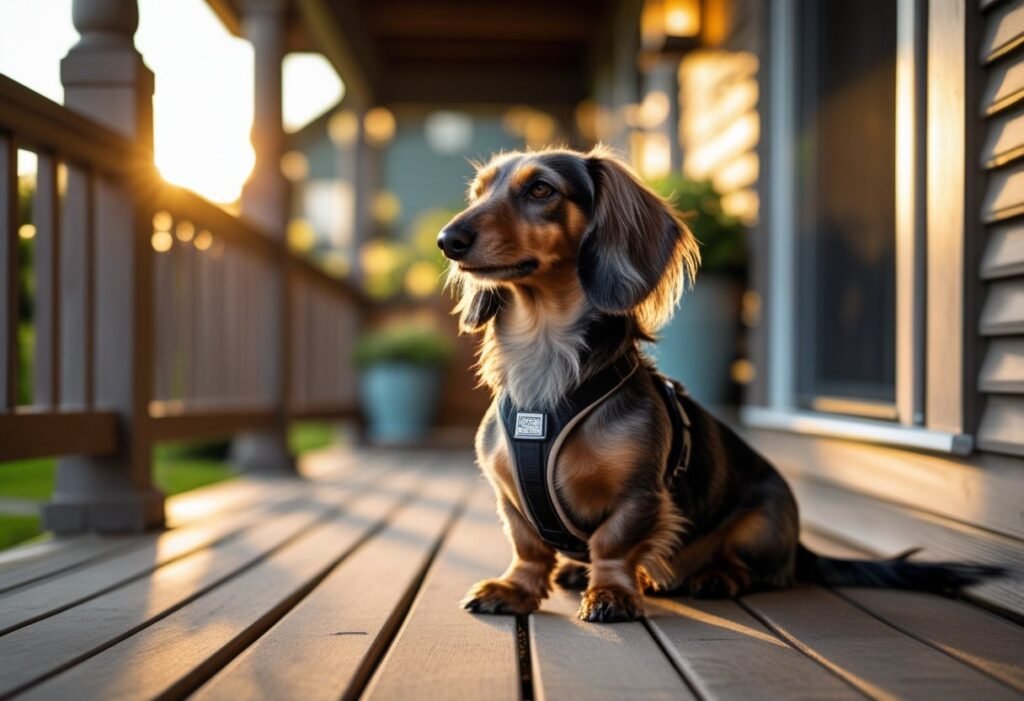
Don’t let your dachshund leap up curbs or stairs. 🪜 If you can, lift them—supporting both chest and back legs—or stick to flat routes.
Watch how your dog moves. If you see dragging or awkward walking, the harness might need an adjustment, or maybe your dog just needs a break.
Try a double-ended leash for more control. It helps guide your dog without putting pressure on their back or neck.
Cleaning and Harness Care Tips
Wash fabric harnesses every couple of weeks, or sooner if they get dirty. Most can go in the washing machine with cold water and gentle detergent, but always check the label.
Quick cleaning method: In between washes, wipe down the harness with a damp cloth. Let it air dry fully before using it again.
Check all buckles, straps, and stitching often for wear and tear. Pay extra attention to where the leash clips on—those spots take the most stress.
Store the harness flat or hang it up in a dry spot, away from sunlight. Sun can break down the material faster than you’d think.
Swap out your harness if you notice fraying, worn padding, or loose stitches. With regular use, most last about a year or two. Once it’s compromised, it can’t do its job.
Additional Tips for Protecting Dachshund Backs During Walks
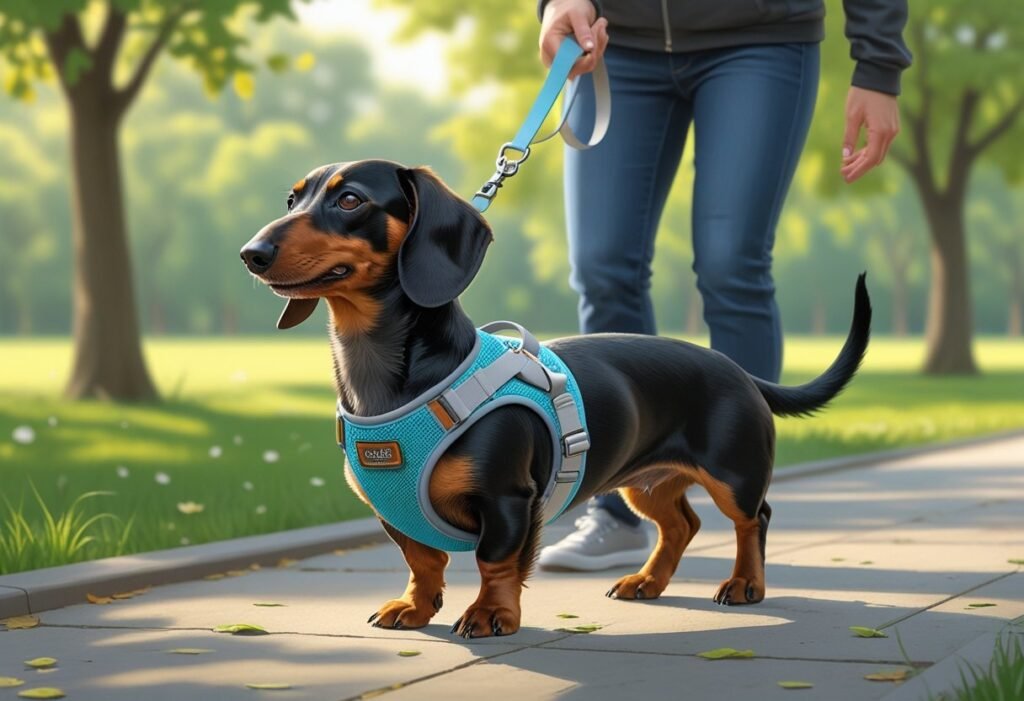
Picking the right harness is only part of the story. How you walk your dachshund and the amount of exercise they get matter just as much for back safety.
Walking techniques and habits can make a surprising difference in preventing injuries.
Safe Walking Techniques
Keep your dachshund on a short leash during walks. It gives you more control and stops sudden lunges or twists.
Steer clear of retractable leashes. They let your dog pick up speed and then stop abruptly, which isn’t great for their back.
When you cross streets or deal with obstacles, lift your dachshund carefully. One hand goes under the chest, the other supports the hindquarters to keep their spine straight.
Teach your dog to walk at a steady pace. Quick turns or sudden moves can put extra stress on their back.
A lightweight, padded handle on your leash can make walks easier on your hands and give you better control.
Exercise Guidelines for IVDD Prevention
Stick with short, frequent walks. Two or three 15-minute strolls beat one long haul for a dachshund.
Avoid high-impact stuff like jumping or climbing stairs. If stairs can’t be avoided, carry your dachshund or install ramps at home.
Gentle exercises like supervised swimming are great. Water lets your dog move with resistance but without pressure on the spine.
Watch for signs of tiredness during walks. Heavy panting, slowing down, or just sitting means it’s time for a break.
Keep your dachshund at a healthy weight. Extra pounds put more pressure on their back. If weight’s an issue, ask your vet for a good diet plan.
🐾 Don’t Miss Out!
Download our free Dachshund care guide to keep your furry friend happy and healthy.
Get Your Free Guide 🐶Frequently Asked Questions
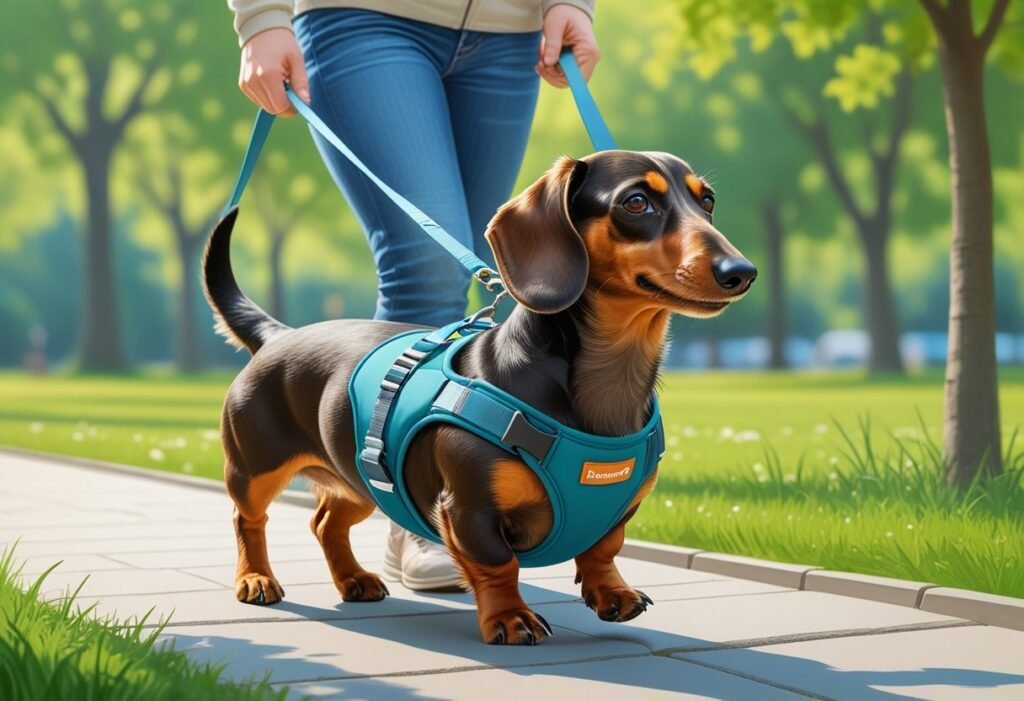
Dachshund owners often worry about keeping their dogs safe from back injuries. Here are some common questions about harnesses and how they protect your pup’s spine.
What type of harness is safest for Dachshunds prone to IVDD?
Harnesses designed for IVDD-prone Dachshunds focus on chest-based pressure distribution, stable strap placement, and controlled movement. Designs that avoid neck strain, reduce pulling force, and help keep the spine neutral are generally considered safer than collars or poorly structured harnesses. Fit, walking style, and consistency matter just as much as the harness design itself.
How can a harness help prevent IVDD in Dachshunds during walks?
A well-designed harness stops your dachshund from pulling, which can otherwise strain the spine. By curbing pulling, you take the pressure off their intervertebral discs. Chest-attachment harnesses turn your dog sideways when they pull, so their back doesn’t take the hit. This redirection keeps the spine safer from sharp jerks. Full-body harnesses spread your dog’s weight over the chest and belly. That balanced load helps avoid pressure points that could compress their discs.
What features matter most for Dachshunds with a history of IVDD?
For Dachshunds with a history of IVDD, harness features that limit sudden movement, reduce twisting, and support controlled mobility are especially important. Chest support, balanced strap placement, and the ability to assist movement without lifting by the spine all help reduce strain during recovery or daily walks. In more advanced cases, veterinarians may recommend additional support based on the dog’s condition.
Are there specific harness features that benefit Dachshunds with back issues?
Padded chest plates help spread out the pulling force over the strongest part of your dog’s body. This design keeps pressure away from those more sensitive spots. Y-shaped fronts follow your Dachshund’s chest shape. That way, the harness doesn’t creep up toward the throat, which can be a real problem for these little guys. Adjustable straps are a must for a snug, comfortable fit. If the harness is too tight or loose, it can slip or rub and just add more stress on your dog’s back.
What should I look for in a back brace for a Dachshund suffering from IVDD?
Pick a back brace with semi-rigid support panels that help stop twisting. The panels should run from the shoulders all the way to the tail for full support. It’s best if the brace feels lightweight, even with all that structure. Heavy braces can tire your Dachshund out fast and might make them want to move even less—definitely not ideal for recovery. Breathable, washable materials go a long way in keeping your dog’s skin happy. Since your pup might need to wear the brace for hours, comfort really matters.
Can a well-designed harness reduce the risk of a Dachshund developing IVDD?
Yes, the right harness can really help lower IVDD risk factors. When you use a harness, you prevent a lot of jumping and pulling—two things that often lead to disc compression. Research shows Dachshunds in a supportive harness tend to have fewer back injuries. Taking pressure off their spine during daily walks seems to make a difference. Still, harnesses aren’t a magic fix on their own. Pairing a good harness with careful lifting, keeping your pup at a healthy weight, and limiting stairs gives your Dachshund the best shot at avoiding IVDD.