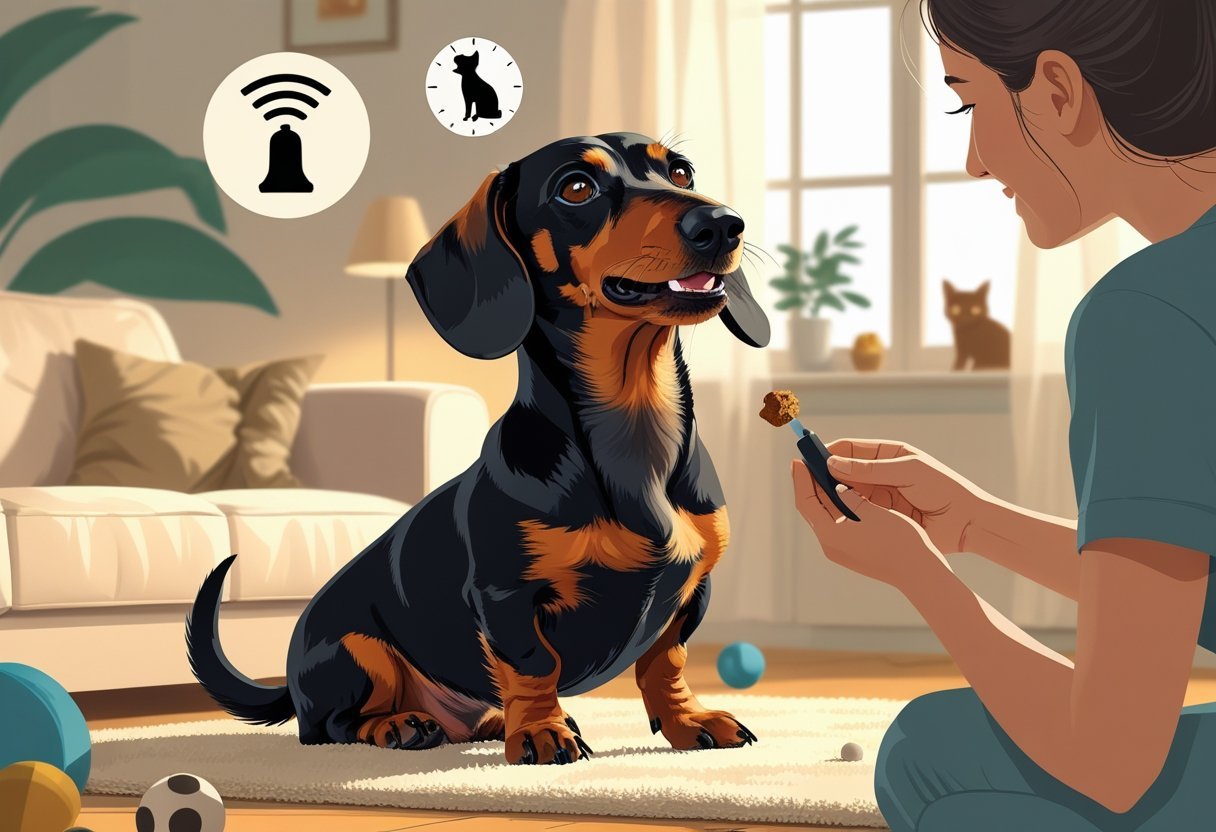
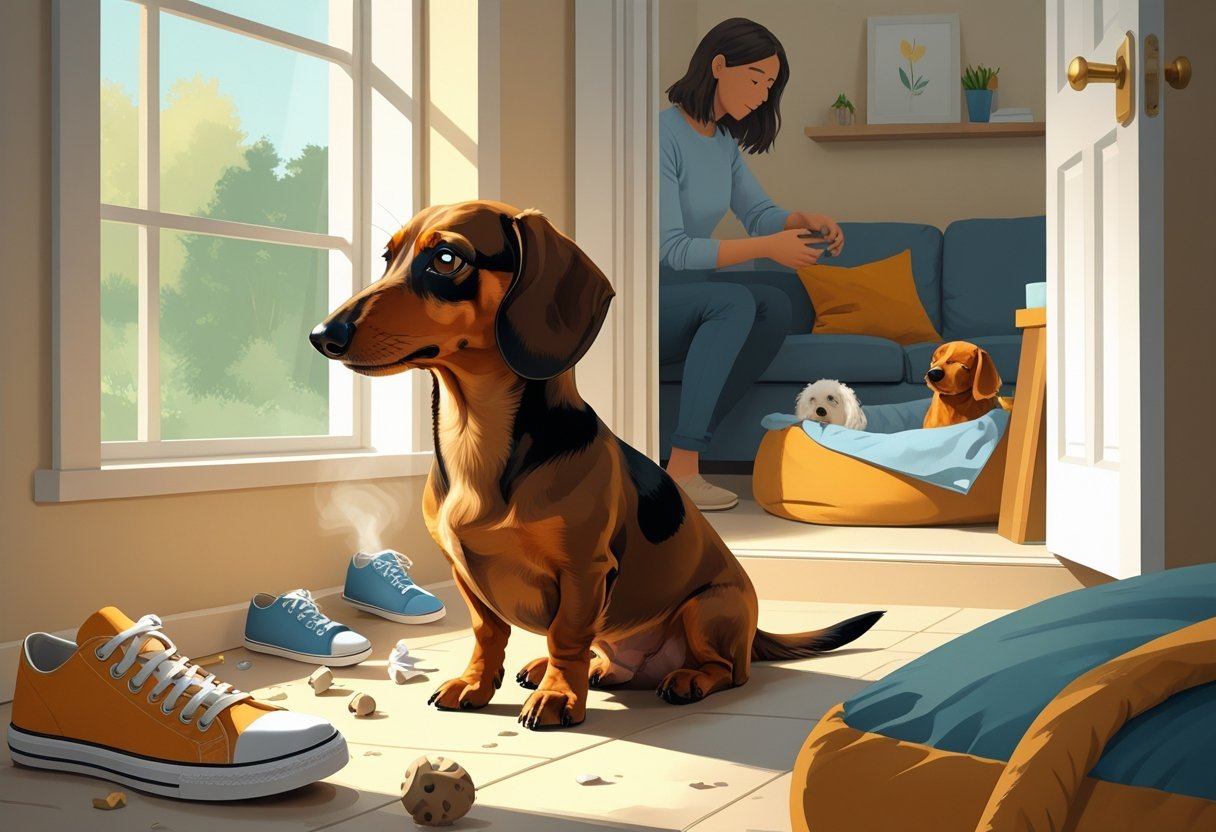
Dachshunds are lovable, loyal companions 🐶❤️. Many owners struggle when their wiener dogs become distressed during alone time 😔.
If your dachshund howls, barks, or destroys furniture when you leave, they might have separation anxiety 🐾. Separation anxiety in dachshunds happens when they feel extreme stress from the moment you leave until you return, often causing destructive behaviors, nonstop barking, or obvious distress 🐕.
These adorable pups form strong bonds with their humans 👨👩👧👦. That attachment can make them more likely to get anxious when left alone 🥺.
The good news? You can help your dachshund get through this 💡. From gradually desensitizing your dog to being alone to ignoring anxious behavior when leaving and returning, there are proven ways to ease your pet’s stress 🧠.
Key Takeaways📌
- Separation anxiety symptoms include excessive barking, destructive chewing, and visible distress when you leave your dachshund alone🔊.
- Gradually increasing alone time and keeping calm during departures and arrivals can help your dachshund get used to separations⏳.
- Creating a consistent routine and offering mental stimulation through toys can really reduce your dachshund’s anxiety🧩.
🐾 Free Dachshund Care Guide
Download our free checklist to ensure your Dachshund stays happy, healthy, and well-loved!
Get Your Free Guide 🐶What Is Dachshund Separation Anxiety?
Separation anxiety is when dogs get extremely stressed when left alone 😔. This stress starts as soon as you leave and doesn’t stop until you return.
Dachshunds are especially prone to this because they’re so loyal and attached 🐶❤️. If your dachshund shows intense distress whenever you get ready to leave or while they’re alone, separation anxiety could be the culprit.
Common signs include:
- Excessive barking or howling 🔊
- Destructive chewing or digging 🛋️
- Indoor accidents (even in well-trained dachshunds) 🚫🐾
- Pacing and restlessness 🚶♂️
- Escape attempts 🏃♂️
The severity can range from mild uneasiness to full-on panic 😟. Your dachshund isn’t being “bad” on purpose—they’re honestly upset about being apart from their favorite person 🥹.
This anxiety comes from the strong bond dachshunds form with their owners 👨👩👧👦. Originally bred as hunting dogs, they were meant to work side-by-side with humans, which makes them extra attached 🐕.
Physical symptoms might show up too, like drooling, panting, or even self-injury 😰. Usually, these behaviors kick in during the first 30 minutes after you leave ⏳.

🎥 Petcube Cam 360 – Check In While You’re Away
This smart camera lets you interact with your Dachshund in real time — perfect for easing separation anxiety when you’re not home.
- ✅ Full HD live streaming with night vision
- ✅ Real-time bark alerts + 2-way talk feature
- ✅ Pan 360° to follow your pup’s movements
- ✅ Ideal for checking in during stressful moments
Recognizing Signs of Separation Anxiety in Dachshunds

Dachshunds with separation anxiety show clear patterns in their behavior, body, and emotions when left alone 🐾. These signs often start as you get ready to leave and can get worse after you walk out the door 🚪.
Behavioral Indicators 📋
The most obvious signs show up in how your dachshund acts. Your dog might chew furniture, dig at doors, or scratch at windows when left alone 🛋️🚪🪟.
These aren’t acts of rebellion—they’re desperate attempts to cope 💔. Excessive barking is another big clue 🔊. Some dachshunds bark, howl, or whine the entire time you’re gone, and neighbors might complain about the noise 😫.
Inappropriate elimination can happen even if your dog is house-trained 🧼. If you find accidents when you get home, anxiety might be why 🚫🐾.
Many anxious dachshunds try to escape, following you or trying to get out of their space 🔓. Sometimes, this leads to injuries as they scratch or bite at doors and windows 🐶⚠️.

🧠 Brain Training for Dogs – Calm Your Anxious Doxie
Keeping your Dachshund mentally active is key to reducing separation anxiety. This proven program uses fun brain games to keep your pup engaged, confident, and less stressed when left alone.
- 🐾 Interactive games that fight boredom & loneliness
- 💡 Builds focus, confidence, and emotional balance
- 🌱 Gentle, force-free training methods only
Physical Symptoms 🩺
Anxiety shows up in your dachshund’s body too. You might notice panting, trembling, or drooling even before you leave 😰.
Once alone, these symptoms usually get worse. Some anxious dachshunds lose their appetite and won’t eat treats or meals before or during your absence 🍽️🚫.
If this goes on, your dog might even lose weight ⚖️. Self-destructive habits like licking paws or biting their tail can develop, leaving raw spots or missing fur 🐾😢.
Stress can also cause tummy troubles like diarrhea or vomiting, but these usually only happen when they’re alone 💩🤢.
Emotional Manifestations🧠💔
Your dachshund’s mood gives away a lot. Pacing, whining, or shaking as you prepare to go signals they’re already nervous 😟.
They pick up on “leaving signals” like grabbing keys or putting on your shoes 🔑👟. When you come home, if your dachshund goes wild—jumping, whining, and struggling to calm down for several minutes—that’s more than just a happy greeting 🐶💨.
Shadowing is another clue. If your dachshund follows you everywhere, even to the bathroom, they might be worried you’ll leave 🚪👣.
Depression sometimes sets in too. Some dachshunds get quiet, droop their ears, or avoid you when they sense you’re about to head out 😞🐾.
Causes of Separation Anxiety in Dachshunds
Dachshunds deal with separation anxiety for a mix of reasons—some they’re born with, others they pick up along the way 🧠🐾. These factors all add up, making certain dachshunds more likely to get anxious when left alone 😟.
Genetic Predisposition 🧬
Dachshunds were bred as hunting dogs, meant to work closely with humans to track badgers and other small animals 🦡. This strong pack mentality makes them want to stick close to their people 🐕🦺.
Their history as hunters created a breed that bonds intensely with owners 🤝. Breeders picked for loyalty and attentiveness, but that also means they’re more likely to get anxious when apart 💔.
Some dachshund bloodlines seem more prone to anxiety. If your dog’s parents or siblings had separation issues, your pup might be at risk too 🧬🐶.
Being small doesn’t help either. Little dogs often feel more vulnerable, which can kick their anxiety into overdrive 😰.

🌿 Innovet PurCBD Oil for Dogs
- Helps calm anxious Dachshunds naturally and safely
- Supports joint comfort and overall relaxation
- THC-free and made with organic hemp extract

💧 Zumalka Calmpet – Natural Calming Support
- Homeopathic formula designed to ease nervousness and fear
- Safe for long-term use and made with gentle natural ingredients
- Helps Dachshunds feel balanced during stressful moments
Environmental Factors 🌍
Your dachshund’s life story matters a lot here. Traumatic events like being abandoned, living in shelters, or getting rehomed can leave deep scars 🏚️💔.
Inconsistent routines confuse dachshunds and make them nervous about when you’ll be back ⏰😟. If your schedule is always changing, your dog can’t relax.
Over-attachment happens if you’re always together. Working from home or never leaving your dachshund alone creates dependency 🏠👥.
Big life changes can also set off anxiety. Moving, adding new family members, or losing a pet friend can shake your dachshund’s sense of security 🚚👶🐾.
If your dachshund didn’t get enough socialization as a puppy (especially between 8 and 16 weeks), they might struggle more with being alone 🐾🍼.
Short-Term Solutions for Managing Separation Anxiety

If your dachshund struggles with being alone, you can try a few things right away to help 🐶. These strategies focus on making your absence less scary and keeping your dog busy 🧠🎾.
Comforting Routines 🛏️📅
Routines matter. When your dachshund knows what to expect, they feel safer 🐾.
Keep your departures low-key—no drawn-out goodbyes or anxious energy 🙋♂️🚪. Dogs pick up on your mood, so try to act calm and casual 😌.
Practice short absences to help your dachshund get used to being alone ⏳. Start with just a few minutes and slowly build up as your dog gets more comfortable 🐕.
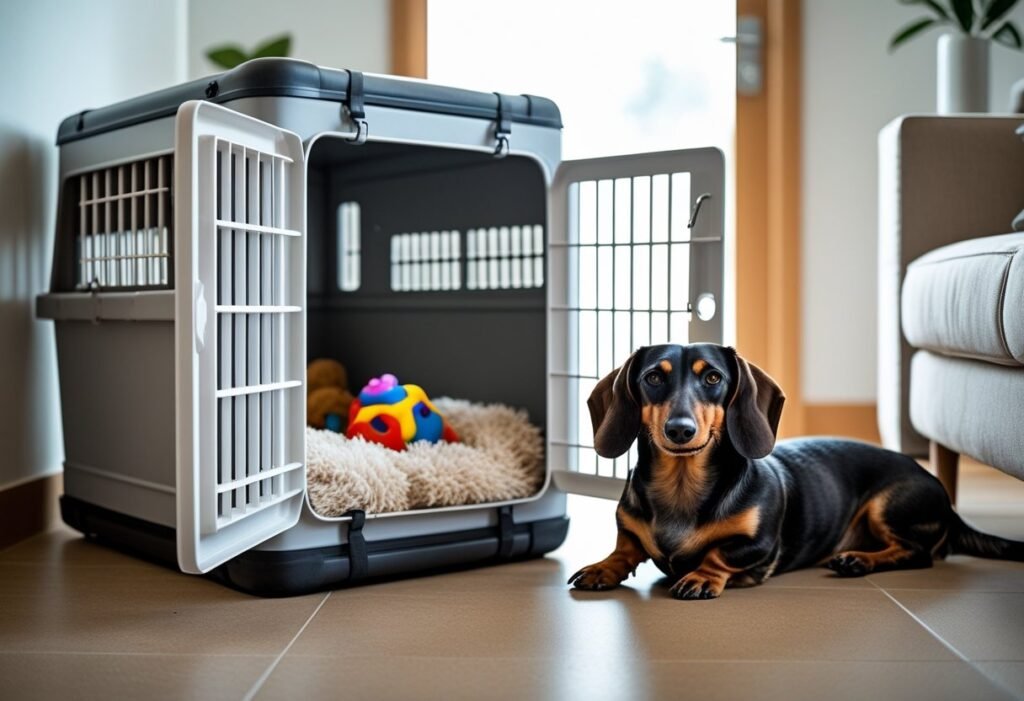
Set up a cozy space. Maybe it’s a crate with soft bedding or a quiet room with their favorite toys 🧸🛏️.
Some calming aids that help:
- Dog-appeasing pheromone diffusers 🌬️
- Music made for dogs 🎶
- Something that smells like you, like a worn shirt 👕

🍲 ChefPaw Fresh Food Maker
- ✅ Make homemade fresh meals in minutes
- ✅ Customize ingredients for sensitive pups
- ✅ Reduces stress linked to poor nutrition

🏥 The Swiftest – Compare Top Pet Insurance Plans
- ✅ Instantly compare leading insurance providers
- ✅ Find affordable plans tailored to Dachshunds
- ✅ Stay protected for accidents & vet emergencies
Distraction Techniques 🎯
Offer special treats or toys that your dachshund only gets when you’re out 🍖🧩. Puzzle toys with peanut butter or frozen snacks can keep them busy for half an hour or more 🧊🥜.
Kong toys and lick mats are great because:
- They challenge your dachshund’s brain 🧠
- They make your leaving a positive thing 👍
- They keep your dog occupied for a while ⏱️
Leaving the TV or radio on helps some dogs relax 📺📻. Calming music or even audiobooks can make the house feel less empty 🎵📘.
Try interactive toys that move or dispense treats. These can help turn anxiety into playtime and problem-solving 🤖🐕.
Long-Term Strategies to Prevent Separation Anxiety
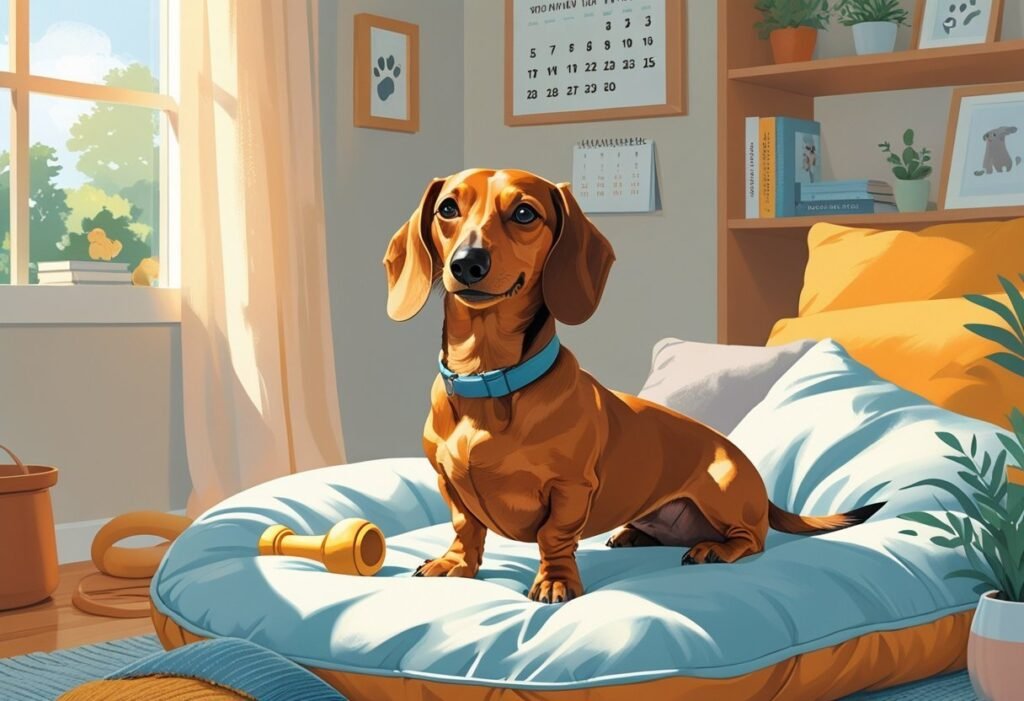
Preventing separation anxiety in dachshunds takes consistent effort and the right training 🐾📅. With patience, you can help your dachshund feel more secure when they’re alone 🐶💛.
Behavioral Training Methods 🧠🎯
Try to create positive associations with your departure. Give your dog a special toy or treat-filled puzzle they only get when you leave 🧸🍖.
This way, your dachshund has something to look forward to instead of dreading your absence 🌈. A simple change, but it can work wonders ✨.
Stick to a consistent routine and make sure your dog gets exercise before you go 🕒🚶♂️. A tired dachshund is less likely to get anxious 😴.
Regular exercise and mental stimulation really do help. Don’t underestimate how much a walk or a game can do 🎾🐕.
If training alone isn’t cutting it, calming aids might help 🧴. Natural supplements like CBD or valerian root can sometimes reduce anxiety, but always check with your vet first 🌿👩⚕️.
Practice “no-fuss” departures and arrivals. Keep things low-key when you leave or come home so your dog doesn’t get too worked up 🚪😌.
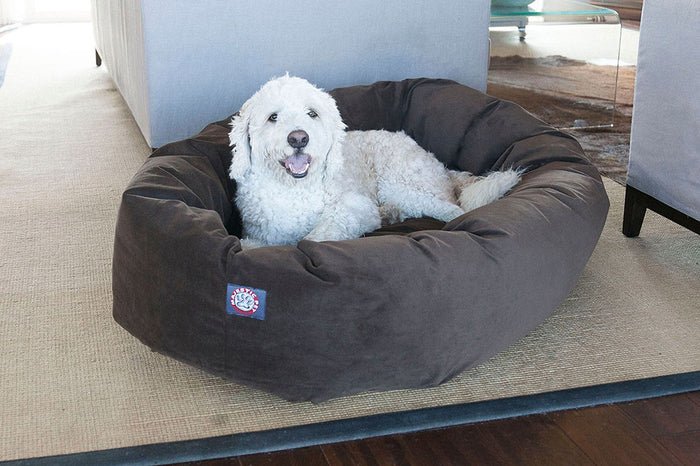
🛏️ Majestic Orthopedic Dog Bed
- Deep cushioning to soothe joints and encourage restful sleep
- Creates a secure, den-like spot that helps reduce separation stress
- Durable, washable cover — practical for everyday use

🌱 Wild Earth – Complete Protein Dog Food
- High-quality, plant-forward protein to support steady energy
- Gentle on digestion — helps reduce stress-related tummy issues
- Supports overall wellness, which can improve behavior and calmness
🎉 Grab your free Dachshund care checklist!
Gradual Desensitization ⏳🐶
Start by desensitizing your dachshund to departure cues. Pick up your keys or put on your coat without actually leaving 🔑🧥.
Eventually, your dog will stop panicking over these cues 😌. It takes a bit of repetition, but it pays off 🔁✨.
Begin with very short absences—maybe just step outside for a few seconds and come right back 🚪⏱️. Gradually increase the time as your dachshund gets more comfortable 🐾.
Use a consistent verbal cue like “I’ll be back” before you leave 🗣️. Over time, your dog will realize you always return 🏠.
If your dachshund really struggles, try leaving them with a friend or family member they know well for longer absences 👨👩👧. Some people add a second dachshund, but that’s not a guaranteed fix 🐕🐕.
Role of Professional Support in Treatment

Professional help can make a big difference for dachshunds with separation anxiety 🐶🧠. Experts bring experience and tools that make the process less overwhelming, both for you and your dog 🛠️💛.
When to Seek a Veterinarian 🩺
If your dachshund shows severe anxiety—like excessive drooling, destroying things, or even hurting themselves—it’s time to call your vet 📞🐾. Sometimes, medical conditions can look like separation anxiety, so it’s good to rule those out ✅.
Your vet might prescribe anti-anxiety medications to help your dog cope 💊. These meds won’t cure the problem, but they can take the edge off while you work on training 🧘♂️.
Some signs it’s time to seek veterinary help:
- No improvement after trying home remedies 🧴
- Symptoms are getting worse ⚠️
- Your dog is hurting themselves 😢
- Neighbors complain about constant barking 🔊🏘️
Your vet might suggest blood tests to check for health issues that could cause anxiety 🧪. It’s always better to be safe 🛡️.

🍽️ Petlibro Automatic Pet Feeder
- Maintains a steady feeding schedule to reduce anxiety
- Customizable portions for healthy weight management
- Ideal for Dachshunds who feel calmer with routine

🧬 AnimalBiome Gut Health Test Kit for Dogs
- Analyzes gut bacteria to uncover hidden health imbalances
- Personalized insights to improve digestion and mood
- Supports overall wellness — a key to calmer behavior
Working With an Animal Behaviorist 🧑🏫🐕
If things still aren’t improving, a Certified Applied Animal Behaviorist can help 👩⚕️. They’ll design a plan that fits your dachshund’s specific needs 🗂️.
Behaviorists use science-based techniques to change how your dog feels about being alone 🔬🐶. They’ll walk you through desensitization and counter-conditioning, one step at a time 🪜.
What does a good behaviorist do?
- Observe your dog’s anxiety patterns 👀
- Develop a treatment plan just for you 📋
- Train you to stick with the plan 🧑🏫
- Adjust strategies as your dog progresses 🔄
The goal is to reduce your dog’s anxiety and help them feel okay when you’re gone 🎯. It takes time, but having a pro in your corner can make things less stressful for both of you 🤝🐕.
Lifestyle Adjustments for Owners
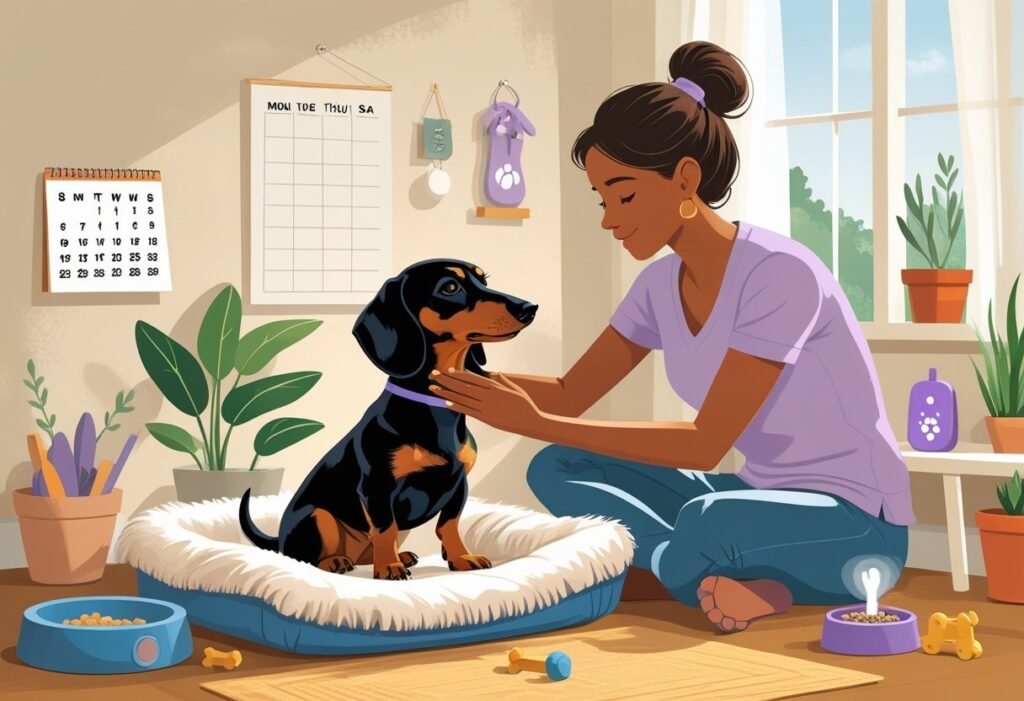
Changing up your daily routine can really help your dachshund manage separation anxiety 📅🐾. These little tweaks create a sense of security for your dog when you’re not home 🏡💛
Creating a Safe Environment 🛏️🎾
our dachshund needs a cozy, safe spot for when you’re away 🐶. Set up a corner with their bed, favorite toys, and something that smells like you 🧸👕
Comfort items to include:
- A soft bed or crate with a blanket 🛏️
- One of your shirts or another item with your scent 👕
- Interactive toys that give out treats 🍖
- White noise or calming music 🎵
Positive reinforcement can help your dog love this space 🦴. Hand out treats when your dachshund settles there calmly 😌.
Puzzle toys keep your dog busy while you’re gone 🧩. They’re not magic, but they can make a difference for short stretches ⏱️.
🛠️ Tools That Help Calm Your Anxious Dachshund
- 💧 Petlibro Water Fountain — Encourages your Dachshund to stay hydrated throughout the day, supporting calm energy and overall wellness.
- 🪜 Majestic Pet Stairs — Help your Dachshund reach their favorite cozy spots safely, reducing physical strain and anxiety triggers.
- 📍 Tractive GPS Dog Tracker — Track your Dachshund in real-time and gain peace of mind knowing your pup’s location anytime.
- 🐾 Embark Pets Adventure No-Pull Harness — Gentle, secure harness that keeps your Dachshund comfortable and confident during walks.
Implementing Consistent Schedules ⏰
Dachshunds love routine 🐕. A predictable schedule helps reduce anxiety and gives your dog something to count on 📆.
Keep these schedule elements steady:
- Feed at the same times daily 🍽️
- Walks on a regular schedule 🚶♂️
- Same departure and arrival routines 🚪
- Dedicated playtime each day 🎾
Try not to make a big deal when you leave or come home 🚫🙋♂️. Dramatic greetings or goodbyes can make anxiety worse. Wait until your dog is calm before saying hello 🐶😌.
Gradual desensitization to your leaving routine helps, too 🔑👟. Practice picking up your keys or putting on your shoes without actually leaving to reduce your dog’s stress triggers 🧠.
Supporting a Dachshund’s Emotional Well-Being
Dachshunds do best when their emotional needs are met through regular, positive interactions🐶❤️. Confidence-building activities can help reduce anxiety and make your pup happier overall 🌟.
Promoting Positive Interactions 🐾🎯
Daily routines give your dachshund a sense of security 🕒. Set times for meals, walks, and play so your dog knows what to expect 🍽️🚶♂️🎾.
Rewarding calm behavior—with treats, toys, or praise—can boost your dog’s confidence 🧸🦴👏. Positive reinforcement teaches them that being relaxed pays off ✅.
Try short separation exercises. Leave the room for a few seconds, then gradually increase the time as your dog gets used to it ⏱️🚪.
If needed, consider calming aids:
- Anxiety wraps or thunder shirts 🧥
- Pheromone diffusers 🌬️
- Music designed for dogs 🎶
- Comfy, den-like spaces 🛏️
🧘 More Natural Ways to Calm Your Anxious Dachshund
- 🔬 AnimalBiome Gut Restore Supplement – Restores healthy gut bacteria to support better digestion and a calmer mood.
- 🐾 Coastal Pet Training Harness – Gentle, no-pull design that gives your Dachshund comfort and control during walks.
- 🛁 Pride + Groom Grooming Kit – Premium grooming essentials to help your Doxie relax and enjoy soothing self-care time.
- 🎨 Purr & Mutt Personalized Pet Art – Turn your Dachshund’s photo into calming, joyful wall art that celebrates their personality.
- 👕 Dog is Good Apparel – Inspirational, dog-lover clothing that spreads calm, positive vibes for pet parents everywhere.
🐶 Combine these thoughtful choices to create a peaceful, happy environment for your Dachshund every day.
Building Confidence Through Play 🎲🐕
Introduce interactive toys that your dachshund only gets when they’re alone 🤖. This way, alone time becomes a little more fun 🎉.
Teach simple tricks and commands to build your dachshund’s confidence 🧠. Learning new things makes them feel good and strengthens your bond 🤝.
Make sure your dachshund gets physical exercise every day 💪. A tired dog is usually a calmer dog 😌.
Gradual desensitization helps your dog get used to being alone. Start with short absences—like 30 seconds—and slowly increase the time over several weeks ⏳.
Puzzle toys that give out treats can keep your dachshund occupied and distracted when you’re not around 🧩🍖
🐾 Don’t Miss Out!
Download our free Dachshund care guide to keep your furry friend happy and healthy.
Get Your Free Guide 🐶Frequently Asked Questions

Dachshunds have some pretty clear signs when they’re struggling with separation anxiety 🐶💔. The right mix of training, environment tweaks, and sometimes professional support can really help them cope 🛠️🐾.
What are common signs indicating a Dachshund is experiencing separation anxiety? ❓
Dachshunds with separation anxiety might urinate or defecate when left alone—even if they’re house-trained 🚫🐾. It’s not spite; it’s stress.
Excessive barking, howling, or whining that starts when you leave is another big clue 🔊😟. Some dogs keep it up until you return.
Destructive behaviors like chewing furniture, scratching doors, or tearing up things often mean anxiety 🛋️🚪. Many Dachshunds focus their efforts on exit points like doors or windows 🪟.
Physical signs include drooling, panting, or shaking as they sense you’re about to leave 😰. Some pace or look visibly upset 😞.
What strategies can be employed to alleviate a Dachshund’s anxiety when left alone? 🧠🐕
Create a safe space with your dog’s favorite toys, bed, and something that smells like you 🛏️🧸👕. A dedicated spot helps them feel secure while you’re gone.
Practice gradual desensitization by leaving for short periods and slowly increasing your time away ⏱️🚪. Start small and build up 🔁.
Offer engaging toys that dispense treats or keep your dog mentally busy 🧩🍖. Puzzle toys can distract them from your absence for a while ⏳.
Try calming aids like pheromone diffusers, anxiety wraps, or music made just for dogs 🌬️🧥🎶. These can help reduce stress for some Dachshunds.
How can separation anxiety in Dachshunds be effectively managed through training? 🎓🐾
Try departure cue desensitization 🔑👟. Just go through your leaving routine—grab your keys, put on your shoes—without actually heading out.
This breaks the link between those cues and anxious feelings 🔄. It’s a small thing, but it can really help over time ⏳.
Teach your Dachshund a “stay” command using positive reinforcement 🧠🍖. Start close by, then slowly increase the distance between you and your dog while they hold the stay 🚶♂️🐶.
Encourage your Dachshund to hang out alone even when you’re home 🏡. A little “independence training” helps them build confidence in their own company 💪.
Reward calm behavior with treats or praise 👏🦴. Ignore attention-seeking antics, even if it’s tough—your dog will start to realize that relaxing when alone pays off ✅.
Are there any quick solutions to address a dog’s separation anxiety issues? ⚡🐕
Honestly, there’s no magic fix ✨. Still, using a crate or safe space can give some Dachshunds a sense of security right away 🛏️.
Make sure the spot feels cozy and inviting, and never use it as punishment 🙅♂️. It should be a little haven, not a time-out zone 🌿.
Doggy daycare or hiring a pet sitter can help in the short term 🐾👩🦰. Having company around keeps them from stressing about being alone 🐕🏡.
Before you leave, give your Dachshund a good workout 🏃♂️🎾. A tired pup is more likely to nap than worry while you’re gone 💤.
Thinking about a second dog? Sometimes it helps, sometimes not—some Dachshunds love canine friends 🐕🐕, while others still crave their humans most ❤️.
What are the best treatments available for dogs suffering from separation anxiety? 💊🧠
A professional dog trainer or animal behaviorist can guide you through behavior modification training 🧑🏫📋. They’ll design a plan that fits your Dachshund’s needs 🎯.
For tough cases, veterinary prescribed medications might be necessary 🩺. Sometimes anti-anxiety meds or sedatives can take the edge off while you work on training 💊😌.
Natural supplements like L-theanine or CBD oil (if it’s legal where you live) might ease mild to moderate anxiety 🌿. Some calming formulas made for dogs are worth a shot ✅.
Try counterconditioning by making your departures something to look forward to 🧸🍖. Hand out special treats only when you leave—your dog might even start to see you heading out as a good thing 😊.
How can I support my Dachshund dealing with anxiety during nighttime separation? 🌙🐶
Try sticking to a consistent bedtime routine ⏰🛌. A predictable schedule helps your Dachshund feel safe and know what’s coming next 📆.
This could mean a short walk before bed 🚶♂️. Maybe just some quiet time together, winding down for the night 🛋️😴.
Set up a cozy sleeping spot 🛏️. If your Dachshund gets anxious, you might want to let them sleep near you at first 🐕❤️.
Gradually move their bed farther away as they get used to being on their own 🪜. No need to rush—some dogs take a little longer to adjust 🐾.
If the dark makes your pup uneasy, try leaving a night light on 💡. Even a soft glow can make a big difference for a nervous dog 😌.
Leaving something with your scent—like a worn t-shirt—by their bed can help too 👕. Sometimes, just having that familiar smell nearby is all they need to relax 🐶💤.