Leaving a Dachshund at home can feel like closing the door on a tiny, loyal heart. Keys jingle… nose at the gap… then the whining and pacing begin. 🐾
Dachshunds don’t just “miss you” — they spiral when routines change. Anxiety often leads to risky behaviors like couch-launching, door scratching, or pacing on slippery floors — all dangerous for long backs prone to IVDD. ⚠️
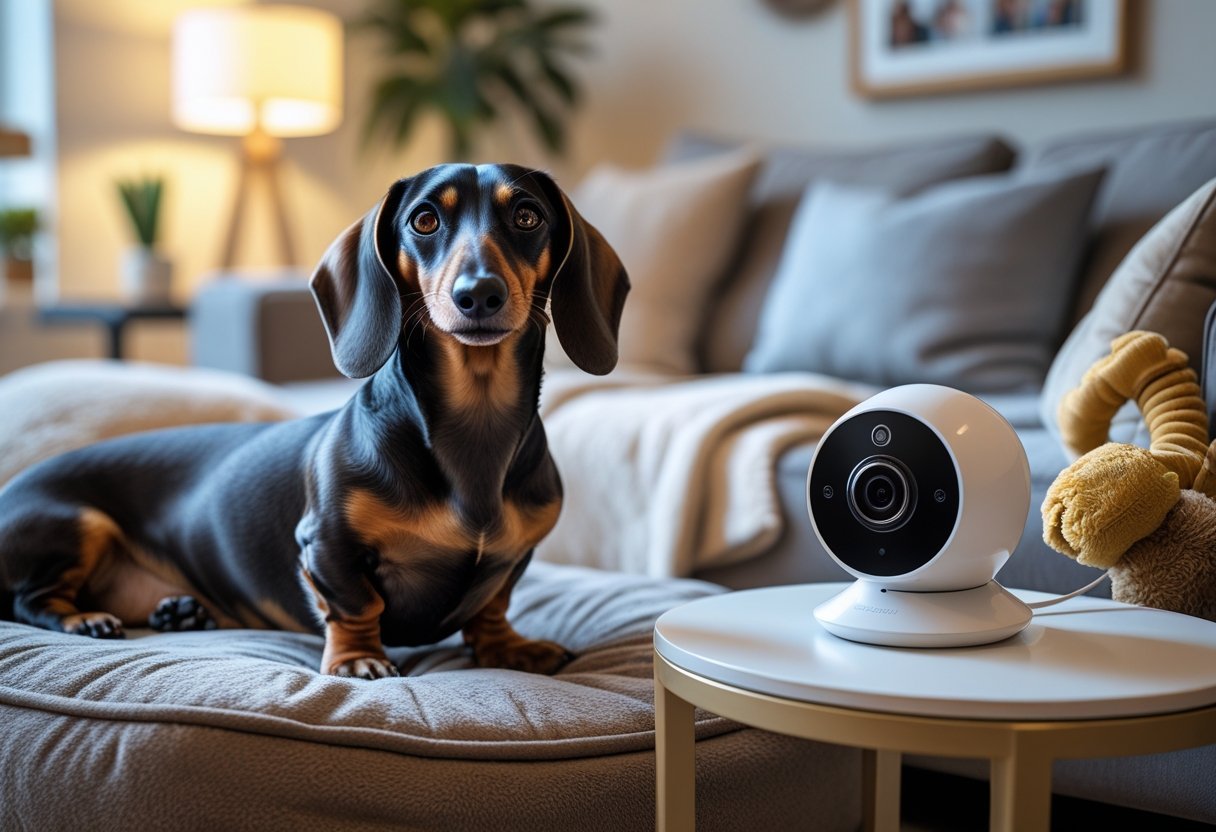
The Petcube Cam 360 won’t cure separation anxiety, but it acts as a calm bridge: live check-ins, soft voice reassurance, and the ability to interrupt stress signs before they escalate. Used correctly, it supports calmer habits and safer alone-time routines. 💛
In this Petcube Camera Review for Dachshund Separation Anxiety, you’ll see how it works, where it truly helps, and how to use it in a training-first, Doxie-specific way to protect both the mind and the spine.
Key Takeaways ✨
- Live check-ins help stop anxiety spirals early and reinforce calm routines. 🧘
- Smart alerts + pan/tilt let you catch and interrupt risky jump attempts. 🦴
- Full 360° view tracks a low-to-the-ground Doxie across all “trouble routes.” 🔄
- No treat-toss feature, but you can still reward calm with pre-planned treats. 🍬
- Best results come when used with desensitization and a stable goodbye routine. 🐾
🐾 Free Dachshund Care Guide
Download our free checklist to ensure your Dachshund stays happy, healthy, and well-loved!
Get Your Free Guide 🐶Why Smart Cameras Help Dachshunds With Separation Anxiety
Pattern-driven brains. Dachshunds live by scent and routine. Even tiny cues — shoes, keys, perfume — can trigger anxiety before you’ve even left. 🧠
Spiral prevention. Anxiety usually escalates in steps:
door watching → whining → pacing → jump attempt
A smart camera lets you catch it early and interrupt the chain with a calm cue or setup change before it becomes a meltdown. 🔍
Back-safety awareness. You can’t prevent what you can’t see. Real-time visibility turns “I hope she’s safe” into “I stopped the jump before it happened” — a big win for IVDD-prone backs. 🦴
Not a cure — a tool. The camera doesn’t fix anxiety alone. Its job is to observe, mark calm, and guide environmental tweaks while you work a desensitization plan. No medical advice — just Dachshund-smart support. 💛
Petcube Cam 360 — Overview & Core Functions
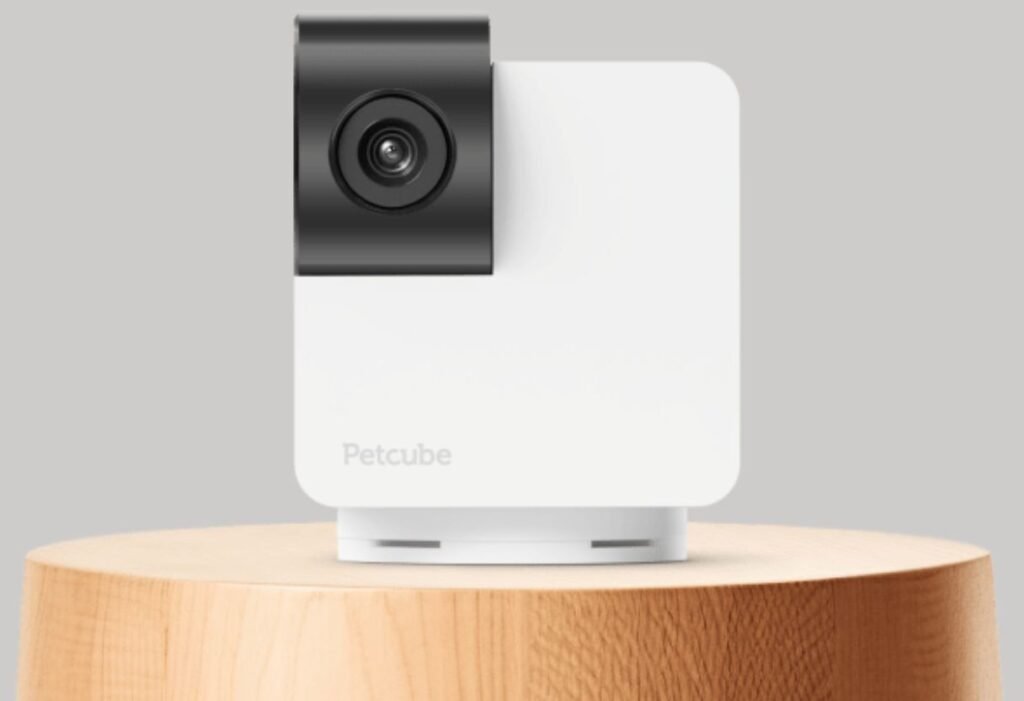
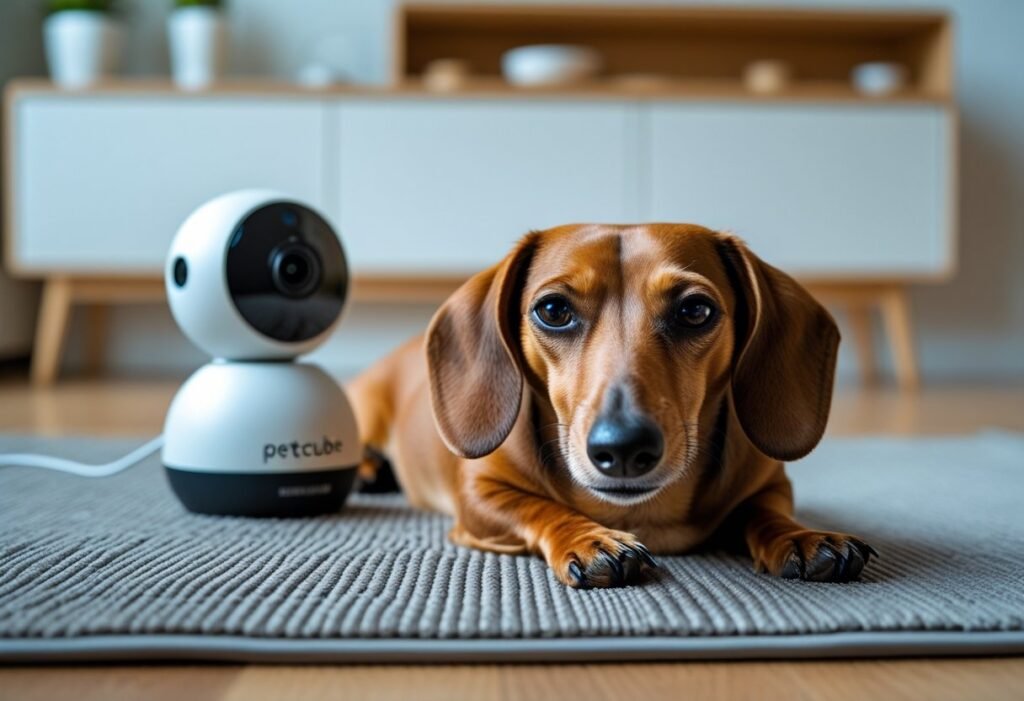
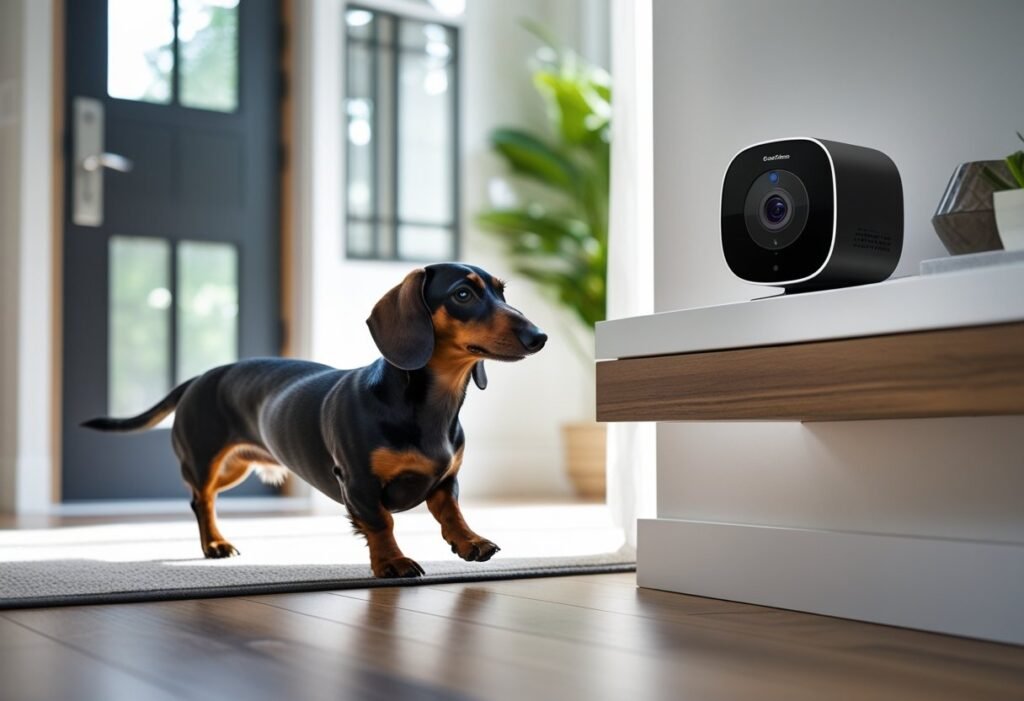
The Petcube Cam 360 is a compact indoor pet camera with pan/tilt motion, allowing you to follow your Dachshund’s movement instead of being stuck with one fixed angle. You can sweep the view from your phone and track a ground-level explorer as they move between the door, sofa, crate area, or window perch. 📱
Most models include HD video with night vision, two-way audio, motion/sound alerts, and a clean mobile app with optional cloud clip history for review.
Why it fits Dachshunds
- Follows the floor — The rotating head + wide view means your low-rider stays in frame without constant repositioning. 🐾
- Sees jump zones — You can park the camera on a doorway + couch angle to catch those pre-launch moments before they become a back injury risk. 🦴
- Quiet and subtle — A soft motor and small footprint reduce the chance of startling sensitive pups or drawing attention to the device. 🌿
In short: it covers the right angles, the right behaviors, and the right risks for a breed like the Dachshund — quietly, consistently, and without getting in their way.
Design & Build Considerations for Dachshund Homes
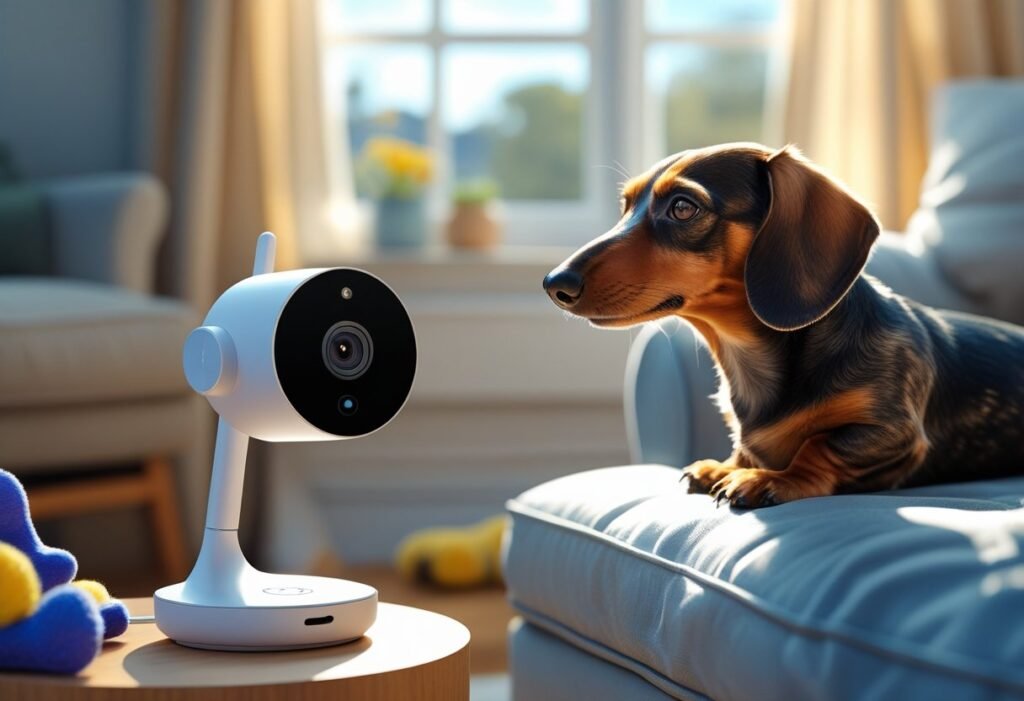
Smart camera placement matters as much as the camera itself. For Dachshunds, you don’t just need any view — you need a view that catches the floor-level action where anxiety and jumping actually begin. 🎯
Placement that sees what matters.
The Cam 360 works best above Dachshund eye level but below ceiling height — roughly chest-to-head height for a standing adult. This angle captures the whole floor arc (door → couch) and avoids the warped view that makes ground movement hard to read. 📐
Stable and silent footing.
Place the base on a non-slip pad to prevent vibration during pan/tilt. Use soft, indirect lighting for clearer night vision and avoid pointing the lens at bright windows. 🌙
Lights and sound sensitivity.
Dim or disable indicator LEDs if your Doxie fixates on tiny lights. In quiet homes, placing a cloth under the unit can absorb motor resonance so the device remains “invisible.” 🔇
Blends into the home.
The neutral, compact design disappears on bookshelves and consoles — ideal for shy pups who get nervous around “new objects.” 🌿
If you’ve ever come home to claw marks on the door or a toppled cushion, this is exactly where a quiet, well-placed camera starts earning its keep. ✅
A well-placed camera can stop a dangerous jump before it happens. 🛋️ See recommended setup details →
Features That Matter Most for Separation-Prone Dachshunds
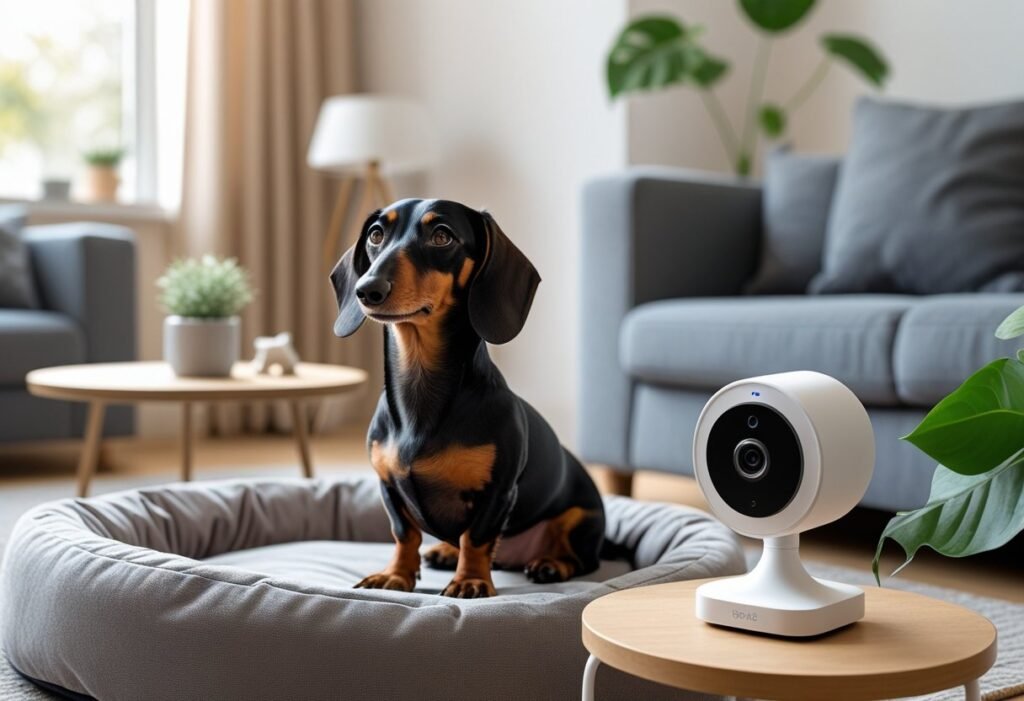
Smart cameras only help when the right features are used in the right way. These are the functions that make a real difference for Dachshunds with separation anxiety — not just in watching, but in shaping safer, calmer alone-time behavior. 🐶
How to balance observation vs reassurance
Think of the Cam 360 as a coach — not a walkie-talkie. Most progress comes from watching quietly, making small environment changes (ramps, rugs, blockers), and marking calm at the right moment — not constant talking. Let’s be honest — no camera replaces your physical presence, but it can help you guide the moment before it turns into panic. 💡
Two-way audio (used wisely)
Hearing your voice can soothe or overstimulate. Use a soft, single calm marker (“good settle”) only when you see relaxed body language — chin down, hip lowered, softer breathing. Avoid rapid chatter or emotional tone, which can build frustration. 🎙️
Pattern to follow: observe → mark once if calm → go silent again.
Motion and sound alerts
Alerts help you catch the first signs — not just the meltdown. Set medium sensitivity so you’re notified for pacing or door-hovering, not every tail flick. When alerted, open the app, read posture, then choose silence or a single calm marker. 📲
Pan / tilt tracking
This is where the Cam 360 shines for a low-body breed. You can sweep from door → sofa → exit points, or park the camera on known jump zones like ottomans or armrests. Move the camera slowly — fast pans can excite sensitive dogs. 🔄
Night vision
Many anxiety spikes happen in dim light — early mornings or late evenings. Night vision helps you see the pre-bark fidgets that trigger stress routines. 🌙
App experience
The app centers the essentials: live view, alerts, and audio. If you use clip history, you’ll see patterns like “pacing starts 10 min after departure,” which is gold for timing training changes. 📈
Cloud history (optional)
Not required, but extremely useful if you’re tracking progress week to week, sharing clips with a professional, or adjusting a desensitization plan. Seeing change over time builds confidence. ✅
Used with intention — not just observation — these features turn the camera into a quiet training assistant instead of just another screen to watch.
The right features don’t just watch your Doxie — they protect their mind and spine. 🧠 Explore the key features here →
Why the Petcube Cam 360 Is a Good Fit for Dachshunds
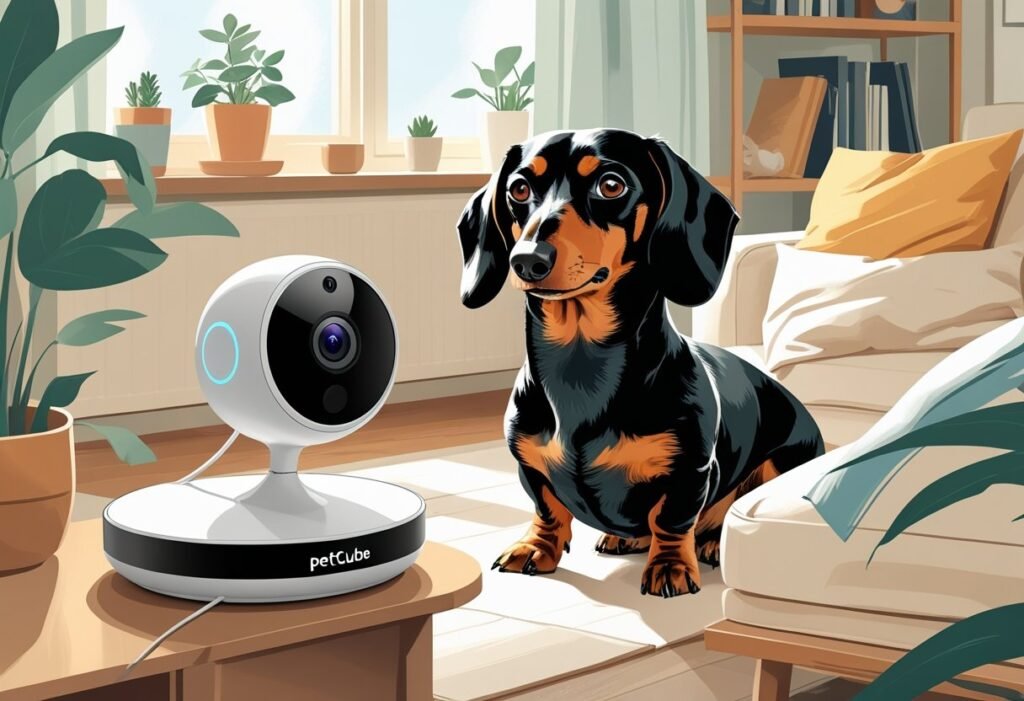
Dachshunds don’t just need “monitoring” — they need prevention, timing, and awareness. The Cam 360 supports exactly the kind of insight that matters for a breed that is anxious, stubborn, and physically delicate. 🐾
Calming the pre-meltdown window
Most “big” behaviors have mini precursors — the door-stare, the tight tail, the little hop onto the sofa arm. Catching those early allows you to mark calm before escalation, preventing the jump you never want to see. 🔍
Protecting backs and joints
IVDD prevention is built in tiny repeated choices, not big dramatic changes:
- Ramps instead of leaps
- Non-slip runners in pacing paths
- Blocked launch pads where jumps repeat
The camera turns those into data-based decisions, not guesses. 🦴
Building independence
The goal isn’t constant dialogue — it’s calm without you. Watching silently more than you speak teaches your Dachshund that alone-time can be safe and uneventful. A brief calm marker helps; silence is a training tool too. 🧘
Mind → body → you (the ripple effect)
When the mind is calmer, the body moves less.
Less movement = fewer jumps and slips.
Fewer jumps = safer backs — and calmer humans watching from afar. 💛
That is why this camera isn’t just for “seeing” a Dachshund — it helps you actively protect one.
Network & Setup Requirements
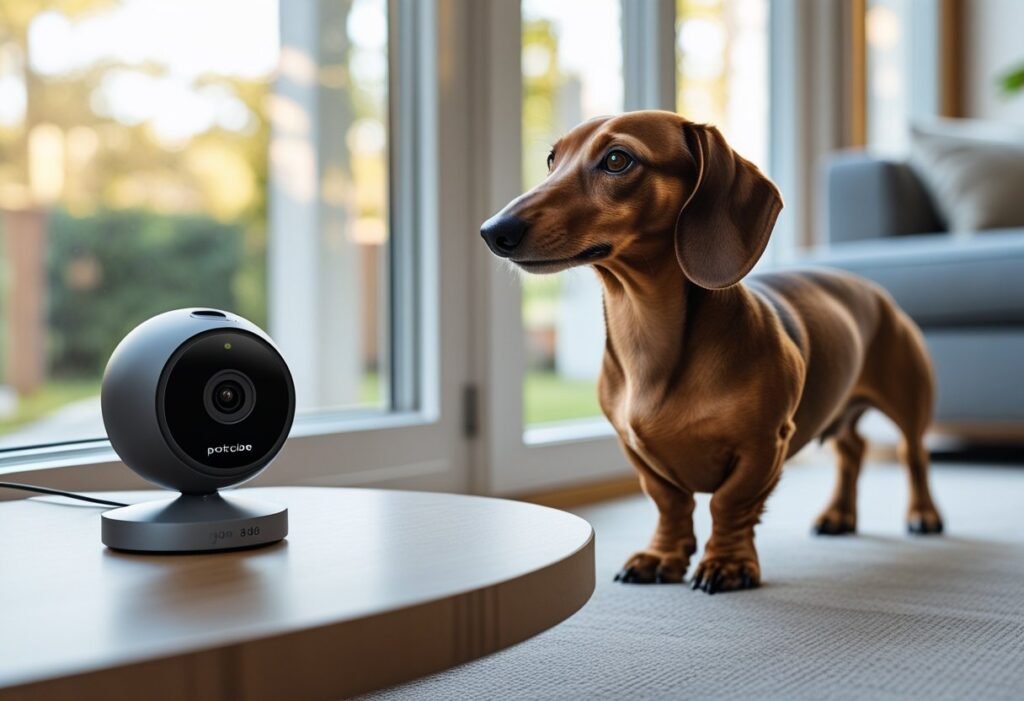
Even the best camera fails if the setup is weak. A stable network and clean placement make the difference between “peace of mind” and “buffering frustration.” 📶
Wi-Fi placement
Put the camera where the signal is strong. If you have thick walls or a large home, a mid-room router or mesh node prevents dropouts.
Phone/app readiness
Keep the app updated. Turn on only critical notifications (motion/bark) and disable noise alerts you don’t need to avoid alert fatigue. 📲
Power & cable safety
Secure the cord away from chewing range. Run the cable behind furniture or use clips to prevent tugging or unplugging. 🔌
Setup time
The first run takes about 10–15 minutes for pairing, firmware updates, and tuning your first alert settings. After that, it runs quietly in the background.
Once the network is stable and alerts are tuned, the camera becomes invisible — until you need it.
Setup & Training Guide for Real-World Use
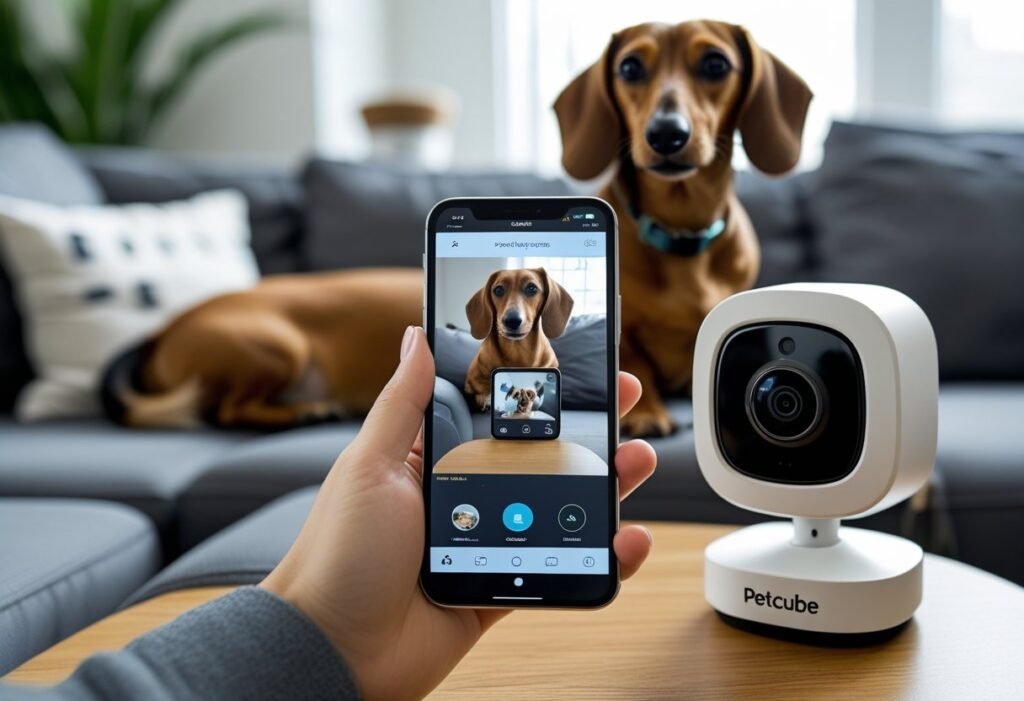
Correct placement is only half the job — how you introduce and use the camera is what determines whether it reduces anxiety or feeds it. Think of this step as shaping the environment and the behavior together. 🧠🐾
Placement and environment
- Primary angle: Door + couch (or the main lookout point) so you see the “activation route.”
- Secondary angle (if adding a second cam): Crate/x-pen or window perch.
- Surfaces: Add non-slip rugs where pacing happens — tiny friction changes lower arousal.
- Furniture: If you see repeated pre-jumps, pull the sofa 6–8 inches from the wall so the armrest is harder to launch from, and add a high-traction ramp instead. 🦴
Desensitization to the camera and audio
- Days 1–2: Silent observation only — let the camera “disappear” in your dog’s mind.
- Day 3+: If body language is soft, use one calm marker during a natural settle, then stop.
- If voice triggers head-whipping, whining, or scanning → pause audio for 48 hours and return to silent observation plus environment changes. 🎙️
Goodbye routine and mat training
Teach “on your mat” when you are home and calm — not when leaving.
- Cue the mat.
- Reward stillness (treat placed between paws, not tossed).
- Add a lick mat or snuffle toy for the final 5 minutes before you leave.
The camera then verifies that the mat holds for the first 10–15 minutes, which is the hardest window for most Doxies. 🧘
Crate or x-pen integration
If you use containment, angle the camera slightly off-axis to avoid bars blocking the view.
Place a small towel behind the unit to reduce echo, which can make audio sound sharp in enclosed spaces.
What’s in the box & time needed
Expect the camera, power cable, quick-start guide, and sometimes a mount/adhesive. Realistically, it’s 15 minutes to working alerts and about one week to a confident routine if used with consistency. ⏱️
A cam alone doesn’t fix anxiety — a cam combined with the right setup and timing does.
Small setup choices today can prevent months of stress and risky behavior tomorrow. 📦 Learn the correct setup method →
Real Dachshund Owner Experiences
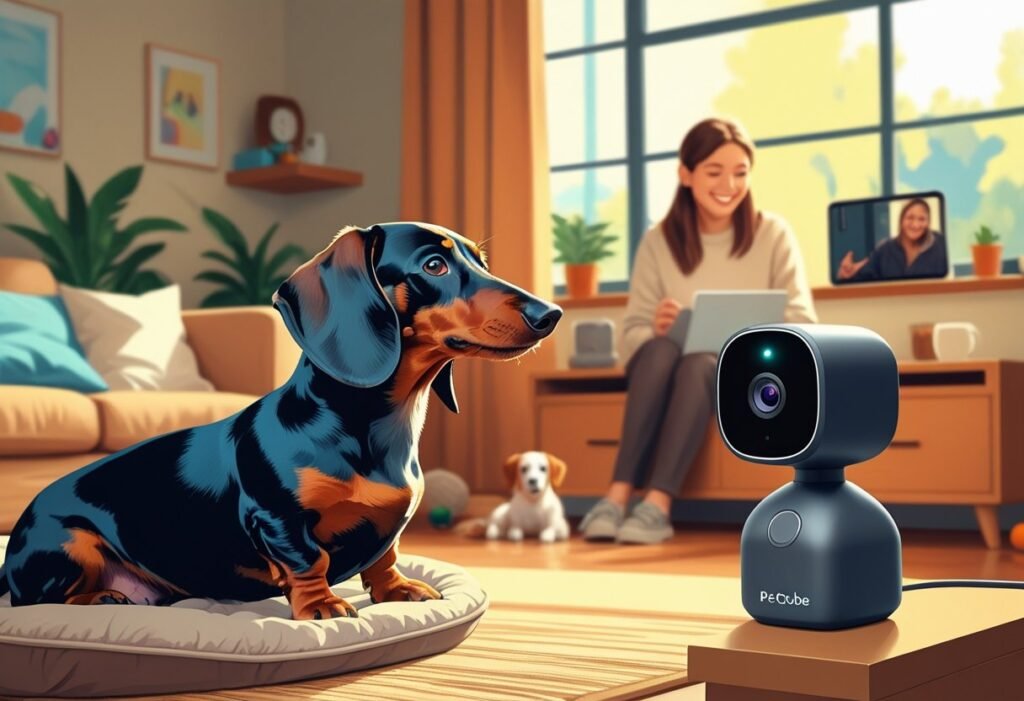
Seeing what actually happens changes how you respond — and how quickly things improve. These are the kinds of shifts Doxie families report once they start using the Cam 360. 📹
“We caught the exact moment Luna prepped to launch — tiny back-leg shuffle on the sofa arm. We slid in a ramp where she kept landing and marked ‘good settle’ twice that week. No launches since.” — Nina R., NJ 🐾
“He used to pace for 20 minutes after I left. With the camera I realized the trigger was the window perch. We lowered the blind and added a snuffle mat by the door. By week two, the pacing was down to five minutes, then nothing.” — Gabe S., ON 💛
“Our mini would bark every day at 3 PM like clockwork. The Cam showed it was the delivery truck. We added a sound machine and blocked the view — barking dropped in two days.” — Maria D., FL 📦
“I thought he slept all day… turns out he kept jumping between couch and window. Added a ramp and blocked the armrest — jumps stopped within 48 hours.” — Evan L., CO 🛋️
Short, specific, and repeatable — that’s the power of seeing reality instead of guessing it.
Pricing & What to Expect Long-Term
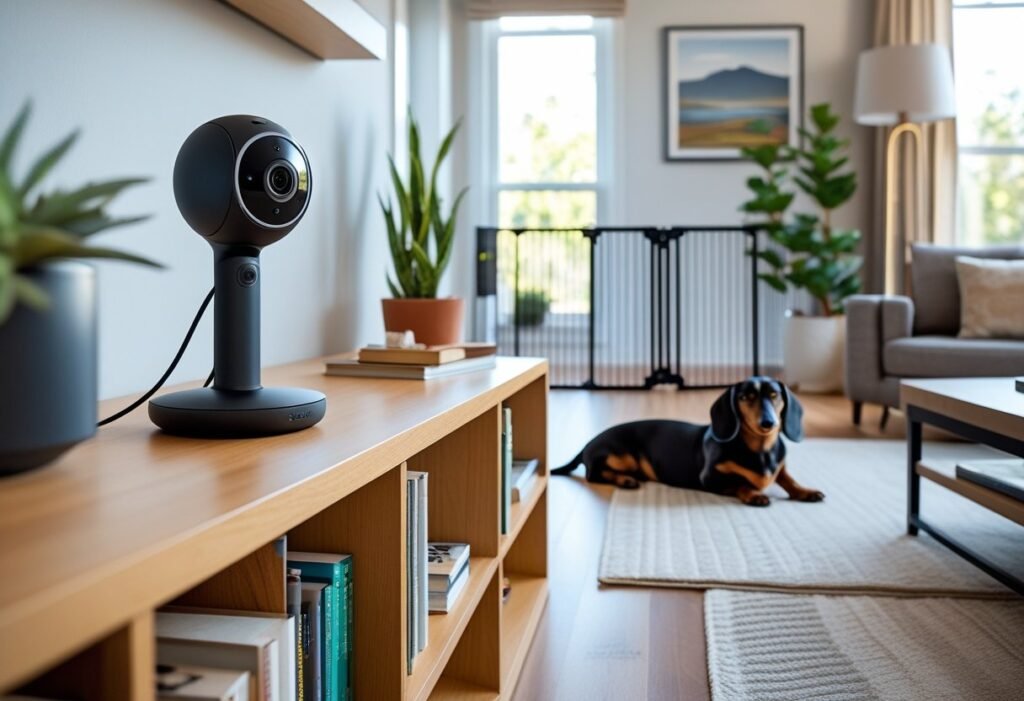
You’re not paying for a “gadget”—you’re paying for visibility, timing, and prevention. The Cam 360 is priced reasonably for a pan/tilt camera and can be used fully in live mode without any subscription. 💰
If you choose to add the optional cloud plan, you get clip history and smarter event filtering — especially useful if you’re:
- Actively training through separation anxiety
- Sharing clips with a trainer or vet behaviorist
- Tracking long-term patterns and progress
The real return isn’t the video itself — it’s fewer back-risk events, faster pattern recognition, and a calmer household rhythm over time. 🧘♂️
You buy clarity once — you feel the peace every day.
Pros & Cons
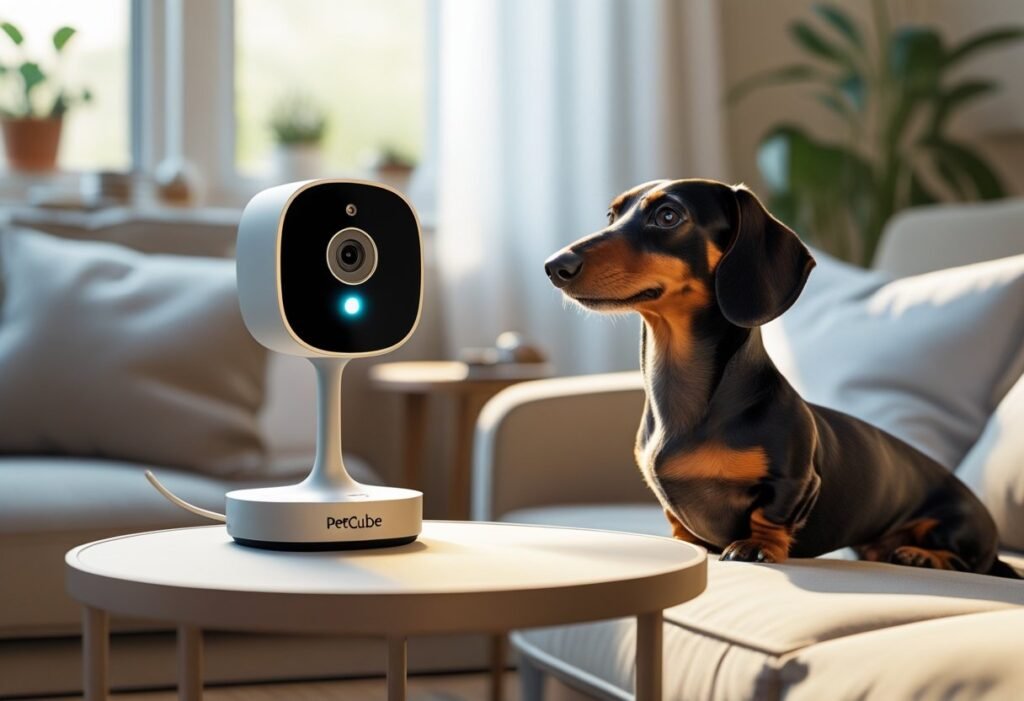
For Doxie homes, the value of a camera isn’t just in features — it’s in what those features protect: routine, spine safety, and emotional calm.
Pros ✅
- 360° coverage tracks a ground-level wanderer without blind spots. 🔄
- Custom alerts catch early pacing or door-hovering before the spiral. 📲
- Two-way audio supports calm-marker training when used wisely. 🎙️
- Night vision keeps monitoring consistent in low light. 🌙
- Compact design blends in, good for shy or sound-sensitive dogs. 🌿
Cons ⚠️
- No treat tossing, so calm rewards must be pre-placed. 🍬
- Cloud history costs extra if you need recorded clips. 💳
- Weak Wi-Fi = weak results — mesh may be needed in larger homes. 📶
- Risk of over-talking if treated like a walkie-talkie instead of a training tool. 🗣️
For most Dachshund parents, the pros protect what matters — the cons just require planning.
Petcube Cam 360 vs Alternatives
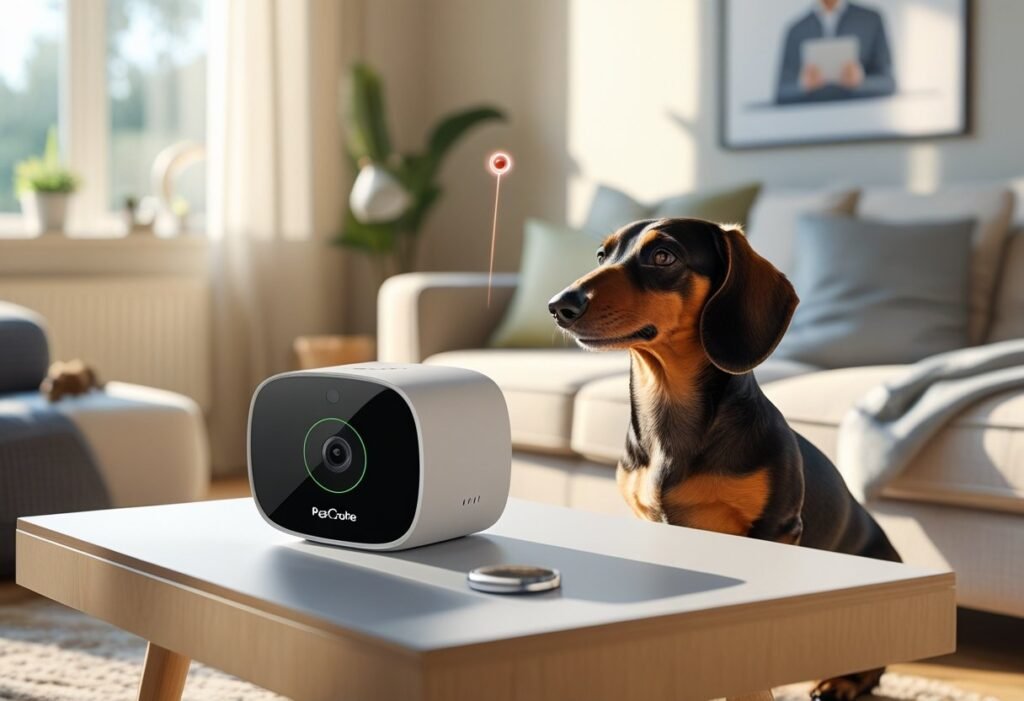
Not every camera solves Dachshund anxiety the same way. Here’s how the Cam 360 compares to common picks when the goal is calm + spine safety, not just “watching.”
Petcube Cam 360 vs Furbo
Furbo:
Great for reinforcing “calm on mat” with treat tossing — but the fixed view often misses the full door → sofa → window route unless placed perfectly. 🍪
Cam 360:
No treats built in, but the pan/tilt coverage is far better for tracking movement and interrupting jump patterns. If you already reward with pre-placed enrichment (Kong, snuffle mat), 360° coverage wins. 🔄
Petcube Cam 360 vs Eufy/Wyze pan-tilt cams
Budget pans (Eufy/Wyze):
Often cheaper and technically capable, but pet-focused alerts, app polish, and long-term reliability vary widely.
Cam 360:
Feels purpose-tuned for pet use, with cleaner alerts and faster “see → decide → act” workflows — crucial when your pulse jumps after an alert. 📲
Bottom line
If treat delivery from the camera is your main priority, choose a treat-tossing cam. Petcube also offers the Petcube Bites line for that use case. 🍪
If back-safety, route visibility, and real-time prevention are the priority, the Petcube Cam 360 remains the better Dachshund-fit choice. ✅
Troubleshooting & Expert Tips
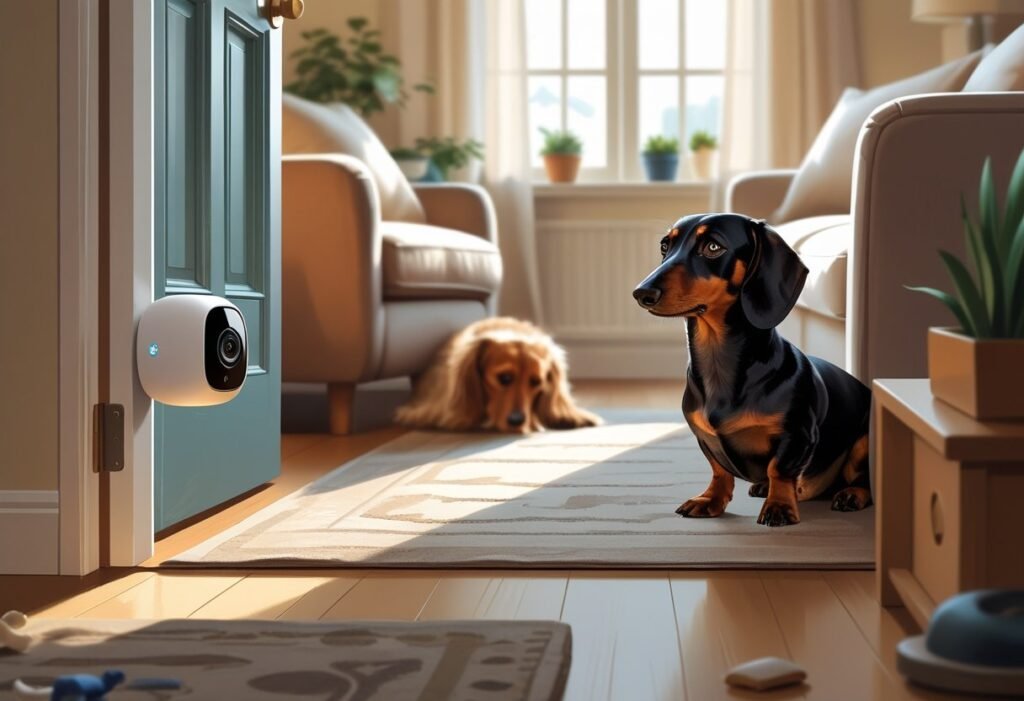
Even with the right tool, tiny adjustments decide whether anxiety improves or plateaus. These fixes solve the most common roadblocks Dachshund families run into. 🧠
Alert fatigue
Start with medium sensitivity. Add quiet hours during known calm periods. If TV or sunlight keeps triggering alerts, lower mic sensitivity or simply angle the camera away from that source. 📲
Over-talking
Use one neutral calm marker (“good settle”) only when posture is relaxed — then go silent. Your goal is independence, not conversation. 🎙️
When voice makes them more frantic
Some Doxies escalate when they hear you but can’t find you. In that case, switch to silent observation and rely on pre-placed calm rewards (snuffle mat, frozen lick toy) instead. 🧊
False motion from windows
Moving light and shadows often fool sensors. Shift the camera slightly away from direct sunlight and lean more on sound alerts for bark spikes. 🌤️
Jump-prevention quick kit
- A wide, grippy ramp aligned with the actual landing spot
- Non-slip runners along pacing corridors
- A bolster bed near the door to soften “watching” behavior
- Blocker cushion on jump-arms for 2–3 weeks while the habit breaks 🛋️
What to log
Track the data that tells the truth, not just the noise:
- Minute of first pacing after departure
- Number of couch approaches per hour (not just jumps)
- Time to first settle on bed or mat
Progress shows up here first — even if barking hasn’t vanished yet. 💛
Remember: the goal isn’t silence — it’s trust. Every calm minute your Doxie spends alone is a quiet win. 🧘♂️
Final Verdict — Petcube Camera Review for Dachshund: Is It Worth It?
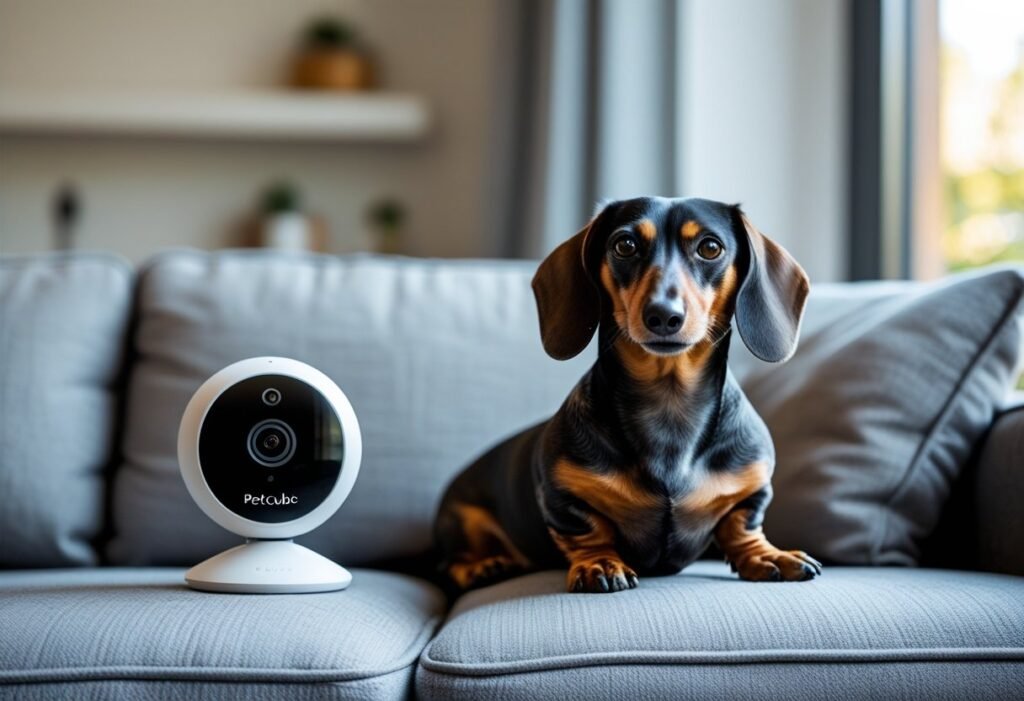
Yes — if you use it like a coach, not a crutch.
The Cam 360’s value isn’t just the video feed — it’s the pan/tilt coverage for a floor-hugging breed, the alerts that catch spirals early, and the ability to redirect risky behavior before it becomes an IVDD scare. 🦴
If you need treat-tossing built into the camera, choose a treat cam — Petcube also offers Petcube Bites for that use case. 🍪
If your priority is spine safety, behavior insight, and real-time prevention, the Petcube Cam 360 is the better Dachshund fit. ✅
It won’t erase your Doxie’s longing, but it can turn that longing into manageable moments — seen, guided, and made safer. And in a Dachshund home, that’s the difference between worry and wisdom: not just hoping they’re okay, but protecting them in real time. 💛
Frequently Asked Questions
Even with a helpful tool like the Petcube Cam 360, Dachshund parents often wonder how to use it the right way. 💡
Here are clear, practical answers to the most common questions from loving Doxie families. 🐾
Will two-way audio make my Dachshund more dependent?
It depends on how you use it. A gentle calm marker during a natural settle teaches that quiet earns attention. 🧘♀️
Constant talking can increase dependence or confusion. The goal is calm confidence without needing your voice. 💛
Which Petcube model is best if my Doxie roams between rooms?
If your Dachshund moves a lot, the Petcube Cam 360 is ideal — its pan/tilt tracks doorways, sofas, and hallways. 🔄
If your dog stays mostly in one spot and you want treat reinforcement, a treat-toss cam may be better. 🍪
Can I pair this with crate or x-pen training?
Yes. Position the camera slightly off to the side so bars don’t block the view.
Use it to monitor gradual duration builds, making sure each solo session stays calm. 🏠
How do I stop couch jumping I see on camera?
Treat the camera as intel, not just a viewer.
Add a ramp, block launch pads, use non-slip rugs, and mark calm when you see a pause.
If jumping is for attention, avoid reacting in the moment — fix the environment first. 🛋️
Do I need the subscription to make progress?
Not always. Live view + alerts are enough for many families. ✅
Subscription helps only if you want clip history, pattern review, or trainer sharing. 📲
My Doxie gets frantic when hearing my voice on the camera — what now?
Pause audio for 48 hours and rely on pre-placed calming toys instead.
Later, reintroduce one calm marker — if arousal returns, stay silent. Some Doxies relax faster without voice. 🧘
✅ Quick reminder: The goal isn’t perfect quiet — it’s trust, safety, and calmer habits over time.