
Watching a Dachshund grow is a journey 🐾 — tiny paws, then a long, sturdy body. Growth patterns can really differ between miniature and standard Dachshunds, which leaves a lot of owners wondering about their dog’s eventual size and whether they’re on track. 🌱
A Dachshund growth chart gives you the average weight and height at each stage 📊. That way, you can see if your puppy’s development looks normal. 🐶
These charts lay out milestones from those first wobbly weeks all the way to adulthood. They show when growth tends to speed up and when it finally slows down. ⏳
Every dog grows at its own pace, sure, but having those typical ranges makes it easier to spot problems early. It also gives you a decent guide for supporting healthy growth — think diet, care, exercise, all that stuff. 🥗🏡
Key Takeaway ✨
- Growth charts highlight average size milestones for Dachshunds at different ages. 🐾
- Miniature and standard Dachshunds have different growth patterns. 🌟
- Tracking growth helps with long-term health and development. ❤️
🐾 Free Dachshund Care Guide
Download our free checklist to ensure your Dachshund stays happy, healthy, and well-loved!
Get Your Free Guide 🐶Understanding Dachshund Growth
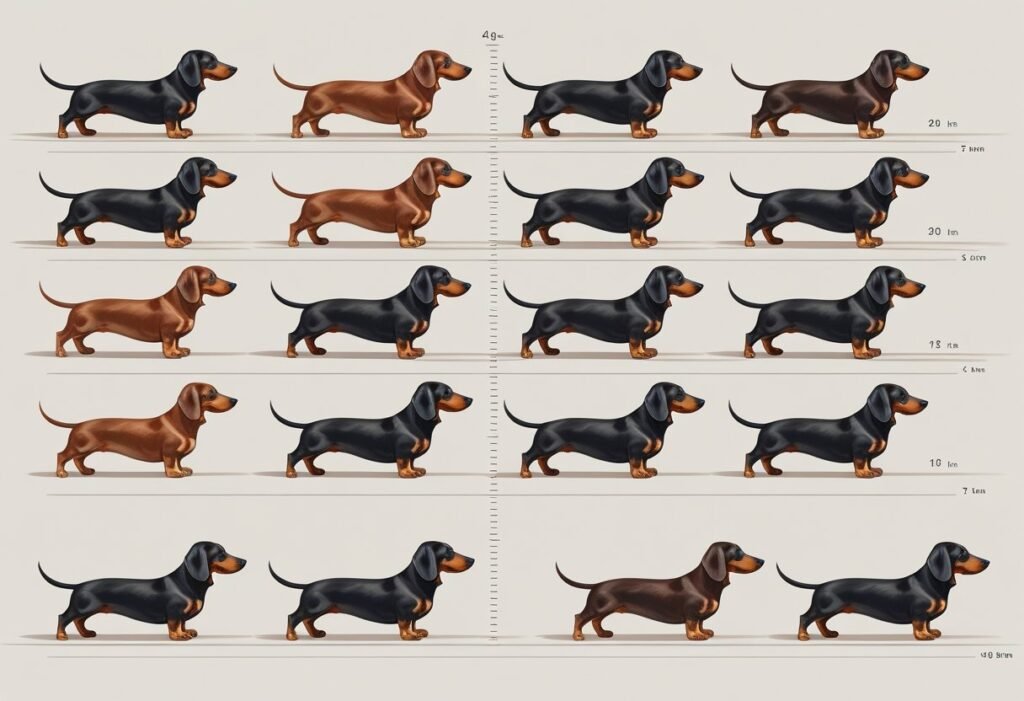
Dachshund growth depends on their size type, age, and overall health 🐾. Standard and miniature Dachshunds hit similar growth stages, but their weight and height milestones don’t match up exactly. ⚖️
Keeping an eye on these changes lets owners track healthy development and catch issues early. 🩺
Growth Stages of Dachshunds 🌱
Dachshund puppies grow fast in their first year. In the first two months, they rely on mom’s milk and start weaning at around 6 to 8 weeks. 🍼
By 3 months, you’ll notice those classic breed traits — long body, stubby legs 🐶. From 4 to 8 months, they pack on height and weight quickly. This stretch often shapes their adult frame. 🌟
Growth plates usually close around 10 to 12 months, which wraps up the big bone development 🦴. Standard Dachshunds might keep filling out until 14 to 16 months, while miniatures usually hit their adult size a bit sooner.
After the first year, growth slows way down. At that point, managing weight matters more than tracking size. 🥗

🩺 The Swiftest – Secure Your Dachshund’s Future Health
Growing Dachshunds face unique health risks. Comparing top insurance plans now helps you safeguard their care and avoid expensive surprises later.
- Find the best coverage for growth-related vet visits 🐾
- Compare trusted providers side-by-side in minutes ⚖️
- Protect against back injuries, surgeries, and emergencies 💛
Factors Influencing Growth Rate 🌿
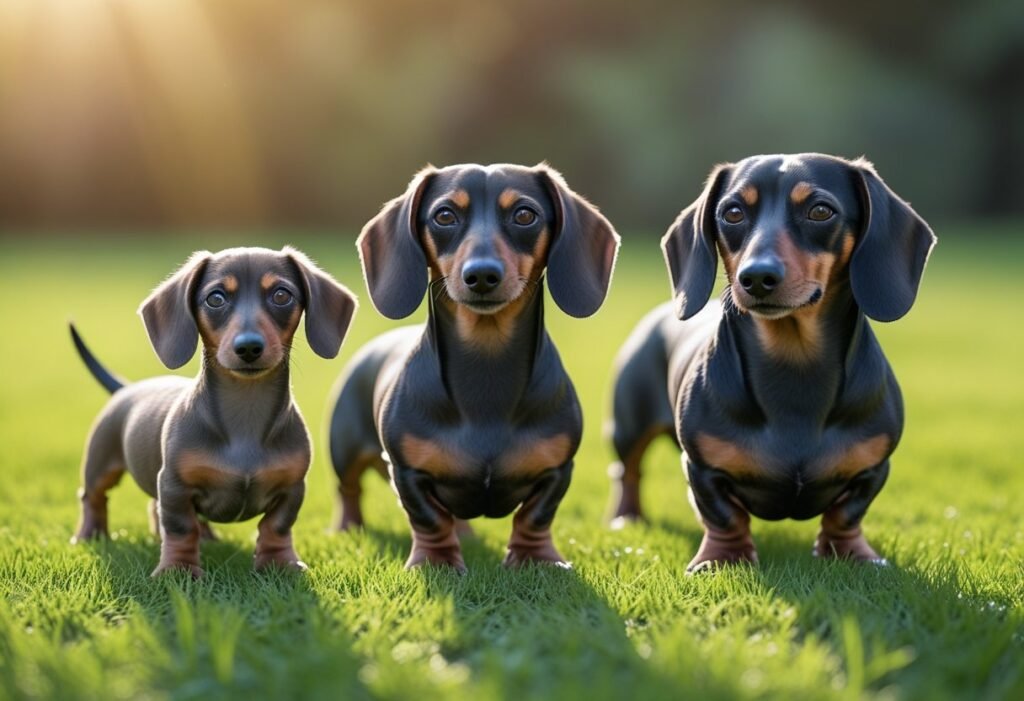
Lots of things affect how fast a Dachshund grows. Genetics top the list — miniatures usually end up at 8–11 pounds, standards land somewhere between 16 and 32 pounds. 🧬
Diet matters too. Puppies need balanced meals with enough protein, fat, and vitamins to build bones and muscle. Overfeeding can lead to extra weight, which is rough on those long backs. 🍎
Exercise helps. Moderate play and walks build muscle without putting too much strain on growing joints. Health issues like parasites or birth defects can slow growth if they’re not treated. 🐾
Common Growth Milestones 📊
Most Dachshunds hit about half their adult weight by 4 months. By 6 months, many are at 75% of their final size. ⏳
Miniatures often stop growing around 10–12 months, while standards might keep going until 14–16 months. 🐕
Average weight milestones:
- 8 weeks: 3–5 lbs (miniature), 5–7 lbs (standard) 🐾
- 6 months: 7–9 lbs (miniature), 18–22 lbs (standard) 🐾
- 12 months: 8–11 lbs (miniature), 16–32 lbs (standard) 🐾
Height usually steadies before weight does, but body length keeps growing into the first year. Tracking these milestones helps catch delays before they become real problems. 🩺
Dachshund Growth Chart by Age
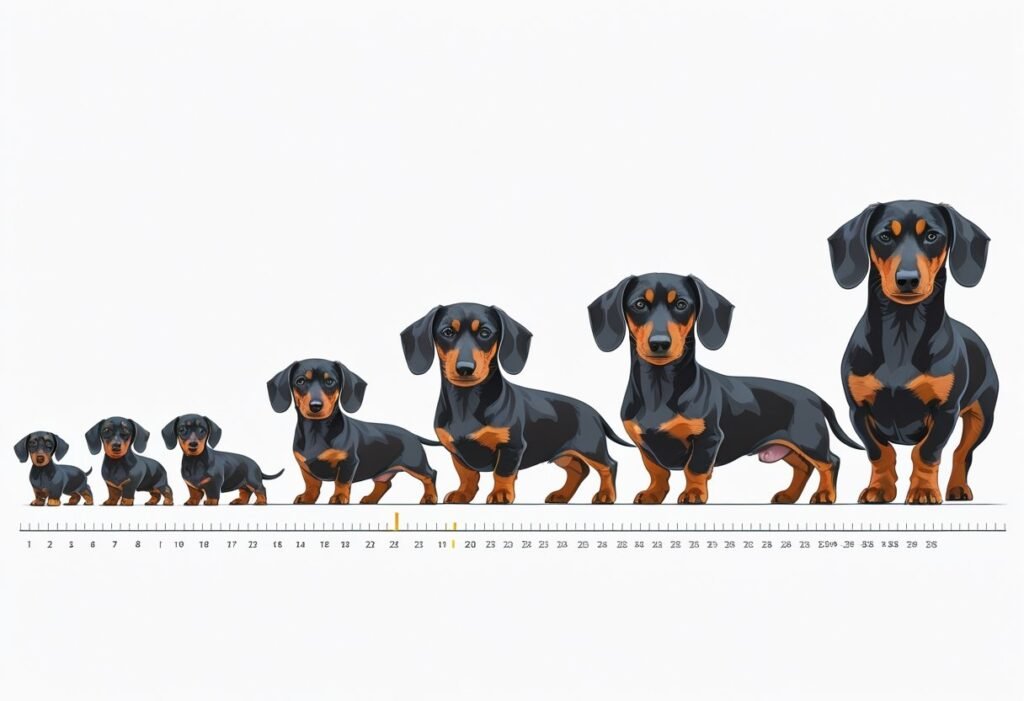
Dachshunds grow fast in their first year 🐾. Most reach their adult size by 12 months, give or take. Their growth comes in steady bursts, and the right nutrition and exercise help them develop well. 🍎🏃♂️
Puppy Growth Timeline 🐶
During the first few weeks, Dachshund puppies are tiny and totally dependent on their mom. 🍼 By 2 months, most weigh about 3–5 pounds and already look a bit like mini versions of the breed.
Growth picks up between 3 and 6 months. A miniature Dachshund may reach 6–9 pounds here, while a standard might weigh 12–16 pounds. Height goes up too — usually about half their adult height by 6 months. 📏
From 6 to 9 months, weight gain keeps going but at a slower pace. Puppies usually hit about 70–75% of their adult weight by their first birthday. 🎂 It’s smart to watch their weight, since extra pounds can stress their backs. 🦴
Approximate Puppy Weight Chart 📊
| Age | Miniature (lbs) | Standard (lbs) |
|---|---|---|
| 2 months | 3–5 | 5–7 🐾 |
| 6 months | 6–9 | 12–16 🐾 |
| 12 months | 8–11 | 16–32 🐾 |

🍲 ChefPaw Fresh Dog Food Maker
- Create fresh, healthy meals at home for steady growth
- Control ingredients to avoid fillers and allergens
- Perfect for Dachshunds with sensitive stomachs

🌱 Wild Earth Complete Plant Based Food
- Vet-developed formula with complete balanced nutrition
- Gentle on Dachshund tummies and supports healthy growth
- Made with clean, sustainable plant-based ingredients
Adolescent Development 🌱
Between 9 and 12 months, Dachshunds hit their adolescent phase. Their bones and muscles get stronger, and their bodies start to settle in size. 💪

Growth slows down, but they still fill out in weight and chest width. Miniatures usually stop gaining height by now, though they might add a pound or two. Standards could keep growing a bit taller and heavier until about 14–16 months. 📈
This is also when their energy peaks. Regular, controlled exercise helps build muscle without overdoing it. A balanced diet with enough protein and minerals supports bone health. 🥗
Adult Size Expectations 🐕
A full-grown miniature Dachshund usually weighs 8–11 pounds and stands about 5–6 inches tall at the shoulder. ⚖️
Standard Dachshunds typically weigh 16–32 pounds and measure 8–9 inches tall. Length matters too — most adults are about 16–20 inches long from chest to tail base, depending on their type. 📏
Most Dachshunds reach full adult size by 12 months, though standards might keep filling out until 18 months. Once they’re grown, keeping their weight steady with good food and activity is key. 🍎🏡
Extra pounds put strain on their backs, which can lead to problems later. Checking against a weight chart now and then helps keep things in balance. ✅
Miniature vs Standard Dachshund Growth Patterns
Miniature and Standard Dachshunds share those long bodies and short legs 🐾, but their growth patterns are pretty different. Size, weight, and how fast they develop all vary. ⚖️
Size Differences by Variety 🌟
Miniature Dachshunds stay much smaller than Standards their whole lives. A Miniature usually weighs 11 pounds or less fully grown, while a Standard can hit anywhere from 16 to 32 pounds. 🐕
Miniatures stand about 5 to 6 inches at the shoulder; Standards, more like 8 to 9 inches. Standards also look longer and sturdier, while Miniatures have a compact vibe. 📏
The gap in size is obvious by a few months old. Miniatures grow slower and stay petite. Standards pack on more size and muscle through their first year. Owners can use a Dachshund growth chart by age to track these shifts and make sure their dog’s in a healthy range. 🩺

🍽️ Petlibro Automatic Feeder
- Set precise feeding times to prevent overfeeding
- Keeps puppies on a healthy, consistent schedule
- Ideal for busy families or while you’re at work
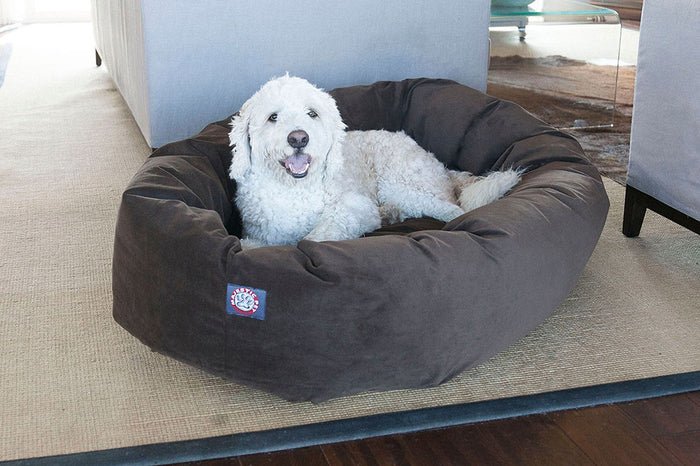
🛏️ Majestic Pet Orthopedic Bed
- Supports long backs and growing joints safely
- Comfortable foam design prevents pressure points
- Durable cover, easy to clean after puppy messes
Weight and Height Comparisons 📊
Here’s a quick look at typical weight ranges:
| Age (months) | Miniature Weight | Standard Weight |
|---|---|---|
| 3 | 3–5 lbs | 7–12 lbs 🐾 |
| 6 | 6–9 lbs | 13–20 lbs 🐾 |
| 12+ (adult) | ≤11 lbs | 16–32 lbs 🐾 |
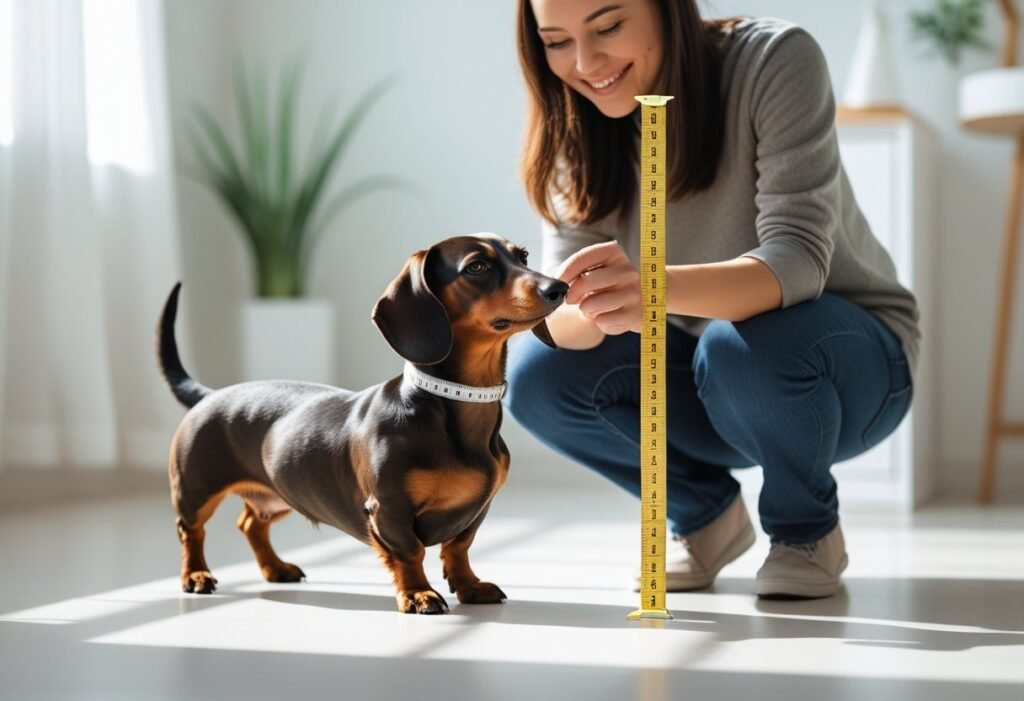
🎉 Grab your free Dachshund care checklist!
Miniatures level off in weight earlier, often by 10–12 months. Standards may keep filling out until 14–16 months, especially with muscle and chest width. 💪
Height splits too — Miniatures stay under 6 inches; Standards end up taller and sturdier. This difference affects what kind of harness or bed you’ll need. Measuring accurately really helps with comfort and safety. 🛏️
Developmental Variations 🌱
Both types go through the same growth stages, but the pace isn’t quite the same. Miniatures mature sooner, with most of their growth done by a year. Standards might take a few more months to finish up. ⏳
Bone density and muscle growth show up more in Standards. They need careful monitoring to avoid too much weight during slower growth. Miniatures don’t fluctuate as much but still need steady nutrition for bones and joints. 🥗
Owners should tweak feeding and exercise based on their dog’s variety. A Standard might need more calories and controlled activity to protect their joints, while a Miniature does better with smaller meals and gentler play to stay safe. 🐾
How to Use a Dachshund Growth Chart
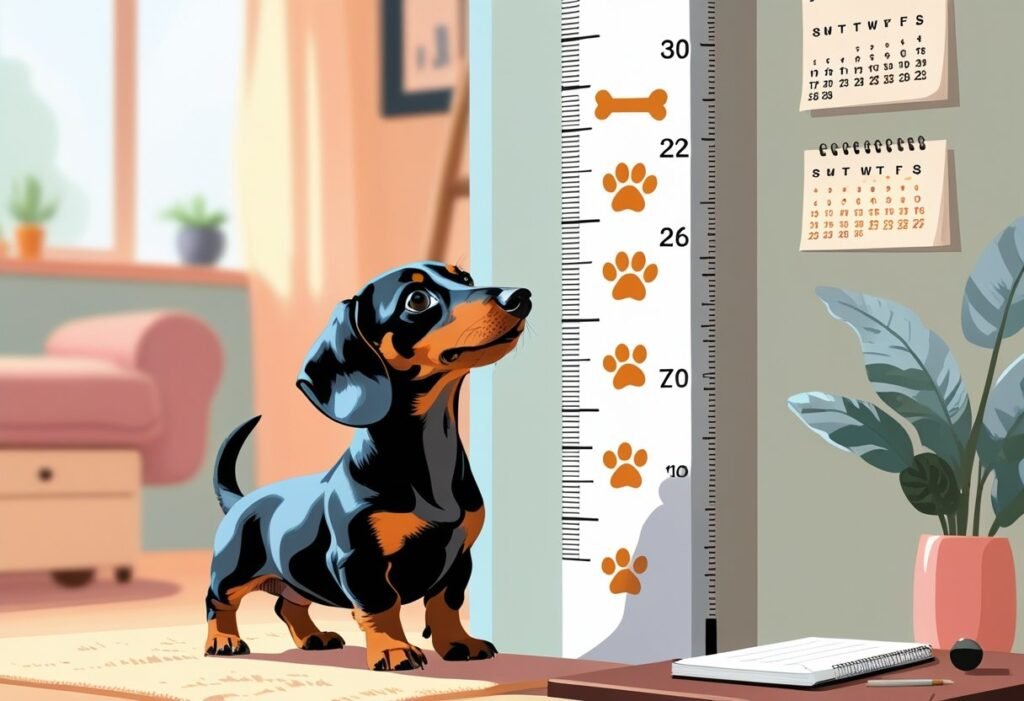
A growth chart lets you compare your Dachshund’s weight and size with average ranges for their age and type 🐾. You’ll quickly see if your puppy is growing steadily or if their numbers are drifting outside a healthy range. 📈
Tracking Your Dachshund’s Progress 🐶
Grab a Dachshund weight chart by age to see if your dog is on track. Standard Dachshunds weigh more than Miniatures, so make sure you’re using the right chart. ✅
For example, a Miniature Dachshund at 3 months might weigh 4–6 pounds. A Standard at the same age could be closer to 10 pounds. ⚖️
Try recording weight every few weeks to catch changes in growth speed. Puppies grow fast between 2 and 8 months, then slow down as they get closer to adult size. ⏳
By 12 months, most Dachshunds reach their full weight. Some might keep filling out a bit until 15 months, but the big jumps are over. 🎂
It’s also helpful to measure height and body length, since Dachshunds are, well, long little dogs. Jotting these details down in a notebook or digital file makes it easier to spot trends. 📝

🧠 Brain Training for Dogs
- Boosts mental stimulation for growing puppies
- Helps manage stubborn Dachshund behavior
- Step-by-step positive training methods
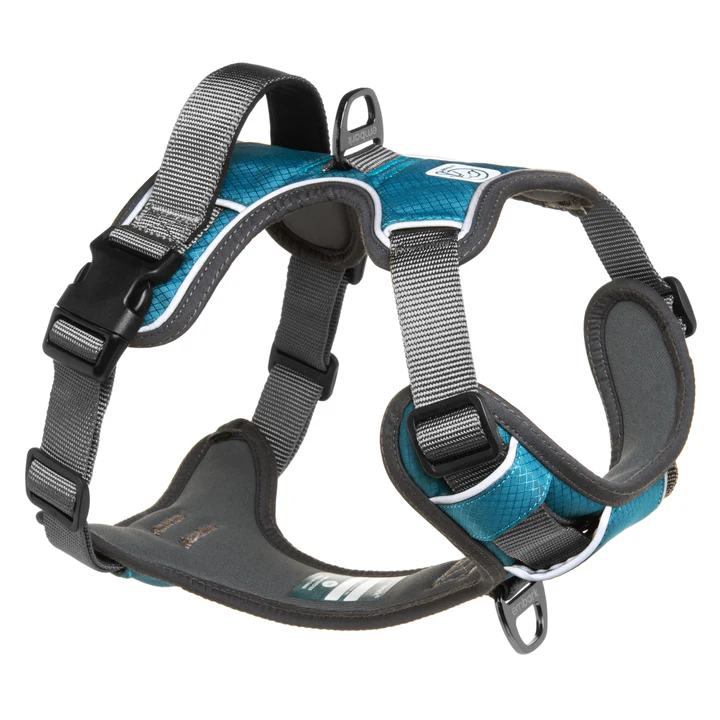
🐾 Embark Pet Adventure No-Pull Harness
- Safe, no-pull design for growing Dachshunds
- Adjustable fit to match each growth stage
- Durable and comfy for everyday walks
Identifying Healthy Growth 🌱
Pairing a growth chart with body condition checks gives you the full picture. You should see a waist when looking down at your Dachshund, and from the side, a gentle tuck at the belly. 🐕
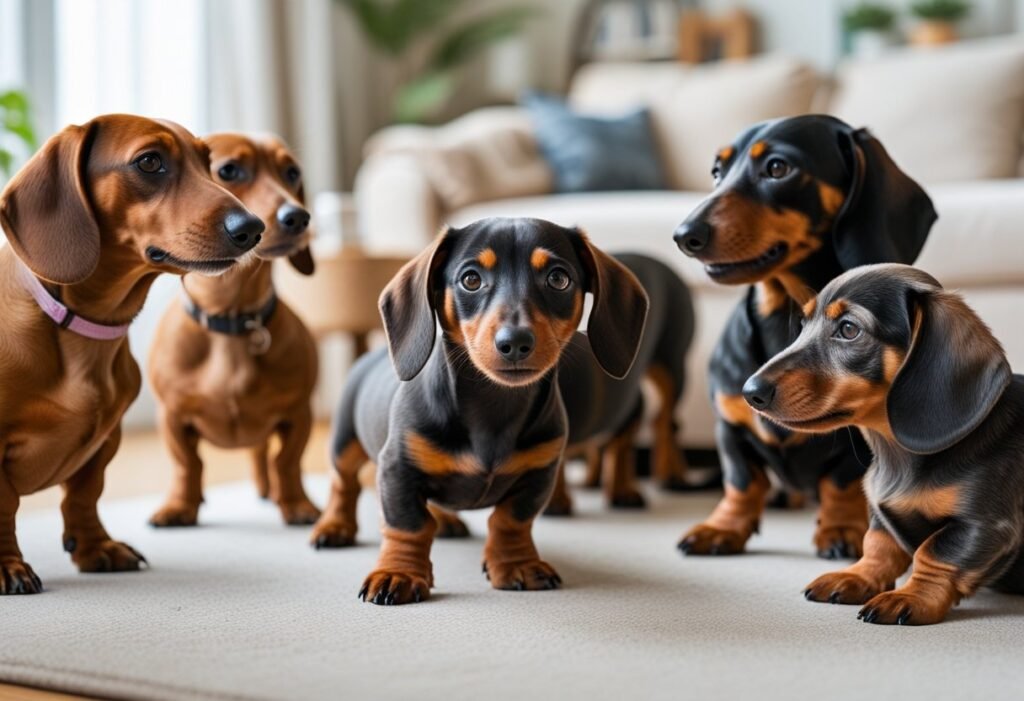
If you can’t feel the ribs without pushing, your dog might be carrying too much weight. Weight ranges are just averages, though. ⚠️
| Age | Miniature Weight | Standard Weight |
|---|---|---|
| 3 months | 4–6 lbs | 9–12 lbs 🐾 |
| 6 months | 7–9 lbs | 16–22 lbs 🐾 |
| 12 months | 9–11 lbs | 16–32 lbs 🐾 |
If your puppy falls a little above or below these numbers, it’s not the end of the world. Focus on steady progress and how your dog looks and feels, not just the numbers. ❤️
When to Consult a Veterinarian 🩺
If your Dachshund’s weight isn’t lining up with the chart, it could mean a health issue. Slow weight gain sometimes points to parasites, diet problems, or illness. 🐾
Rapid weight gain can put extra stress on joints and backs — something Dachshunds are already prone to. Vets can check growth plates, which usually close between 6 and 8 months. 🦴
Early closure or uneven growth might mess with posture or movement. Your vet might suggest diet tweaks or run tests if something seems off. 🔍
It’s a good idea to schedule regular checkups during the first year. If you notice small but unusual changes in weight or body shape, bring it up with your vet. ✅
Common Growth Concerns in Dachshunds
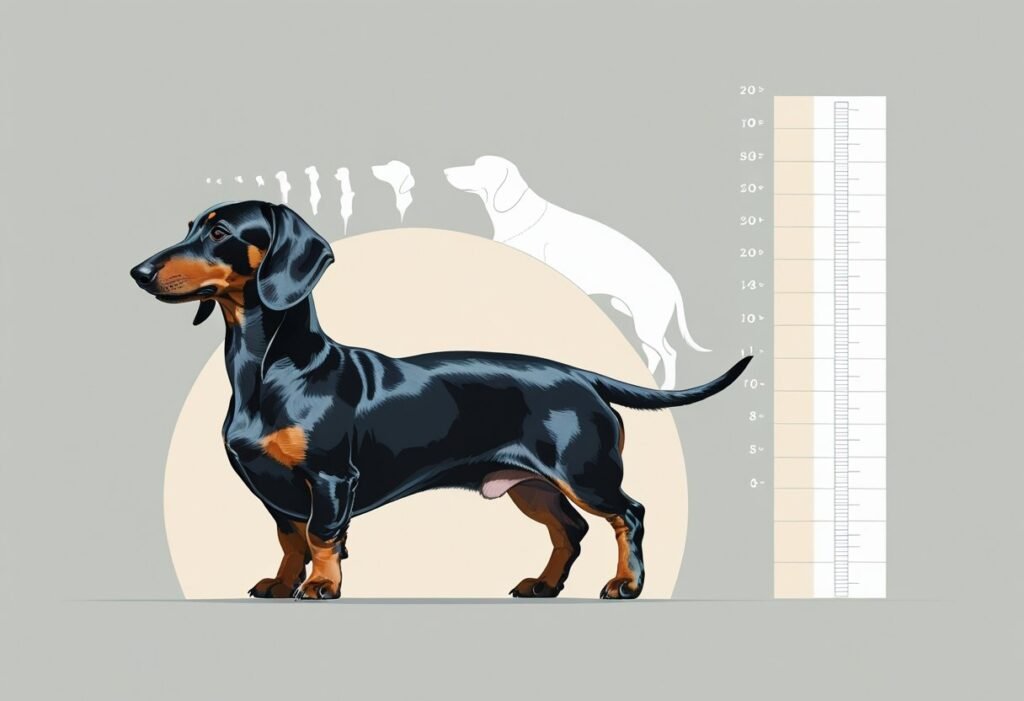
Dachshunds deal with weight management issues, risks to their growing bones, and health problems shaped by both genetics and their environment 🐾. Keeping an eye on these things can help prevent long-term trouble. 🩺
Underweight and Overweight Issues ⚖️
Weight problems pop up a lot in Dachshunds because of their long backs and short legs. Extra weight puts strain on the spine, raising the risk of back problems like Intervertebral Disc Disease. 🦴
Being underweight can signal poor nutrition, parasites, or other health issues. Keep tabs on your dog’s weight regularly. ✅
You should see a waist from above and feel the ribs without digging in. Signs to watch for:
- Ribs and bones showing (underweight) 🐾
- No waist and hard-to-feel ribs (overweight) 🐾
- Low energy or not wanting to move 🐾
Feed measured portions of balanced dog food. Try not to go overboard with treats. 🍎
Short walks and play keep muscles strong without stressing joints too much. 🐕
🌱 Growth Support & Daily Care Must-Haves for Dachshunds
- 💧 Petlibro Water Fountain — Encourage steady hydration to support healthy bone growth and energy throughout each stage.
- 🪜 Majestic Pet Pet-Stairs — Protect growing joints by making it easy for your pup to reach beds or couches without risky jumps.
- 🧬 AnimalBiome Gut Health Test Kit — Track gut health to ensure nutrients are properly absorbed for steady, balanced growth.
- 🛁 Pride + Groom Grooming Tools Kit — Gentle tools to keep their coat healthy and shiny during every growth stage.
Growth Plate Injuries 🚫
Growth plates are soft spots near the ends of long bones. In Dachshunds, they usually close between 6 and 12 months. ⏳
Until they close, these plates can get injured pretty easily. Jumping off furniture, climbing stairs, or rough play can cause real problems. 🪜

Injuries might lead to uneven limb growth, pain, or long-term joint issues. To help prevent injuries:
- Use ramps instead of letting your dog jump on and off furniture 🐾
- Limit stair use for puppies 🐾
- Supervise play and avoid high-impact stuff 🐾
If your puppy starts limping, swelling, or won’t put weight on a leg, get to the vet quickly. Early treatment can help avoid permanent damage. 🩺
Genetic and Environmental Factors 🌱
Some Dachshund growth issues come straight from their genes. Their long backs and short legs make them more likely to have back and joint problems. 🧬
Certain family lines might also have dental crowding or heart risks. But the environment matters, too. ❤️
Poor diet, not enough exercise, or unsafe spaces can slow growth or make injuries more likely. Puppies raised on slippery floors may end up with weak muscles and wobbly joints. 🐕
Good breeders screen for genetic health problems, but owners still need to do their part. Give your pup a safe home, balanced meals, and regular vet checks to help them stay on track. 🏡
Tips for Supporting Healthy Dachshund Growth

Dachshunds need good nutrition, steady exercise, and regular health care to grow up strong 🐾. All these things work together to prevent weight issues and bone stress. 🦴
Nutrition and Diet Recommendations 🥗
With their long backs and short legs, keeping a Dachshund’s weight in check is a must. Feed a high-quality dog food with the right mix of protein, fat, and fiber to support muscle and energy needs. 🍎
Puppies usually need three or four small meals a day. Adults do fine with two meals. 🍽️
Stick to a feeding schedule so digestion stays smooth and overeating doesn’t sneak up on you. Free-feeding isn’t great — Dachshunds love to eat, and extra pounds spell trouble for their backs. ⚠️
Keep table scraps and high-calorie treats to a minimum. Go for low-calorie training treats or veggies like carrots or green beans instead. 🥕
Size portions based on your dog’s age, weight, and activity level. Adjust as they grow. 📏
💛 Bonus Picks for Growth, Safety & Lifelong Memories
- 📹 Petcube Cam 360 – Watch your Dachshund’s growth milestones and keep an eye on them while away
- 📍 Tractive DOG GPS Tracker – Track outdoor adventures safely as your pup explores and grows
- 🍖 Petcube Bites 2 Lite Treat Dispenser – Reward healthy behaviors and celebrate growth milestones from anywhere
- 🌿 Zomalka Anxiety Relief Drops – Gentle, natural support to keep your pup calm during growth changes
- 🎨 Purr & Mutt Personalized Dachshund Art – Capture and celebrate your Doxie’s journey from puppyhood to adulthood
🐾 Celebrate your Dachshund’s milestones while keeping them safe, healthy, and happy.
Exercise and Activity Guidelines 🐕
Dachshunds need daily activity, but their backs can’t handle too much strain. Short walks, gentle play, and mental games are best. 🎾
Puppies do better with short play sessions throughout the day. As they get older, they can handle longer walks, but try to avoid letting them jump from furniture or climb stairs too much. 🪜

Some safe activities:
- Leash walks for 15–30 minutes 🐾
- Interactive games like fetch with soft toys 🐾
- Puzzle feeders for brain exercise 🐾
Swimming can also be a great low-impact option if your dog likes water. Just go slow when introducing it. 🐾
Routine Health Monitoring 🩺
Take your Dachshund to the vet regularly to track their growth and catch any health issues early. Vets can spot back problems, dental issues, and joint concerns common in the breed. 🧬
At home, keep an eye on your dog’s weight and body condition. You want to see a waist from above and feel the ribs without much effort. ✅
Stay on top of vaccinations, parasite prevention, and dental care. Keep notes about weight, diet changes, or anything odd so your vet can give the best advice as your pup grows. 📝
🐾 Don’t Miss Out!
Download our free Dachshund care guide to keep your furry friend happy and healthy.
Get Your Free Guide 🐶Frequently Asked Questions
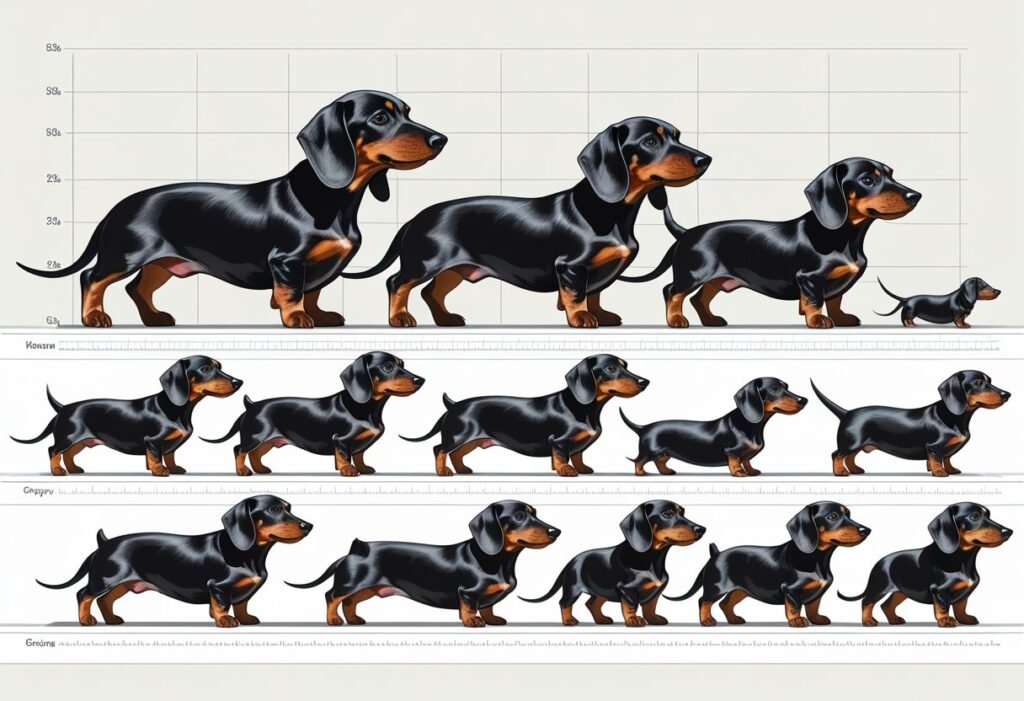
Miniature Dachshunds grow fast during their first year, hitting most of their adult size by 10 to 12 months 🐾. Size and weight depend on age, sex, and whether you’ve got a mini or a standard. Tracking growth helps you keep your dog in the healthy zone. ✅
What is the typical growth progression for a miniature dachshund by age? ⏳
A miniature dachshund starts tiny and spends the first month nursing. 🍼 By 2 or 3 months, they begin weaning and show early breed features. 🐶
From 4 to 8 months, growth picks up speed. By 9 to 12 months, things slow down and start to settle. 📉
How much should a miniature dachshund female weigh at different stages of development? ⚖️
Female minis usually weigh a bit less than males. Most adult females land around 8 to 11 pounds.
During early puppyhood, weights are lower — just a few pounds at 2 or 3 months. It’s a steady climb up to their adult range. 🐾
What are the expected weight milestones for a mini dachshund during the first year? 📊
- 2 months: Many minis weigh 3 to 5 pounds 🐾
- 6 months: Typically 7 to 9 pounds 🐾
- 12 months: Most reach 8 to 11 pounds, give or take 🐾
These ranges depend on genetics and diet, so some variation is normal. 🍎
How can I calculate the expected weight of my miniature dachshund as it grows? 🐕
You can estimate adult weight by doubling your puppy’s weight at 16 weeks.
It’s not perfect, but it gives you a good ballpark figure. 📏
Checking with your vet is the best way to make sure your pup is on track. 🩺
What is the difference in growth patterns between a full-size and a mini dachshund? 🌟
Standards are bigger — adults reach 16 to 32 pounds. Minis stay under 11 pounds for the most part.
Both types grow quickly in the first 6 to 8 months, but standards keep gaining size and weight after minis have mostly leveled off. 📈
At 4 months old, what is the average weight range for a miniature dachshund? 🐾
At 4 months, a miniature dachshund usually weighs between 5 and 7 pounds.
Puppies at this age grow fast, so you’ll notice their weight going up steadily. They won’t stay this tiny for long — before you know it, they’ll start looking more like their adult selves. ❤️